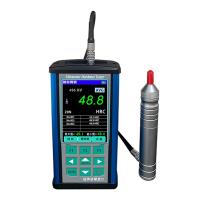
How to choose the right Hardness Tester? Pencil, swing rod, indentation, Richter, Shore five types of depth analysis
Hardness testing is a key indicator of material properties, but the application scenarios of different principles of Hardness Testers are very different. Scratch, swing, indentation, rebound, press-in - how to choose the five methods accurately? This article will reveal it to you.
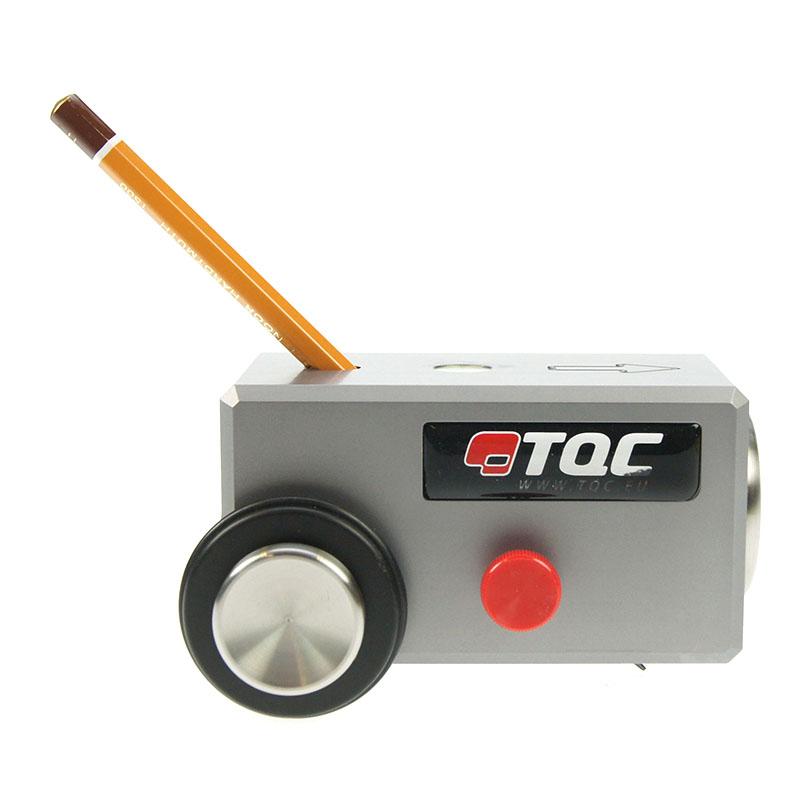
Pencil Hardness Tester
Principle: Scratch method. Using a series of pencils with increasing hardness (from the softest 6B to the hardest 9H), scratch the coating surface at a fixed angle (usually 45°) and pressure (usually 750g or 1000g) to observe if permanent scratches are left. Find the hardest pencil grade that can scratch the coating, which is the pencil hardness of the coating.
Application objects: The surface hardness of coatings (paints, varnishes, powder coatings, plastic films, etc.) is mainly aimed at, especially for evaluating their scratch resistance. It can also be used on softer materials such as paper and wood.
Test Standards: ASTM D3363, ISO 15184, GB/T 6739, etc.
The results show: Expressed in pencil hardness grades (e.g. 2H, 3H, F, HB, B, etc.). The higher the H value, the harder and more scratch-resistant the coating is.
Peculiarity: Easy, fast and low cost of operation; The results are intuitive; It is mainly used to evaluate surface scratch resistance rather than overall material hardness; the subjectivity is relatively strong (it is necessary to judge whether it is scratched); There are certain requirements for the thickness of the substrate and coating.
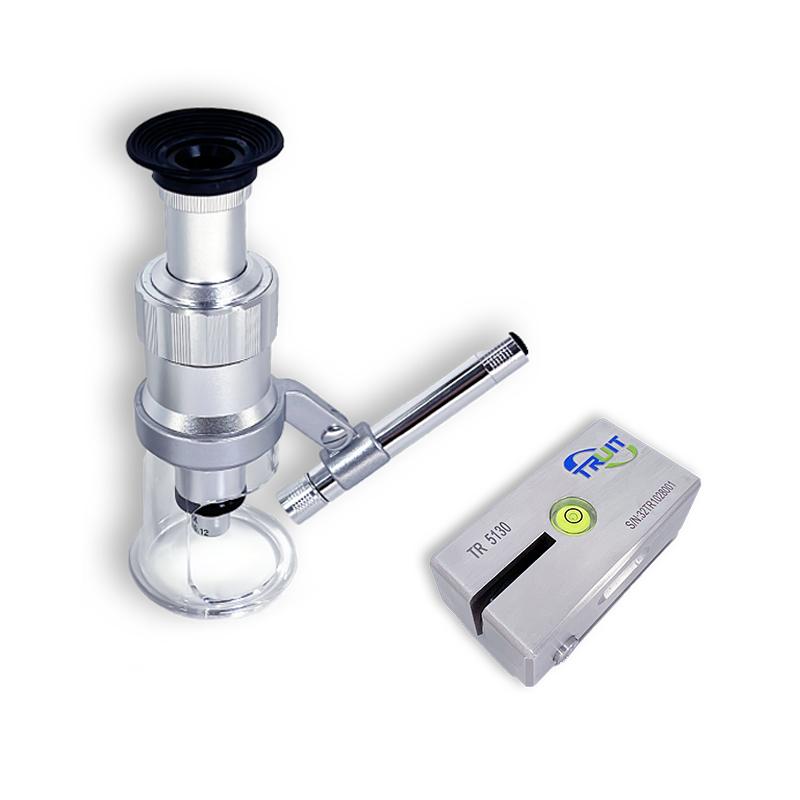
Pendulum Hardness Tester
Principle: Damping oscillation method. The core of the instrument is a glass or metal pendulum that swings freely over the surface to be measured, with a specific shape (e.g., hemispherical or ring-shaped) contact point at the end. The pendulum bar is released from a fixed angle, and the rate of its swing attenuation (number of swing times or damping time) depends on the resistance (viscoelasticity) of the surface of the material (usually the coating). The greater the resistance (the harder the surface/the less damping), the slower the pendulum attenuation, the more swings or the longer the damping time.
Application objects: It mainly targets the hardness of coatings (paints, varnishes, varnishes, etc.), reflecting their dryness, cross-linking curing and surface friction characteristics. It is commonly used in automotive paint, wood paint, printing ink, etc.
Test Standards: ISO 1522 (König pendulum), ASTM D4366 (Persoz pendulum), GB/T 1730 (double pendulum), etc. The results of different swing rod types (e.g. König, Persoz, Sward) are not directly comparable.
The results show: Expressed in seconds as the number of swings within a defined angle (e.g., 6° to 3°) or the time it takes to decay from a starting angle (e.g., 6°) to a specific angle (e.g., 3°). The higher the value, the higher the hardness of the coating surface/the smaller the damping.
Peculiarity: Very sensitive to small hardness changes on the surface of the coating; It can better reflect the curing state of the coating; Fast testing; The results are greatly affected by ambient temperature and humidity and substrate flatness. high requirements for the surface flatness of the specimen; The result has no direct correspondence with scratch hardness (pencil method).

Indentation Hardness Tester
Brinell hardness: Carbide ball indenter to measure the indentation diameter. Suitable for softer materials (non-ferrous metals, annealed steel, cast iron).
Rockwell hardness: Diamond cone or carbide ball indenter to measure indentation depth increments. The most widely used with different scales (A, B, C, D, etc.) covering materials from soft to very hard (plastics, mild steels, hardened steels, carbides).
Vickers hardness: Diamond regular tetragonal pyramid indenter to measure the diagonal length of the indentation. Suitable for a wide range of materials from extremely soft to very hard (including thin layers and small areas) with high precision.
Knoop hardness: Diamond diamond pyramid indenter that measures long diagonal length. It is particularly suitable for hardness testing of thin layers, brittle materials (ceramics, glass) and tiny areas.
Microhardness: It usually refers to the application of Vickers or Knoop hardness at very small loads (<1 kgf) for hardness testing of microzones, coatings, and phases.
Principle: The most widely used hardness testing principles are in this category. Under static or quasi-static loads, indenters of a specific shape (spherical, tapered, pyramidal) are pressed into the surface of the material, the load is removed after a specified period of time, and the size of the indentation left on the surface of the material (depth, diagonal length, diameter) is measured. The hardness value is calculated by the ratio of the load to the indentation area (or a specific formula). This is a very large category with a variety of specific methods:
Application objects: Almost all solid materials such as metals, ceramics, rigid plastics, and composite materials are especially suitable for the hardness evaluation of block materials.
Test Standards: There are a large number of standards for different methods (such as ASTM E10/E18/E92/E384, ISO 6506/6507/6508/4545, etc.).
The results show: Depending on the method, it is expressed as HBW (Brinell Brothers), HRC/HRB/HRA (Rockwell), HV (Vickers), HK (Knoop), etc., usually followed by load and indenter information (e.g. HV0.5).
Peculiarity: measures the ability of a material to resist plastic deformation; The results are quantifiable, objective, and comparable (within the same method); The test usually takes a certain amount of time; May cause permanent indentation on the surface of the specimen; The results of different methods cannot be directly compared (the conversion table needs to be checked, and the conversion is inaccurate); The device is usually larger (desktop).
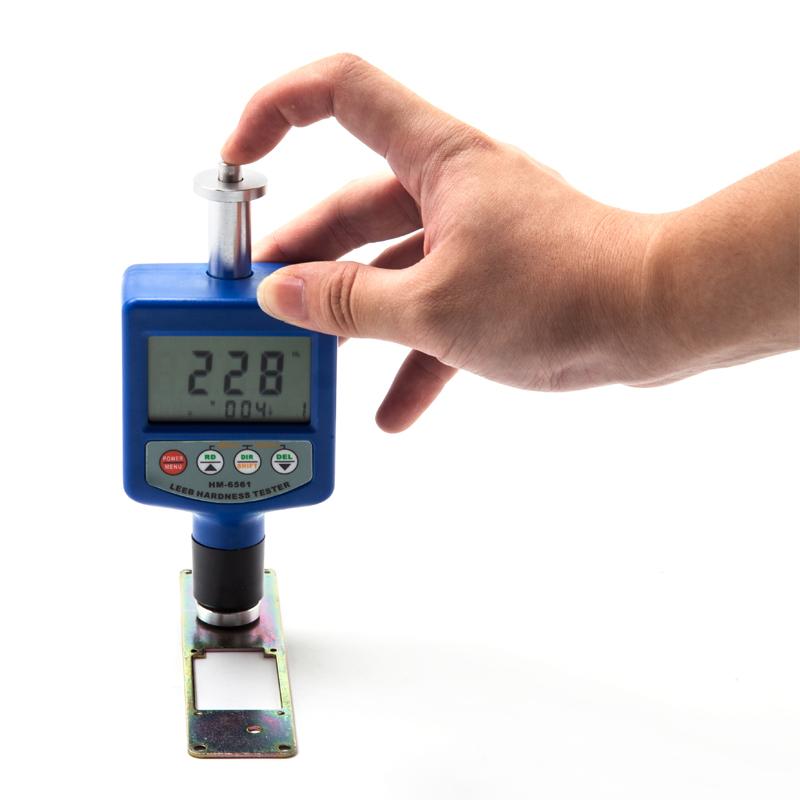
Richter hardness meter
Principle: Dynamic rebound method. An impact body (punch) with a carbide ball head strikes the specimen surface at a certain speed under the action of spring force. Part of the kinetic energy of the impact body is lost due to plastic deformation during impact, and the remaining kinetic energy causes it to rebound. Measure the ratio of the impact body rebound velocity to the impact velocity (or rebound height), which is directly proportional to the hardness of the material. The hardness value is calculated and displayed by an electronic device.
Application objects: Large, heavy-duty, difficult to move or difficult to test on a desktop (castings, forgings, rolls, large molds, pressure vessels, pipes). It can also be used for on-site quick sampling inspection. Suitable for most metal materials.
Test Standards: ISO 16859 (Richter Hardness), ASTM A956, GB/T 17394, etc.
The results show: Richter hardness value (HL), but the instrument can often be automatically converted to the more commonly used Brinell (HB), Rockwell (HRC/HRB), Vickers (HV) values (the correct material group and ruler is selected). Such as HL, HLD, HLDC, HRC, HB, HV, etc.
Peculiarity: Portable, fast and easy to operate; It can test large workpieces and complex shapes; minimal damage to the surface (microindentation); The measurement results are greatly affected by the elastic modulus of the material. Different orientations (D, DC, G, C probes) and material types need to be selected and converted correctly; Accuracy is generally lower than benchtop indentation Hardness Testers, but sufficient for field applications; There are certain requirements for the surface finish and quality (thickness, stiffness, coupling) of the specimen.
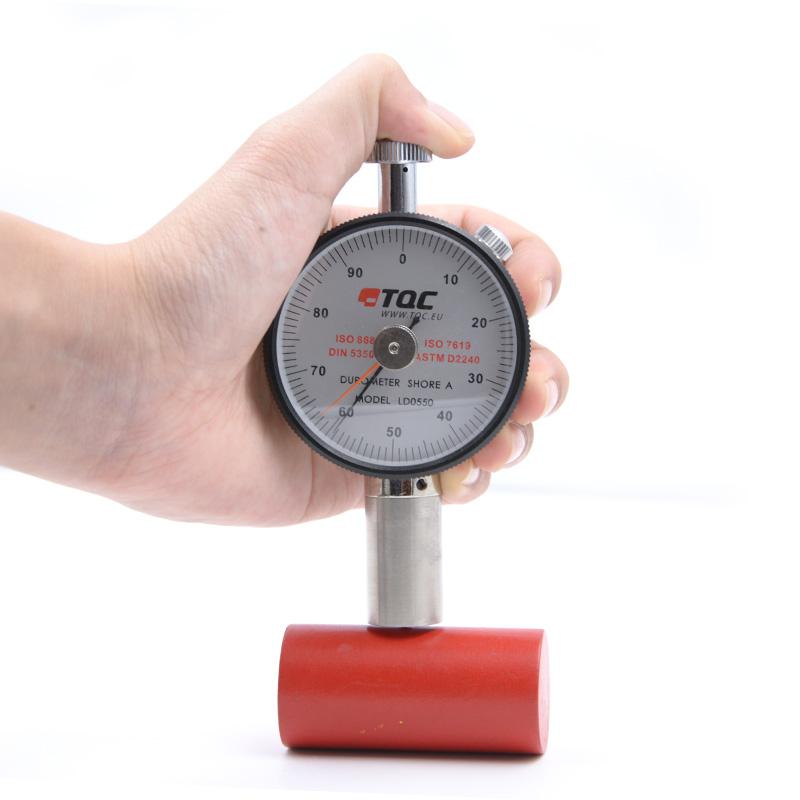
Shaw Hardness Tester
Principle: Press-in depth method. Under the action of a defined spring force, a pin of a specific shape (blunt needle or hemisphere) is pressed vertically into the surface of the material. The hardness value is determined by the depth at which the needle is pressed (direct reading of the scale or electronic display). The shallower the press, the higher the hardness.
Application objects: It is mainly used for elastomers (rubber, silicone) and soft plastics (TPE, PP, PE, etc.). It is the most commonly used hardness testing method in the rubber industry.
Test Standards: ISO 7619-1 (Shore A, D), ASTM D2240 (Shore A, D, O, OO, OO, OO, etc.), GB/T 531.1, etc. The most commonly used are Shore A (softer material) and Shore D (harder material).
The results show: Shore hardness value, units are usually omitted (e.g. 60 HA, 80 HD). The range is 0-100, and the larger the value, the harder it is.
Peculiarity: Portable, extremely easy to operate, fast and non-destructive (indentation can be recovered); There are certain requirements for the thickness of the specimen; The results were greatly affected by the shape of the needle, spring force, pressure application time and temperature. It mainly reflects the elastic deformation resistance of the material (especially Shore A); Different scales (A, D, O, etc.) are for materials with different hardness ranges, and the results cannot be directly compared.





Summary and comparison table:
| features | Pencil Hardness Tester | Pendulum Hardness Tester | Indentation Hardness Tester (Category) | Richter hardness meter | Shaw Hardness Tester |
| Core principles | Scratch method | Damping oscillation method | Static press-in method | Dynamic rebound method | Depth of Press-In Method (Elastomers) |
| Main applications: | Scratch resistance of the coating surface | Coating surface hardness/curing | Overall hardness of metal/ceramic/hard plastic | Hardness of large metal workpieces on site | Rubber/soft plastic hardness |
| Typical objects | Paints, varnishes, plastic films | Paints, varnishes, inks | Steel, aluminum, copper, ceramics, hard plastics | Castings, forgings, pipes, molds | Rubber, silicone, TPE, soft plastics |
| The results show | Pencil Grade (H, B) | Number of swings/time (seconds) | HB, HRC, HV, HK, etc | HL (Convertible to HB, HRC, HV) | HA, HD (0-100) |
| peculiarity | Simple, fast and low cost | Sensitive to small changes in the surface | Quantification is precise and the standards are extensive | Portable, fast, and on-site | Portable, ultra-fast and lossless |
| merit | Visually assess scratch resistance | Reflects the curing state | The results are objectively comparable and widely applicable | It can measure large pieces and on-site testing | Minimalist operation, non-destructive and inexpensive |
| limitations | Subjective, only superficial scratches | It is greatly affected by the environment and needs to be leveled | May damage surfaces, require desktops | The accuracy is lower than that of desktop computers, and conversion is required | Only suitable for soft/elastic materials, affected by time and temperature |
| Key differences | Scratch or not | Swing attenuation is fast and slow | Indentation size | Rebound speed is high | Press in depth and depth |
How to choose?
Measure the coating for scratch resistance? -> Pencil Hardness Tester
Measure coating curing status/surface friction? -> Pendulum bar Hardness Tester
Measure the overall hardness of metals, ceramics, and hard plastics? -> Indentation Hardness Tester (choose specific method: Brinell Rockwell, Vickers, Knoop)
Measure the on-site hardness of large metal workpieces? -> Richter Hardness Tester
Measure the hardness of rubber or soft plastics? -> Shore Hardness Tester (Selector: A or D)
Understanding their principle differences and application scenarios is key to the correct selection and use of hardness testing methods.