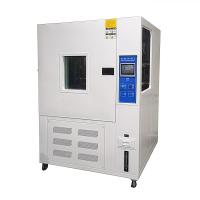
Humidity chamber core components dismantling: how to select compressors/Sensors
summary
Constant temperature and humidity Test Chambers are key equipment for reliability testing in materials, electronics, automotive, and other industries. Its core performance depends on the selection and maintenance of two core components: compressor and sensor. This article provides an in-depth analysis of the core components of refrigeration systems and control systems from a dismantling perspective, elaborating on the selection principles, technical parameters, and application points of compressors and sensors to help users scientifically configure equipment and improve test accuracy.
1. Overview of the structure and core components of the Test Chamber
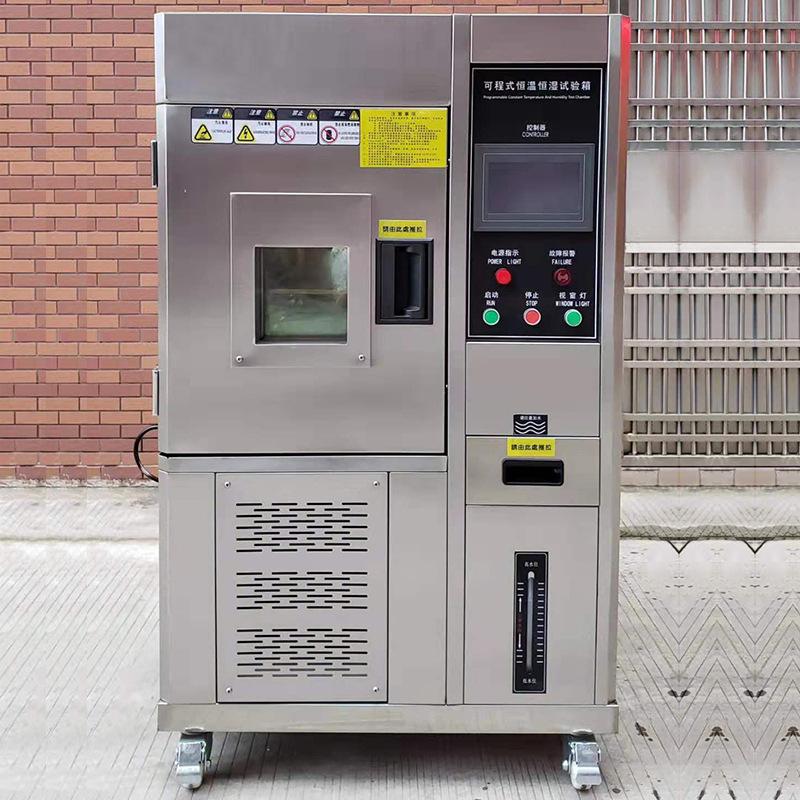
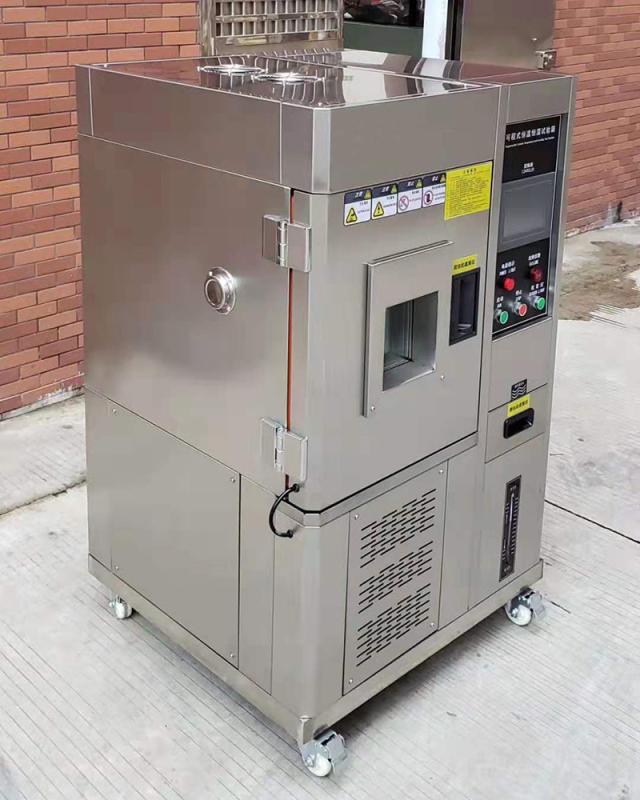
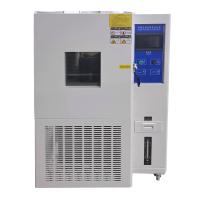
The constant temperature and humidity Test Chamber is mainly composed of a box, a refrigeration system, a heating system, a humidification/dehumidification system, a circulation air duct and a control system. Its core function is to simulate various environmental conditions and evaluate the product's tolerance in extreme climates through precise control of temperature (-70°C~150°C or wider) and humidity (10%~98% RH).
Refrigeration system:Responsible for cooling and dehumidification, the core is the compressor, which drives the refrigerant circulation to achieve heat exchange.
Control System:Real-time monitoring of temperature and humidity data through sensors, combined with PID algorithms to adjust heating, cooling, humidification and other actuators to ensure environmental stability.
Compressor and sensor synergy:Sensors provide feedback signals for the system, and compressors are the power source for energy conversion, which together determine the temperature control accuracy, response speed and long-term reliability of the Test Chamber.
2. In-depth analysis of compressor selection
As the "heart" of the refrigeration system, the compressor directly affects the cooling efficiency, energy consumption and life of the Test Chamber. Here are the key points of selection:
1. Compressor types and applicable scenarios
Scroll Compressors:
Piston compressors:
Screw compressors:
Stacked refrigeration system:
note: Refrigerants need to meet environmental requirements (e.g. R134a, R448A instead of R22) and ensure that the compressor is compatible with the refrigerant.
2. Key technical parameters matching
Cooling capacity calculation:
The total cooling requirements are determined based on the Test Chamber volume, temperature range, load thermal power consumption and environmental conditions (such as high temperature and high humidity conditions). Simplified reference of the formula: cooling capacity (kW) = chamber volume (m³) × experience coefficient (0.2~0.5 kW/m³) + sample calorific value.
Safety margin: Choose the compressor rated cooling capacity ≥ calculated value × 1.2~1.5 times to avoid long-term high-load operation.
Evaporation temperature and condensation temperature:
The evaporation temperature determines the minimum cooling limit (e.g., -70°C corresponds to the low-temperature evaporation temperature ≤-80°C);
The condensation temperature is affected by the ambient temperature and cooling method (air cooling/water cooling), so it is necessary to ensure heat dissipation efficiency.
Energy Efficiency Ratio (COP) vs. Energy Consumption:Prefer energy-efficient compressors (scroll type with higher COP) and reduce standby power consumption in combination with frequency conversion technology.
3. Key points of sensor selection and installation
The sensor is the "nerve ending" of the Test Chamber, responsible for accurately capturing temperature and humidity signals, and its accuracy and stability directly affect the control accuracy.
1. Temperature sensor selection
Genre comparison:
Platinum resistance (PT100): High precision (Class A error ±0.15°C), good linearity, wide temperature resistance range (-200°C~650°C), is the mainstream choice for constant temperature and humidity equipment.
Thermocouples (such as K-type): fast response (ms level), high upper limit of temperature measurement (>1000°C), suitable for rapid temperature change or high-temperature auxiliary measurement, but low temperature accuracy.
Semiconductor sensors: high integration and low cost, but narrow range and poor long-term stability, mostly used in economical equipment or secondary monitoring points.
Key parameters::
Accuracy level: Electronic test requires ±0.1°C~0.3°C (Class A PT100); Optional ±0.5°C for general applications.
Temperature resistance range: covers the entire temperature range of the Test Chamber (such as -70°C~150°C) to avoid low-temperature embrittlement or high-temperature drift.
Response time: The rapid temperature change Test Chamber needs to < 10s response speed (e.g., thermocouple with platinum resistance complementarity).
2. Humidity sensor selection
Humidity measurement technology is complex, requiring balancing accuracy, hysteresis, and anti-contamination capabilities:
Capacitive (polymer film):
Principle: Based on the measurement of capacitance change after moisture absorption of polymer film, the response is fast (<60s), and the accuracy can reach ±1%~2% RH (high-end model).
Advantages: small size, low power consumption, suitable for compact spaces; Supports digital outputs such as RS485 for easy integration.
Limitations: High humidity (>95% RH) or oily environment is prone to drift, and regular calibration is required.
Wet and dry ball method:
Principle: Calculate humidity through dry/wet bulb temperature difference, low cost and simple structure, but the accuracy will be affected by wind speed and water quality (error ±3%~5% RH).
Applications: Large-volume equipment or low-cost scenarios that do not require high humidity uniformity.
Resistive / ceramic sensor: high temperature and humidity resistance, but poor linearity, mostly used for industrial environment monitoring.
Selection suggestions: For high-precision tests (such as semiconductors), imported capacitive sensors are preferred, and automatic calibration functions are equipped to cope with long-term drift.
3. Sensor installation specifications
4. Practical suggestions for dismantling, maintenance and selection
In practice, reasonable maintenance is as important as scientific selection:
1. Key points of compressor disassembly and maintenance
Disassembly steps: power off and drain the refrigerant→ dismantle the electrical connection and pipeline→ loosen the fixing bolts and take out the compressor (pay attention to anti-static and impurities entering the system).
Common troubleshooting:
Motor winding burnout: insulation aging or abnormal power supply, need to be professionally rewound or replaced;
Valve disc/piston ring wear: vibration noise increases, cooling capacity decreases, wear parts are replaced regularly;
Lubrication system problems: Lack of oil causing stalling, change the special refrigeration oil and clean the oil separator on a cycle (every 4000 hours).
Assembly note: clean the exhaust pipeline to avoid impurity collision, and the suspended fixed compressor reduces vibration transmission to ensure that the angle valve seal is leak-free.
2. Sensor maintenance calibration
Regular calibration: the temperature sensor is compared annually against a standard source (e.g. thermostatic tank); The humidity sensor calibrates the zero point and span with a standard saturated salt solution or a high-precision generator depending on the frequency of use (recommended every 3~6 months).
Contamination treatment: Alcohol wipe the humidity probe to remove dust/oil to avoid scratching the film; Dry and store before long-term use to prevent mildew.
Life management: The lifespan of capacitive humidity sensors is about 3~5 years, and frequent high-low humidity cycles accelerate aging, so they need to be replaced in time to ensure accuracy.
3. Selection decision-making framework
1) Clear requirements: temperature range (whether the ultimate low temperature needs to be overlapped), humidity accuracy, sample loading characteristics (heat generation/size), industry standards (such as GB/T 2423, IEC 60068).
2) Performance trade-off: scroll compressors take into account efficiency and cost; High-precision test combination platinum resistor + imported capacitance hygrometer; The budget is limited, and the wet and dry ball method is used with the basic sensor.
3) Brand and service: Prefer manufacturers who provide original compressor/sensor parts and calibration services to reduce maintenance complexity.
4) Test verification: check the temperature and humidity uniformity report (temperature ≤± 1.5°C, humidity ≤±2% RH is preferred) during the acceptance of the new equipment to ensure that the selection meets the standard.
5. Summary and trend outlook
The selection of compressors and sensors for constant temperature and humidity Test Chambers is the core link to ensure the reliability of the test:
Compressor selection needs to combine cooling capacity, temperature range, energy efficiency and working condition stability, scroll type (single stage) or overlapping system (ultra-low temperature) is the mainstream solution, brand and maintenance system determine long-term cost.
The combination of platinum resistance + high-end capacitive hygrometer is irreplaceable in the field of high precision, and scientific installation and calibration are the cornerstones of measurement accuracy.
Future technology trends will focus on intelligent integration (such as IoT sensors + AI algorithm optimization control), green energy conservation (CO2 refrigeration, waste heat recovery), and miniaturized high-precision devices, promoting the development of test equipment in a more accurate, efficient, and sustainable direction. Reasonable selection and standardized maintenance can not only improve equipment performance, but also ensure the scientific and repeatability of experimental data, providing solid support for product development and quality control.




- 1GB/T 10586-2006 Detailed explanation: Core technical indicators and acceptance specifications for damp heat Test Chamber
- 2Inaccurate lab data? 90% of people ignore Test Chamber calibrating issues
- 3Chip high-low temperature heat and humidity performance test
- 4Application of Humidity Chamber in building materials and flooring industry
- 5Principle, application and selection of programmable Humidity Chamber for die casting
- 6Humidity Humidity Chamber principle, application and selection
- 7Principle, application and selection of field effect transistor programmable Humidity Chamber
- 8Principle, application and selection of luggage Humidity Chamber
- 9Analytical magnetic material programmable Humidity Chamber, principle, application and selection