Paint film RDI Tester principles and selection guide: types, applications and industry standards in detail
1. What is the paint film powdering rate Tester?
1. Definition and core functions
The paint film powdering rate meter is a precision instrument used to evaluate the chalking phenomenon of coating surfaces caused by long-term exposure to environmental factors such as ultraviolet rays, water vapor, and oxygen. Powdering refers to the process of gradually losing adhesion on the surface of the coating, forming a fine powdery substance that falls off, which directly affects the aesthetics and protective properties of the coating.
The instrument quantifies the degree of powdering of coatings through standardized test methods, providing a scientific basis for coating research and development, quality control and engineering acceptance.

2. Comparison of detection principles
At present, the paint film powdering rate Tester mainly adopts two detection methods:
(1) Imprint contrast method (Kempf method, DIN 53159 standard)
The imprint contrast method is the most widely used detection method, and its working principle is to apply a specific pressure (usually 50-250N) to make the paint film contact with the photo paper to produce impressions, and then judge the degree of powdering of the coating by comparing the standard powdering grade sample. This method has a standardized operation process, and the test results are consistent and comparable.
Notable features of this method include:
• Relatively simple operation and does not require complex sample preparation
• The testing process is fast and suitable for batch testing
• Complies with international standard DIN 53159 (Kempf method)
• Suitable for routine testing of architectural coatings, automotive paints, etc
(2) Gravimetric method/image analysis method (modern high-precision testing)
With the development of technology, modern paint film chalking rate analyzers are increasingly using gravimetric and image analysis methods, which can provide more accurate quantitative data.
The gravimetric method uses a special tool to collect a specified area of powder samples from the surface of the paint film, then uses a high-precision weighing device (accuracy can reach 0.1mg or even higher) to measure the powder mass, and finally calculates the powdering rate based on parameters such as the sampling area. This method uses "sampling-weighing" as the core process and is characterized by intuitive operation and stable results.
The image analysis method takes the surface image of the paint film through a high-definition camera, combines advanced image recognition technology to analyze the powder distribution density and area ratio, and indirectly calculates the powdering rate. This method is non-contact detection and avoids secondary damage to the coating during the sampling process.
Key features of these two high-precision inspection methods include:
• Provide quantitative data to eliminate subjective judgment bias
• High standardization and reproducibility of test results
• Image analysis is suitable for precious coatings or on-site inspection scenarios
• Some high-end instruments have data storage, trend analysis and networking functions
• It is an important tool for the coatings industry to transform from "empirical evaluation" to "data-driven"
Compared with the traditional visual grading method, these modern detection methods have significant advantages: the visual method relies on manual subjective judgment, is easily affected by factors such as experience and light, and has a large error; Instrumental testing achieves standardization and reproducibility of test results through quantitative data.
2. The main types of paint film powdering rate Tester
1. Classification according to the detection principle
According to the different detection principles, the paint film powder rate Tester can be mainly divided into the following categories:
Standard type (Kempf method)
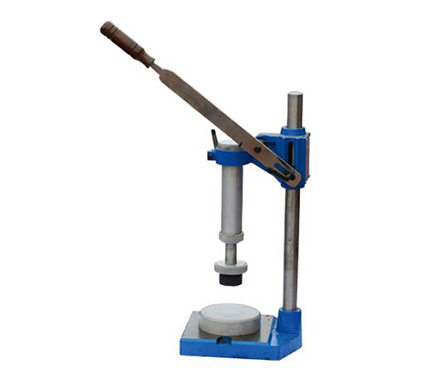
These instruments are tested in strict accordance with DIN 53159 using the imprint contrast method. It is equipped with a probe with a fixed pressure range (usually 50-250N), and the rubber hardness is controlled at 60±5A and the diameter is 40mm. The structure mainly includes the press, tensile device, base, tray, pillar and movable frame, and the operation process is standardized, which is suitable for powdering rate testing in a conventional laboratory environment.
Gravimetric analyzer
Gravimetric method is one of the most widely used detection methods at present. This type of Tester uses "sampling-weighing" as the core process, delineating a fixed area (common 100 cm² or 200 cm²) through a circular sampler, collecting powder using a soft brush or vacuum adsorption device, and then calculating the pulverization rate by weighing it with a high-precision balance. This type of instrument has a moderate cost and low requirements for operator skills, and is widely used in production quality inspection and engineering acceptance.
Image analysis method analyzer
The image analysis method analyzer adopts advanced image processing technology. The surface image of the paint film is taken by the high-definition camera, and the powder distribution density and area proportion are analyzed in combination with image recognition technology, and the powdering rate is indirectly calculated. This type of instrument is non-contact inspection, which can avoid secondary damage to the coating during the sampling process, especially suitable for precious coatings or on-site inspection scenarios. However, it has high requirements for light conditions and needs to pass the calibration of standardized powdered samples, which is currently mostly used in laboratory research and development or high-end testing scenarios.
Wear-Gravimetric Instrument
For special scenarios that need to simulate a long-term use environment, the wear-gravimetric meter comes into being. This type of instrument first accelerates the aging and wear of the paint film through standardized wear devices (such as grinding wheels, friction blocks), and then uses the gravimetric method to measure the amount of powder after wear, so as to evaluate the powder resistance of the coating in a dynamic environment. Its test results are closer to the actual use conditions, but the equipment structure is complex and the testing cycle is long, and it is mainly used for coating durability research and high-end product certification.
2. Categorize by usage scenario
According to different usage scenarios, the paint film powdering rate Tester can also be divided into:
Portable analyzer
These instruments are small, lightweight, and usually equipped with rechargeable batteries and simple operator panels for on-site inspection (e.g., building facades, bridge coatings). Sophisticated portable devices usually weigh < 5kg, are dustproof and waterproof (protection level not less than IP54), and can complete multiple inspections on a single charge.
Laboratory measuring instrument
Laboratory measuring instruments have higher measurement accuracy and extended functions (such as temperature and humidity control, multi-sample continuous testing), and are mostly used in R&D laboratories of coating manufacturers or third-party testing institutions. These devices often support more complex test processes and data analysis capabilities.

3. Application fields of paint film powder rate Tester
The application of paint film powdering rate Tester runs through multiple links of the coating industry chain and has a wide range of applicability:
1. Coating manufacturers
In the process of coating production, enterprises need to conduct random inspections of each batch of products through a measuring instrument to ensure that their anti-powdering performance meets the factory standards. For example, exterior wall latex paint needs to be tested for powdering rate after accelerated aging tests (such as ultraviolet irradiation, cold and hot cycling) to verify the durability of the product in the outdoor environment. For industrial anti-corrosion coatings, the degree of powdering needs to be measured after the salt spray test to evaluate the protective effect of the coating on the metal substrate. Through standardized testing, enterprises can adjust the formula in time (such as adding antioxidants and ultraviolet absorbers) to improve product quality stability.
2. Architecture and engineering
In the acceptance of building construction, the paint film powdering rate is a key indicator to evaluate the quality of exterior walls and steel structure coatings. For example, the exterior wall coating of a new residential building needs to be regularly tested for the chalking rate after completion to ensure that it does not have serious chalking during the 5-10 year service cycle. The anti-corrosion coating of large steel structures such as bridges and venues needs to be monitored by measuring instruments to provide data support for maintenance and renovation. In addition, for old house renovation projects, the meter can help determine the degree of powdering of the original coating and determine whether it needs to be completely removed before repainting.
3. Automotive and rail transit industry
The chalking resistance of automotive coatings (especially body topcoats) directly affects the appearance and value retention rate of vehicles. The paint film powder rate Tester is used to detect the powdering of automotive coatings after simulated use environments (such as acid rain, ultraviolet light) to ensure that the coating maintains its gloss and integrity for a long time. In the field of rail transit, the exterior coatings of high-speed rail and subway also need to pass the pulverization rate test to verify their durability under high-speed operation and complex climatic conditions.
4. Scientific research and testing institutions
Universities and research institutes use paint film powdering rate Testers to carry out coating formulation optimization research, such as exploring the effects of different resin and pigment ratios on the powdering resistance of coatings. third-party testing agencies provide enterprises with fair powder rate test reports for product certification (such as green building materials certification), quality arbitration and other scenarios. In addition, the instrument is also used to study the impact of extreme environments (such as high altitude and high humidity areas) on paint film powdering, providing a basis for coating selection in special scenarios.
4. Key points for the selection of paint film powdering rate measuring instrument
Choosing the right paint film powdering rate Tester requires comprehensive consideration of many factors, and the following are the key selection points:
1. Test standard compliance
Give preference to instruments that comply with DIN 53159 (Kempf method) or other international standards such as GB/T related standards, ensuring authoritative and comparable test results. Standard compliance is the basis for ensuring the validity of the test data.
2. Detection accuracy and method
There are different requirements for detection accuracy in different application scenarios. Laboratory research and development often requires instruments with an accuracy of 0.1 mg to capture the impact of subtle recipe adjustments on pulverization rates, while on-site inspections can choose portable equipment with an accuracy of 1 mg, which can reduce costs while ensuring practicality. In addition, it is necessary to pay attention to the repeatability error of the instrument (the result bias of the same sample detected multiple times), and the error should be controlled within ±2% to ensure data reliability.
3. Rubber probe parameters (Kempf method applicable)
For instruments using the Kempf method, the key parameters of the rubber probe must meet the standard requirements:
• Rubber hardness: 60±5A grade
• Diameter: 40mm
• Probe pressure range: typically 50-250N
• Pressure accuracy error should be controlled to ± 10% or less (high precision type)
These parameters directly impact the accuracy and comparability of test results.
4. Ease of operation
The ease of operation of the instrument directly affects the detection efficiency. Give preference to equipment with the following characteristics:
• Reasonable structural design, such as smooth fit of the presser, stretching device and pallet
• Reduce human error
• Equipped with scale indicator or locking device to improve testing efficiency
• One-touch operation, automatic calculation function (high-end instruments)
• Easy-to-clean, corrosion-resistant material
5. Maintenance and durability
Choose materials that are easy to clean and corrosion-resistant to avoid affecting accuracy due to wear and tear after long-term use. Good maintainability can reduce later maintenance costs and extend the service life of the instrument. A ventilated and dry storage environment also helps maintain stable instrument performance.
6. Additional Features (Optional)
Some high-end instruments may offer digital readouts, automatic pressure control, or data storage capabilities, making them suitable for laboratories that require large amounts of test data. Data management systems, such as connecting to computers to export inspection reports, are especially important for businesses that need to process data in batches. But a well-rounded device can meet the needs of most applications.
7. Application scenario matching
Choose the appropriate type of instrument according to the actual use scenario:
• Portable and simplified: Suitable for on-site rapid testing or small laboratories, while the functionality may be simplified, the core testing principles remain the same
• High-precision type: Used in scientific research institutions or coating research and development laboratories with high data accuracy requirements
• Standard type: suitable for pulverization rate testing in a conventional laboratory environment
5. Summary: How to choose the right paint film powdering rate Tester?
The paint film powdering rate Tester is an indispensable testing tool in the coating industry, scientifically evaluating the degree of powdering of coatings through the standardized Kempf method or modern high-precision testing technology, providing key data support for product development, quality control and engineering applications. Whether it's architectural coatings, automotive paints, or industrial protective coatings, this instrument helps users optimize coating performance and extend their service life.
Comprehensive selection suggestions:
• Routine laboratory testing → Choose a standard Kempf method instrument in accordance with DIN 53159
• High-precision R&D needs → Choose gravimetric or image analysis instruments to ensure accurate and reliable data
• Fast on-site testing → Choose a portable Tester that requires easy operation and reliable results
• Research and high-end testing → Consider image analysis or wear-gravimetric analyzers to obtain more comprehensive coating performance data
Through reasonable selection and correct use, the paint film powdering rate Tester will become an important help to improve the quality of coatings and reduce maintenance costs, providing strong support for technological progress and product optimization in the coating industry.
-
![JINGKELIAN QEY Paint film RDI Tester]() JINGKELIAN QEY Paint film RDI Tester$ 424.00
JINGKELIAN QEY Paint film RDI Tester$ 424.00 -
![QEY Paint film RDI Tester YONGLIDA probe Pressure range 50~250N]()
-
![JINGKELIAN QEY Paint film RDI Tester]() JINGKELIAN QEY Paint film RDI Tester$ 424.00
JINGKELIAN QEY Paint film RDI Tester$ 424.00 -
![QEY Paint film RDI Tester YONGLIDA probe Pressure range 50~250N]()