Non-yellowing Test Chamber comprehensive analysis: test principles, scientific definitions, and professional selection guidelines
1. Yellowing resistance phenomenon and test demand background
1.1 The nature and impact of yellowing
Yellowing refers to the phenomenon of gradual yellowing of the surface color due to environmental factors such as light, heat, and oxygen, which is essentially the shift in visible light absorption characteristics caused by changes in molecular structure (such as free radical reaction and chromophore formation). This problem not only reduces the aesthetics of the product, but may also be accompanied by hidden risks such as deterioration of mechanical properties and weakened chemical stability.
In the plastics industry, the yellowing of outdoor products (such as car interiors and home appliance shells) directly affects consumers' purchasing decisions; In the textile field, yellowing of white/light-colored fabrics shortens the service life and damages brand reputation; The yellowing of coatings and rubber products reflects insufficient oxidation resistance and is related to the weathering defect of the product.
1.2 Limitations of traditional testing
Natural exposure testing, while real, is too long (often months to years) to meet the needs of rapid iterative product development. The yellowing resistance Test Chamber simulates environmental effects for several years under controllable conditions through artificial accelerated aging technology, compressing the test cycle to several days to weeks, significantly improving R&D efficiency and quality prediction ability.
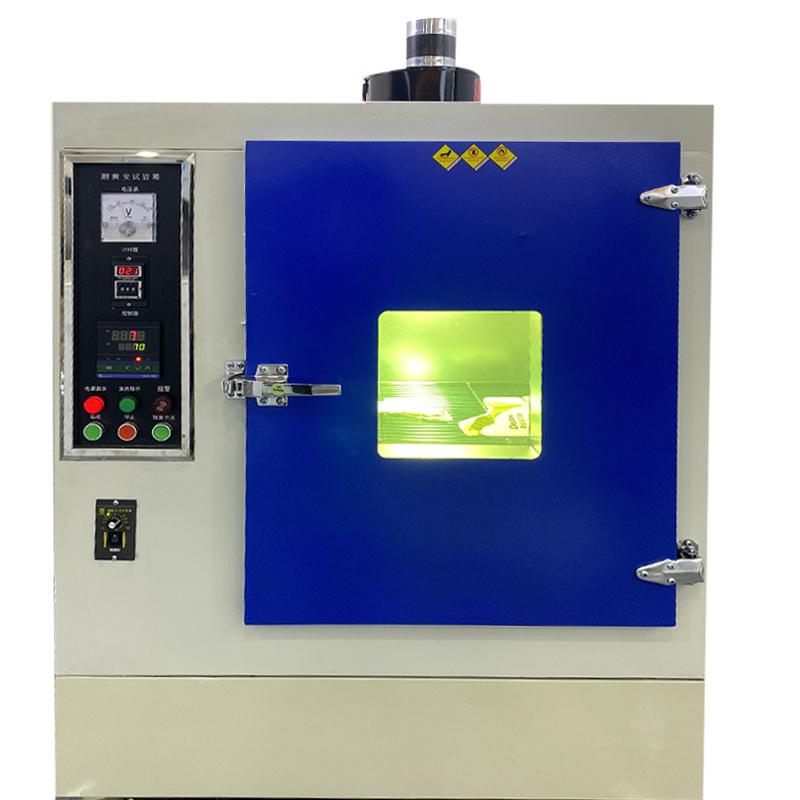
2. Scientific principle and technical realization of yellowing resistance Test Chamber
2.1 Simulation of core aging mechanism
The equipment reproduces the main chemical reaction paths that cause yellowing through the regulation of complex environmental factors:
• Photooxidation: Ultraviolet (UV) radiation breaks the molecular bonds of materials (e.g., C-C, C-H), triggering a radical chain reaction that generates conjugated chromophores (e.g., quinone-like structures). The Test Chamber mostly uses fluorescent ultraviolet lamp (UVA/UVB) or xenon lamp to accurately match the UV wavelength band (such as 340nm and 313nm peak wavelength) in natural sunlight. By controlling parameters such as the power of the light source and the irradiation time, the light intensity and cumulative irradiation amount can be adjusted, thereby controlling the speed and degree of material yellowing.
• Thermal oxidation: High temperature accelerates the movement of molecules and increases the rate of chemical reactions, making materials more prone to yellowing under the action of light and other factors. At the same time, temperature changes can also lead to changes in the internal stress of the material, affecting the stability of the material. The yellowing resistance Test Chamber is equipped with a temperature control system, which can accurately control the temperature inside the chamber. During the testing process, the appropriate temperature value can be set according to the characteristics and test requirements of different materials. The temperature control system usually adopts a combination of heating and refrigeration devices to achieve precise control of different temperature ranges, ensure uniform and stable temperature in the box, and provide a stable temperature environment for material yellowing.
• Ozone oxidation (some equipment): For rubber and other materials containing unsaturated bonds, ozone attacks double bonds to form ozone oxide, causing yellowing. Some high-end models have integrated ozone generators, which can simulate specific ozone concentration environments and further expand the test scenarios.
2.2 Analysis of key functional modules
• Illumination system: Ozone-free quartz tube UV lamp (UVA-340 simulated daylight shortwave UV) or full-spectrum xenon lamp (including UV/Vis/IR) with filters to filter out invalid wavelengths with irradiance ranges of 0.1 - 1.5W/m²@340nm to ensure consistency with standard test methods. By precisely controlling the light source type, wavelength range, and light intensity, it can simulate different lighting environments and accelerate the photooxidation process of materials.
• Temperature and humidity control: PID algorithm-driven electric heating/compressor cooling module, combined with humidity generator (optional), realizes precise regulation of temperature gradient (RT - 180°C) and relative humidity (30% - 95%RH). Parameters such as temperature control range, fluctuation, and uniformity are crucial for the accuracy of test results, and the equipment should be able to accurately control the temperature within the set temperature range to ensure the stability of the test conditions. Humidity has a relatively small impact on the yellowing of materials, but in some cases, such as high humidity environments, it may promote the hydrolysis reaction of materials and accelerate the aging and yellowing of materials, so some equipment has humidity control functions, which can further improve the comprehensiveness of testing.
• Monitoring and calibration: real-time sensor feedback light intensity, temperature/humidity data in the box, and support automatic compensation; Regular irradiance calibration of the light source ensures long-term test reliability. Through continuous monitoring and calibration, ensure that the environmental parameters within the Test Chamber are always maintained within the set range, ensuring the accuracy and repeatability of test results.
3. Professional definition and type division of yellowing resistance Test Chamber
3.1 Standard Definitions
The yellowing resistance Test Chamber is an environmental simulation test equipment, which accelerates the aging process of materials through a combination of controllable light, temperature, humidity and ozone parameters, quantitatively evaluates its yellowing resistance, and provides data support for formula optimization, life prediction and quality consistency control.
3.2 Mainstream types and applicable scenarios
Yellowing resistance Test Chambers can be divided into various types according to different testing principles and application fields. The UV yellowing resistance Test Chamber mainly simulates the influence of the ultraviolet part of the sunlight on the material, and uses fluorescent ultraviolet lamp as the light source, which is suitable for evaluating the yellowing tendency of the material under ultraviolet irradiation, especially suitable for outdoor use products or UV-sensitive material testing. The high-temperature yellowing resistance Test Chamber focuses on evaluating the yellowing of materials in high-temperature environments, and is often used to evaluate the performance of plastics, coatings, etc. under high-temperature storage or use conditions by precisely controlling high temperature and possible humidity conditions. The comprehensive environmental yellowing resistance Test Chamber combines a variety of environmental factors, such as ultraviolet rays, high temperature, humidity, and ozone, to more comprehensively simulate the complex environmental conditions that materials may encounter in actual use, providing test results closer to actual use, but the test cycle may be relatively long. In addition, according to the different types of light sources, it can also be divided into fluorescent ultraviolet yellowing resistance Test Chamber and xenon lamp yellowing resistance Test Chamber. The fluorescence UV Test Chamber uses a specific wavelength of ultraviolet fluorescent lamp, which can more accurately simulate the ultraviolet part of sunlight; Xenon Test Chambers, on the other hand, provide a more comprehensive spectrum, including ultraviolet, visible, and infrared rays, closer to the full spectral characteristics of natural sunlight. The type of yellowing chamber you choose depends on your specific testing needs and material properties.
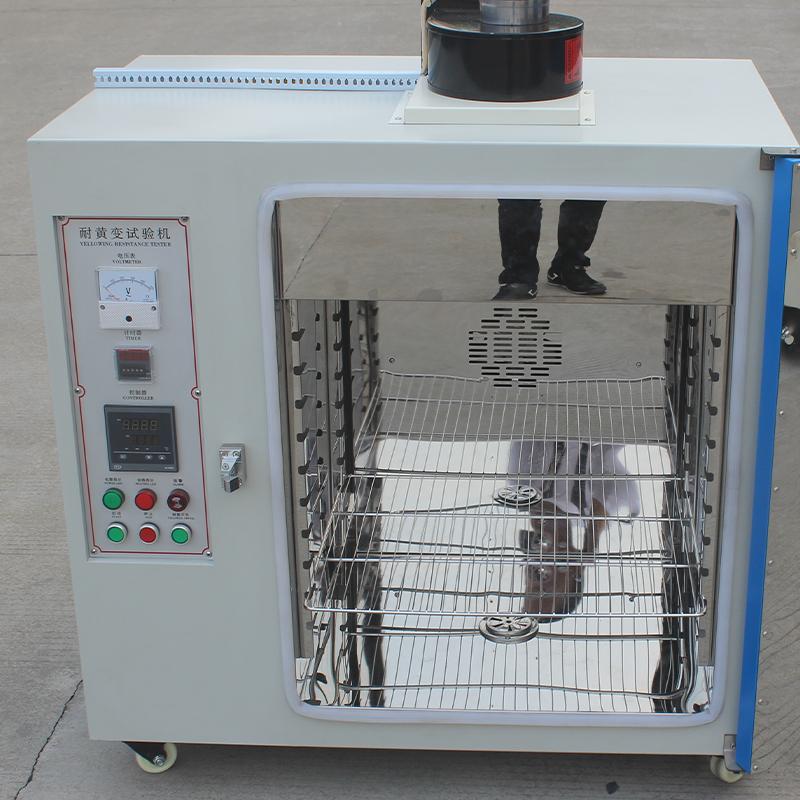
4. Scientific selection guide: the whole process from demand to implementation
4.1 Clarify the test objectives and standard basis
• Industry Specification Adaptation: Prioritize confirming test standards in target markets (e.g., ASTM D1148 Rubber Yellowing, ISO 11341 Coating Aging, GB/T 16422 Plastic Weathering) to ensure that equipment parameters (e.g., wavelength, temperature tolerance, irradiance) match exactly. Different industries and applications usually have specific testing standards or method requirements, and the selection should ensure that the Test Chamber can meet the requirements of relevant standards for light intensity, temperature range, humidity control and other parameters.
• Material property correlation: For rubber materials, the ozone function is emphasized, textiles focus on ultraviolet + humidity combination, and plastic films need to pay attention to the dimensional stability interference at high temperatures. Clarify the type of test material and the final application environment, different materials are sensitive to environmental factors, and the application environment also determines which aging factors need to be simulated.
4.2 Key points of core parameter screening
• Illumination system: light source type (UV/xenon lamp), wavelength range (UVA/UVB/UVC), irradiance uniformity (within ±10%), lifetime (≥ 1600 hours). The appropriate light source should be selected based on the test criteria and sample characteristics to ensure that its wavelength and intensity can meet the testing needs. At the same time, the stability and uniformity of light intensity are also important to avoid inconsistent yellowing of the sample due to uneven lighting.
• Temperature control performance: temperature range (conventional 50 - 150°C, special needs up to 200°C), fluctuation (≤±0.5°C), distribution uniformity (≤2°C/box volume). The equipment should be able to accurately control the temperature within the set temperature range, and the temperature fluctuation and uniformity should meet the requirements of the test standard to ensure the stability of the test conditions.
• Extended functions: humidity control (for hygroscopic materials), sample holder angle adjustment (simulating vertical/horizontal irradiation differences), gas interface (ozone/other corrosive gas injection). Depending on the testing needs, consider whether the equipment has humidity control functions and whether the sample holder is designed reasonably to ensure that the sample can be fully exposed to the test environment and receive uniform light and temperature.
4.3 Comprehensive evaluation dimensions
• Operation and maintenance: touch screen HMI, data storage/export function (CSV/Excel), automatic alarm system (over-temperature/light source failure); Ease of lamp replacement and ease of internal cleaning. The operation interface of the equipment should be simple and intuitive, easy for operators to grasp, and can easily set test parameters, start and stop the test process, and view test data. At the same time, the structure of the equipment should be reasonably designed to facilitate daily maintenance and maintenance to reduce the failure rate of the equipment and extend its service life.
• Cost-benefit ratio: initial purchase price, energy consumption index (kW·h), light source replacement frequency (affecting long-term use cost), after-sales service response speed. The price of yellowing resistance Test Chambers of different brands and specifications varies greatly, and cost-effective equipment should be selected based on the budget under the premise of meeting the testing needs. However, it should be noted that the quality and performance of the equipment cannot be ignored in the pursuit of low price, so as not to affect the test results and subsequent production quality control.
5. Application value and industry practice
In the product development stage, yellowing resistance testing can quickly screen the optimization direction of formula (such as adding ultraviolet absorbers and antioxidants); The production link is used for batch quality control to avoid large-scale failure caused by raw material fluctuations; the procurement side is used as the key basis for the evaluation of suppliers' technical capabilities. According to statistics, enterprises that adopt standardized yellowing resistance testing reduce the after-sales repair rate of products by 30%-50%, and the brand premium ability is significantly improved.
conclusion
Through scientific simulation and precise control, the yellowing resistance Test Chamber transforms the complex environmental aging process into a quantifiable and reproducible laboratory evaluation method, which is a core tool for material durability research. When selecting a model, enterprises need to closely follow the actual needs, balance the accuracy of technical parameters, standard compliance and cost-effectiveness in order to maximize the test value and escort product quality.


- 1Three test items and methods for light resistance of coating films
- 2Test method for yellowing resistance of polyurethane synthetic leather
王学川;周志军;张哲;强涛涛 - 《皮革与化工》
- 3Analysis and Discussion on Yellowing of Polyurethane Synthetic Leather
王学川;周志军;张哲;强涛涛 - 《皮革与化工》
- 4How to measure the yellowing resistance of films?
- 5How is the yellowing resistance of films determined?