Comprehensive analysis of rain Test Chambers: Definitions, multi-industry applications, and scientific selection guidelines
1. Definition and technical principle of rain Test Chamber
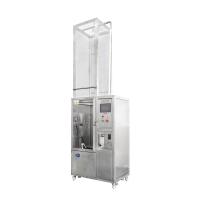
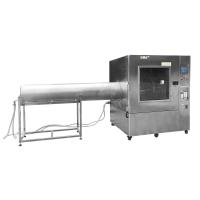
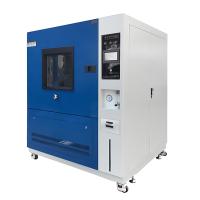
The rain Test Chamber is a professional test equipment that tests the waterproof performance of products by manually simulating the impact of water flow of different strengths, angles and temperatures. Its core function is to verify the reliability of materials or products under long-term exposure to moisture, rain, and other climatic conditions, and is a key tool for evaluating product tightness, weather resistance, and environmental adaptability.
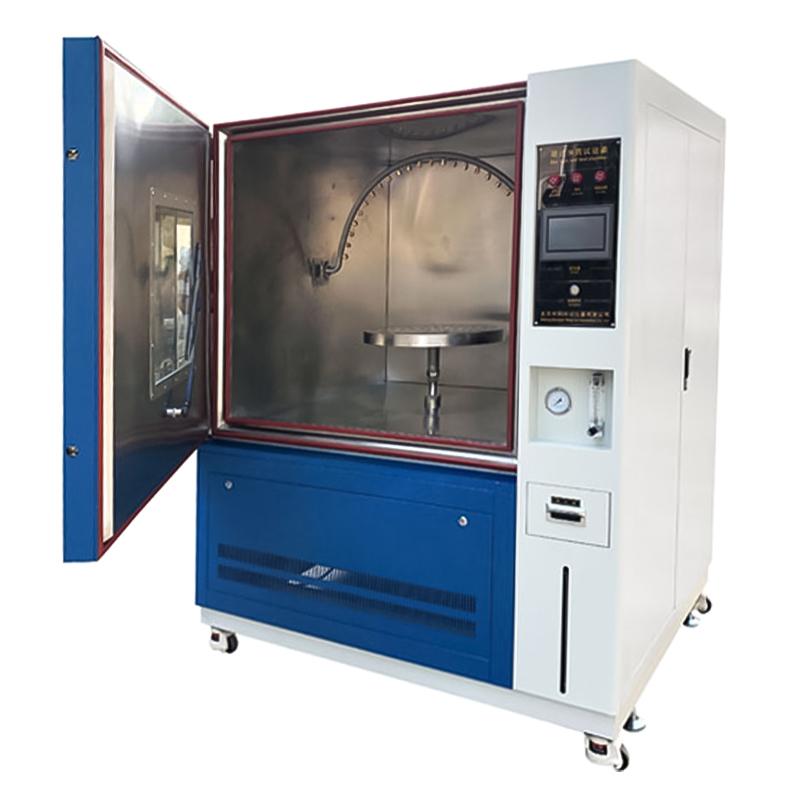
From the perspective of technical implementation, the modern rain Test Chamber adopts a sophisticated water flow control system, including pressurized water pumps, special nozzles and intelligent temperature and humidity adjustment mechanisms. Through built-in swing pipes, rotating sprinklers and other components, the equipment can flexibly adjust the angle and frequency of water flow to accurately reproduce the process of rainwater hitting the surface of the product at different speeds and directions. The high-end model also integrates a heating/cooling system, which can simulate extreme climate environments such as high temperature, high humidity or low temperature rain, further close to actual usage scenarios.
Compared with natural rainfall, the rain Test Chamber has significant test advantages: the parameters are highly controllable, and the rainfall intensity, angle and duration can be accurately set; The test efficiency is high, and the multi-condition test can be completed in a short time. The results are highly comparable, ensuring the scientific and reliable test data. These features make the rain Test Chamber an indispensable and important tool in the process of product development and quality control.
2. The core application areas of the rain Test Chamber
With its accurate environmental simulation capabilities, rain Test Chambers play an important role in a wide range of industries, from everyday consumer goods to high-precision industrial equipment.
1. Electronic and electrical industry
In the field of electronic appliances, rain Test Chambers are mainly used to verify the waterproof performance of products. Portable devices such as smartphones and tablets usually need to meet the requirements of IPX4 (splash resistance) to IPX7 (short-term immersion); while outdoor cameras, smart speakers and other products need to pass higher level tests (such as IPX5/IPX6 strong water spray). The Test Chamber can accurately simulate scenarios such as direct rainwater spray and oblique splashing, focusing on verifying the waterproof ability of the shell sealing rubber strip and interface, effectively avoiding circuit short circuits or component corrosion problems caused by water ingress.
2. Automobile manufacturing field
The automotive industry is one of the main application areas of rain Test Chambers. Key components such as lights, mirrors, door seals, and on-board electronic control units (ECUs) must pass rigorous tests from IPX3 (swing pipe rain) to IPX9 (high-pressure and high-temperature water spray). For example, headlights need to simulate rainwater impact conditions when driving at high speeds in heavy rain, and door seals need to verify the risk of deformation and water seepage after long-term rain. The modern rain Test Chamber can accurately reproduce these complex working conditions through 360° rotation of the pendulum tube and directional injection technology of the sprinkler head, ensuring the waterproof reliability of auto parts.
3. Aerospace and military industry
In the aerospace and military fields, rain Test Chambers undertake more demanding testing tasks. Special equipment such as aviation instrument cabins, satellite communication equipment, and military radars need to maintain functional stability in extreme environments intertwined with heavy rain, sand and dust, and low temperatures. The Test Chamber can be combined with advanced temperature and humidity control systems to accurately simulate heavy rainfall in high-altitude areas or freezing rain conditions in polar climates, and comprehensively test the integrity of the sealing structure of the equipment and the anti-interference ability of electronic components, providing an important guarantee for flight safety.
4. Building materials and home
Building materials such as building exterior wall coatings, roof waterproof membranes, and door and window sealant strips also need to be verified by rain testing to verify their water seepage resistance. By simulating a continuous water spraying environment (such as IPX5 water spray), the Test Chamber accurately detects whether there is microporous leakage or expansion deformation after long-term immersion on the surface of the material, providing reliable data support for the durability of construction projects. Products such as outdoor furniture and sports equipment also pass such tests to ensure their performance in various climatic conditions.
5. Outdoor lighting and communication facilities
Equipment that has been exposed to the outdoors for a long time, such as street lights, signal lights, and 5G base station shells, must meet the protection requirements of IPX4 (splash resistance) to IPX6 (strong water spray). By accurately adjusting the amount and angle of water spray, the rain Test Chamber simulates the rainwater scouring effect under different wind direction conditions, ensuring that key components such as the internal circuit and communication module of the lamp are not affected by moisture intrusion and ensuring the stable operation of outdoor facilities.
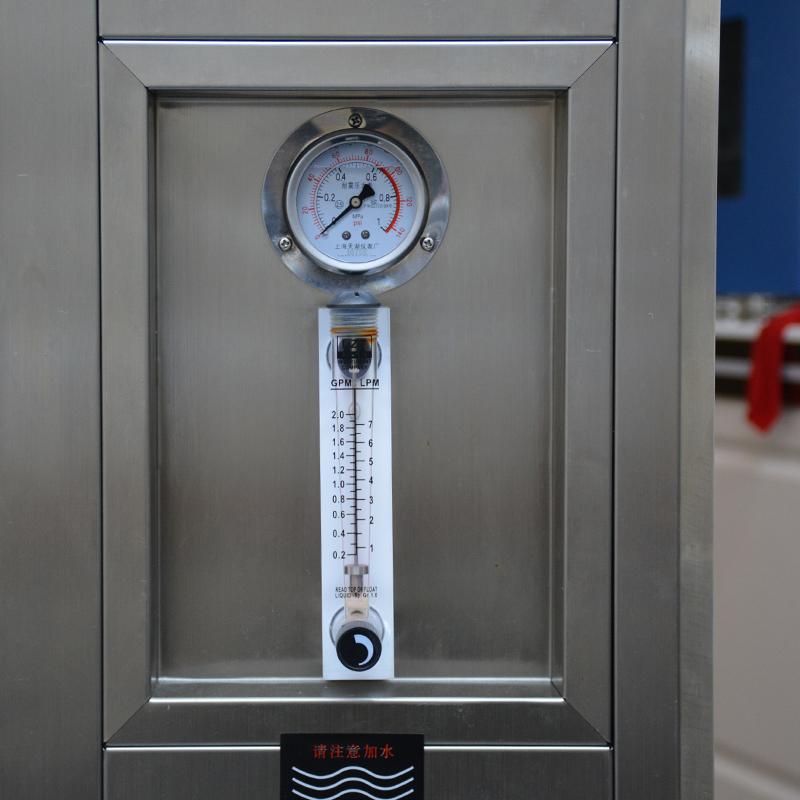
3. Scientific selection strategy of rain Test Chamber
In the face of diverse testing needs, how to choose a rain Test Chamber suitable for the actual application of enterprises? Professional selection should be comprehensively evaluated from the following key dimensions:
1. Clarify the test standards and protection levels
The primary consideration for selection is to clarify the test standards and protection level requirements of the target product. Different industries follow specific waterproof level standards, such as IPX1-IPX9 as defined by IEC 60529, national standards in GB/T 4208, etc. For example, e-watches typically pass the IPX7 (1-meter immersion for 30 minutes), while outdoor cameras may only require IPX4 (protection against splashing water in all directions). If special tests such as high-temperature and high-pressure water spray (e.g. IPX9 rating) are involved, professional models with booster pumps and high-temperature nozzles should be selected.
2. Match the product size and box volume
The effective space design of the Test Chamber should follow the basic principle of "sample volume ≤ 1/3 of the volume of the chamber". small electronic products (such as headphones, sensors) can choose desktop models with smaller studio sizes; Large automotive parts (such as engine covers, vehicle models) need to be customized with large volume boxes and ensure that the internal structure supports multi-angle placement and rotation testing to meet the testing needs of complex products.
3. Focus on the flexibility of simulated scenarios
A high-quality rain Test Chamber should have multi-mode adjustment capabilities: key parameters such as spray intensity (flow range is usually 50~100kPa), swing angle (0°~350° adjustable), and sprinkler swing frequency need to be accurately controlled through PLC or touch screen. Some advanced devices also provide quick switching functions for different test modes such as drip (IPX1/IPX2), splash (IPX3/IPX4), and water spray (IPX5/IPX6), which can adapt to the needs of full-scenario testing from light rainfall to heavy rain.
4. Evaluate the stability and durability of the equipment
The long-term stable operation of the equipment is crucial. In terms of box material selection, stainless steel liners (such as SUS304) have excellent corrosion resistance and are easy to clean, and the outer box is made of painted steel plates to effectively resist long-term humid environmental erosion. Core components (such as pumps, motors, sensors) should be selected with industrial standards to ensure continuous operation for thousands of hours without trouble; The control system needs to have perfect fault self-diagnosis functions, such as sprinkler blockage alarm, water level insufficient reminder, etc., to greatly reduce maintenance costs.
5. Comprehensive consideration of cost performance and after-sales service
Balance equipment performance with cost-effectiveness. Domestic equipment often offers significant cost advantages when meeting basic testing needs, while imported brands may perform better in precision controls such as flow accuracy ±0.1L/min). More importantly, it examines the manufacturer's technical support capabilities, including installation and commissioning guidance, operation training, spare parts supply and regular calibration services and other full life cycle service guarantees to ensure the long-term stable operation of the equipment.
epilogue
As a key link in product quality control, the value of rain Test Chambers is not only reflected in the verification of waterproof performance, but also in helping enterprises discover potential risks in advance and optimize product design through scientific simulation, so as to enhance market competitiveness. Whether it is the IP level certification of electronic products or the extreme environmental adaptability testing of auto parts, choosing a rain Test Chamber with matching parameters, reliable functions and perfect service is an important guarantee for enterprises to achieve technological upgrading and brand value-added.