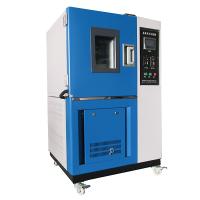
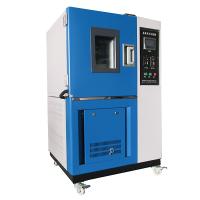
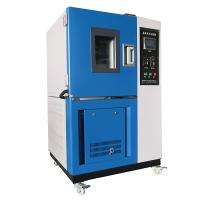
Ozone aging chamber: Definition, type, testing principle and application value
1. Definition of ozone aging chamber
An ozone aging chamber is a test equipment specifically designed to simulate the ozone environment in the atmosphere. Although the amount of ozone in the atmosphere is relatively small, it has a significant destructive effect on many materials. Ozone is highly oxidizing and can react with the chemical components in the material, leading to changes in the physical and chemical properties of the material, which in turn affects its service life and performance.
This equipment accelerates the aging process of materials in the ozone environment by accurately controlling environmental parameters such as ozone concentration, temperature, and humidity, so as to simulate the aging of materials in the long-term natural environment in a short period of time. In this way, researchers can quickly evaluate the ozone aging resistance of materials in the laboratory, providing strong support for material selection, improvement, and product quality control. Ozone aging chambers are widely used in the rubber industry, plastics industry, automotive industry, electronic and electrical appliances, and are indispensable and important tools for material science research and quality inspection.
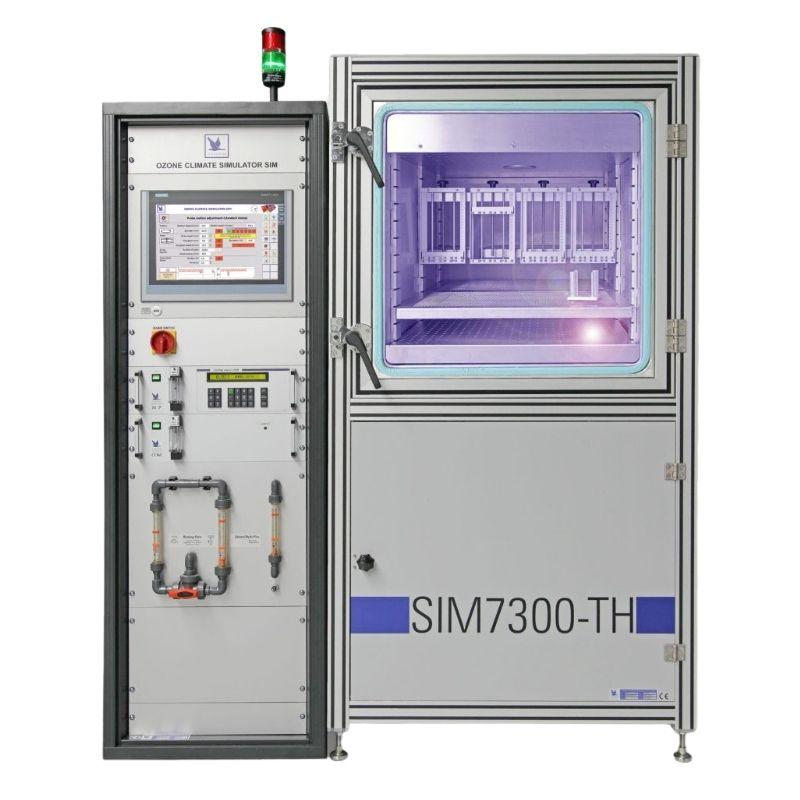
2. Types of ozone aging chambers
Ozone aging chambers are mainly divided into various types, and there are certain differences in testing principles and application scenarios between different types, and the common classification methods include according to the test method, according to the ozone generation method, according to the box structure and according to the test standard.
(1) Divided by test method
1. Static Test Chamber
Static Test Chamber is to put the sample into the Test Chamber in a stretched state for testing. In this test method, the sample remains in a fixed stretching state during the test without additional dynamic stretching operations. It is primarily used to evaluate the aging resistance of materials under specific ozone concentration, temperature, and humidity conditions under static tensile conditions. This test method can simulate the static stress conditions that materials may be subjected to in actual use, such as some rubber seals that have been in a fixed tensile state for a long time. Through the test of the static Test Chamber, the ozone aging characteristics of materials in static environment can be understood, which provides a basis for the preliminary screening and performance evaluation of materials.
2. Dynamic Test Chamber
The dynamic Test Chamber is to place the sample on the fixture of the Test Chamber and test the sample while stretching it during the test process. It can more realistically simulate the dynamic stress of materials in actual use, such as the aging of rubber products under dynamic loads such as repeated stretching and compression. During the dynamic test, the sample continuously undergoes a process of stretching and recovery in the ozone environment, which allows the ozone to react more fully with the chemical composition inside the material, so as to more accurately evaluate the ozone aging resistance of the material in the actual dynamic use environment. Dynamic Test Chambers are of great significance for studying the dynamic aging behavior of materials, optimizing material formulations, and improving the service life of products.
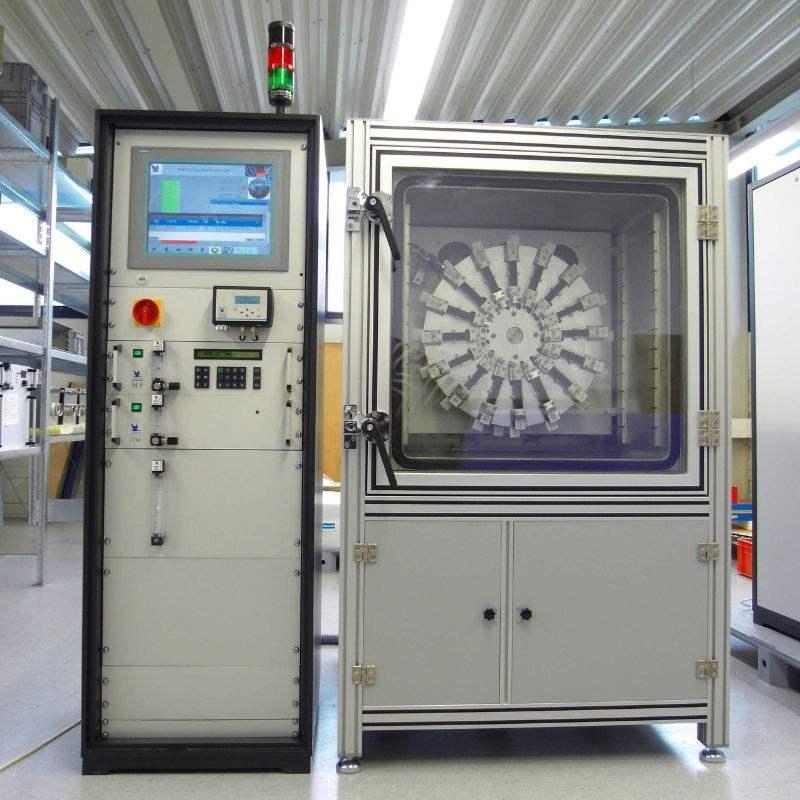
(2) Divided by ozone generation mode
1. UV lamp type ozone aging chamber
The UV lamp ozone aging chamber uses ultraviolet lamps to irradiate the air to produce ozone, and its principle is similar to the formation process of ozone in nature. This type of equipment has a relatively low ozone yield and a narrow concentration control range, making it suitable for some test scenarios where ozone concentration is not required. At the same time, UV lamps have a limited lifespan and need to be replaced regularly, resulting in relatively high maintenance costs.
2. Silent discharge ozone aging chamber
The silent discharge ozone aging chamber generates ozone by applying high-frequency and high-voltage electricity between two electrodes to cause silent discharge of the air between the electrodes. This method produces a high ozone concentration and a wide range of concentration adjustments, which can meet the testing needs of most materials. In addition, the silent discharge ozone aging chamber has good operational stability, and the ozone yield is not significantly affected by factors such as ambient temperature and humidity, so it has been widely used in the field of industrial testing and scientific research. However, this equipment has high requirements for electrode materials and insulation materials, and the manufacturing cost is relatively high.
(3) Divided by box structure
1. Single-box ozone aging chamber
The single-box ozone aging chamber has a simple structure and small footprint, making it suitable for small businesses or laboratories to test small samples. Its control system is relatively simple, easy to operate, and low cost.
2. Multi-box ozone aging chamber
The multi-box ozone aging chamber consists of multiple independent Test Chambers, each of which can independently control ozone concentration, temperature, humidity and other parameters, and can perform aging tests under different conditions at the same time. This type of equipment is suitable for large enterprises or scientific research institutions, especially in scenarios that require a large number of comparative experiments, although it has a large footprint and high cost, but the testing efficiency is greatly improved.
(4) According to test standards
Ozone aging chambers can be divided into equipment that meets international standards (such as ISO standards), national standards (such as GB standards) and industry standards. Different testing standards have specific regulations on the performance parameters and testing processes of equipment, so equipment needs to strictly follow the corresponding standard requirements when designing and manufacturing. For example, ozone aging chambers that comply with the GB/T 7762 - 2014 standard must meet the specific numerical requirements of the standard in terms of ozone concentration control accuracy and temperature uniformity to ensure the accuracy of test results.
3. Test principle of ozone aging chamber
The test principle of ozone aging chamber is based on the strong oxidation of ozone and its mechanism of action on materials, and accelerates the aging process of materials by simulating and strengthening ozone conditions in the atmosphere, including the following aspects:
(1) Ozone generation and control
Ozone aging chambers produce ozone through an ozone generator. Common ways of ozone generation include corona discharge, which uses a high-voltage electric field to decompose oxygen molecules (O₂) in the air into oxygen atoms (O), which then combine with oxygen molecules to form ozone (O₃). In the Test Chamber, the ozone gas produced by the ozone generator is mixed with the treated air in the exchanger to form a gas mixture containing a specific concentration of ozone.
To ensure the accuracy and repeatability of the test, the ozone aging chamber is equipped with a precise ozone concentration control system. The system monitors the ozone concentration in the Test Chamber in real time through ultraviolet Detectors and other equipment, and feeds back the monitoring data to the control system. The control system automatically adjusts the output of the ozone generator according to the set ozone concentration value, so as to maintain the stability of the ozone concentration in the Test Chamber. This precise ozone concentration control simulates ozone levels under different environmental conditions, catering to various material testing needs.
(2) Simulation of temperature and humidity
In addition to ozone concentration, temperature and humidity are also important environmental factors affecting the ozone aging properties of materials. The ozone aging chamber accurately simulates the temperature and humidity environment of materials in actual use through temperature control systems and humidity control systems.
The temperature control system consists of temperature controllers, heating elements, sensors, etc. The temperature controller controls the operation of the heating element according to the set temperature value, so that the temperature in the Test Chamber is kept within the specified range. The sensor monitors the temperature inside the chamber in real time and feeds back the temperature data to the temperature controller for precise temperature control. Suitable temperature conditions can affect the activity of ozone and the activity of material molecules, thereby accelerating or slowing down the aging process of the material.
Humidity control systems include humidifiers, dehumidifiers, and other equipment. The humidifier increases the humidity in the chamber by injecting water vapor into the chamber; The dehumidifier is used to reduce the humidity in the box. The humidity control system precisely adjusts the humidity level in the box according to the set humidity value to meet the testing requirements of different materials in different humidity environments. Humidity has an important impact on the ozone aging properties of materials, for example, in high humidity environments, materials may be more susceptible to ozone attack, thereby accelerating the aging process.
(3) Aging process and evaluation of materials
In an ozone aging chamber, samples are placed under specific environmental conditions and subjected to the combined effects of ozone, temperature, and humidity. Ozone will undergo chemical reactions such as electrophilic addition reactions with chemical components in materials, especially active sites such as double bonds on the backbone chain of materials such as rubber. These reactions can alter the molecular structure of the material, leading to changes in the physical properties of the material, such as reduced elasticity, increased hardness, and cracks on the surface.
As the test progresses, the material ages. The ozone aging resistance of the material is evaluated through the performance testing of the sample at different test time points, such as appearance observation (checking whether the surface has cracks, discoloration, etc.), physical property testing (measuring tensile strength, elongation at break, hardness and other indicators), and chemical property analysis. According to the test results, the service life and performance changes of materials in a specific ozone environment can be determined, providing a scientific basis for the improvement and application of materials.
In addition, in order to improve the reliability and repeatability of test results, ozone aging chambers are usually equipped with comprehensive control and monitoring systems. The control system can accurately adjust parameters such as ozone concentration, temperature, humidity, airflow velocity, etc., and keep these parameters running stably within the set range; The monitoring system can monitor various parameters in the Test Chamber in real time, and once the parameters deviate from the set value, it will issue a timely alarm and automatically adjust it.
4. The application value of ozone aging chambers
The application of ozone aging chambers in the materials industry has important practical value. In the product development stage, researchers can use ozone aging boxes to test the ozone aging resistance of new materials, and improve the aging resistance of materials by adjusting the formula and production process of materials, thereby extending the service life of products.
In terms of product quality testing, ozone aging chambers can conduct sampling tests on products before leaving the factory to ensure that products meet relevant quality standards and usage requirements. For rubber products and other products that are easily affected by ozone aging, the ozone aging test can detect the quality problems of the products in a timely manner, avoid the flow of unqualified products into the market, and protect the rights and interests of consumers.
In the field of scientific research, ozone aging chambers provide important experimental means for studying the aging mechanism of materials. By testing materials under different ozone concentrations, temperatures, humidity and other conditions, researchers can deeply study the reaction law between ozone and materials, explore the internal mechanism of material aging, and provide a theoretical basis for the development of new aging resistant materials.
-
![CHINA NBC-CY150L Ozone Aging Test Chamber 150L]()
-
![HZAOC QL-500 Ozone Conditioning Test Chamber]() HZAOC QL-500 Ozone Conditioning Test Chamber$ 12742.00
HZAOC QL-500 Ozone Conditioning Test Chamber$ 12742.00 -
![HZAOC QL-150 Ozone Conditioning Test Chamber]() HZAOC QL-150 Ozone Conditioning Test Chamber$ 10753.00
HZAOC QL-150 Ozone Conditioning Test Chamber$ 10753.00 -
![HZAOC QL-100 Ozone Conditioning Test Chamber]() HZAOC QL-100 Ozone Conditioning Test Chamber$ 10330.00
HZAOC QL-100 Ozone Conditioning Test Chamber$ 10330.00 -
![ZKHS QL-010 Ozone Aging Test Chamber ozone aging machine]()
-
![ZKHS QL-500 Ozone Aging Test Chamber Ozone Aging Test Chamber]()
-
![ZKHS QL-225 Ozone Aging Test Chamber Ozone Aging Test Chamber]()
-
![ZKHS QL-150 Ozone Aging Test Chamber Ozone Aging Test Chamber]()
-
![ZKHS QL-100 Ozone Aging Test Chamber aging test for resistance to sunlight and artificial Light sources]()