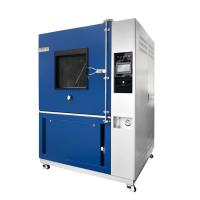
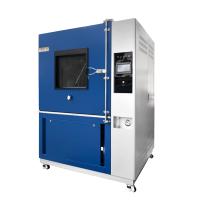
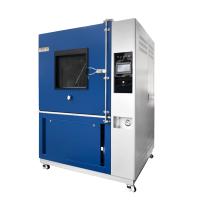
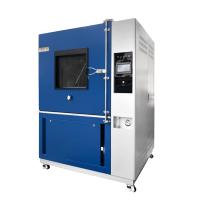
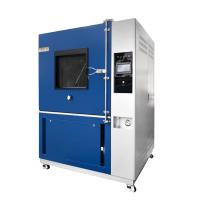
Dust Test Chamber core parameters and selection skills, covering multi-industry applications
1. Definition and working principle of sand and dust Test Chamber
The dust Test Chamber is an environmental test equipment that simulates the natural dust environment, which tests the dust-proof performance, sealing reliability and wear resistance of the product by artificially creating dusty airflow and accurately controlling parameters such as sand and dust concentration and wind speed. Its core function is to restore the physical characteristics of dusty environments such as deserts, Gobi, and arid areas, evaluate the performance changes of products after long-term exposure to sand and dust environments, and provide a scientific basis for product design improvement and quality control.
From the perspective of working principle, the sand and dust Test Chamber is mainly composed of the Test Chamber, the sand and dust circulation system, the airflow control system, the temperature control system and the intelligent control system. The Test Chamber is a confined space for placing the samples to be tested; The sand and dust circulation system lifts and evenly distributes the sand and dust of a specific particle size through fans and pipes in the cabin, forming a stable sand and dust environment. The airflow control system can accurately adjust the wind speed and airflow direction to simulate the influence of natural wind on the diffusion of sand and dust; The temperature control system can maintain the temperature stability in the cabin according to the test standard to avoid temperature fluctuations interfering with the test results. The intelligent control system realizes automatic operation and data recording through program setting parameters, and some high-end models also support remote monitoring and data export functions.
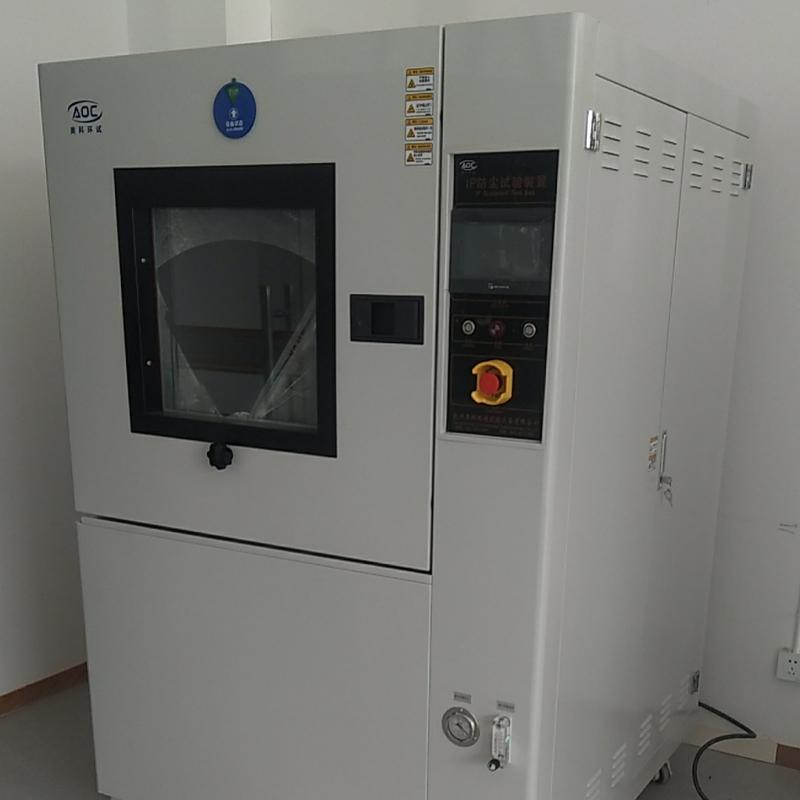
2. Core technical parameters and industry standards of sand and dust Test Chambers
The performance of the sand and dust Test Chamber directly depends on the accuracy and coverage of its technical parameters. The following is a detailed description of the core parameters:
1. Basic environment parameters
• Temperature range: Conventional equipment supports room temperature up to 60°C (some high-end models can be expanded to -10°C to 80°C) for simulating high-temperature sand and dust (such as desert noon) or low-temperature sand and dust (e.g. plateau winter) compound working conditions.
• Humidity control: Some tests need to be combined with humidity adjustment (such as simulating a wet and dusty environment), and the equipment needs to have humidity adjustment function (usually in the range of 30%-90%RH, high-end models can reach 30%-95%RH).
• Dust type: standard tests commonly use dry talcum powder (particle size ≤75μm), silicate cement or flue ash, special needs can be customized quartz sand, metal powder, etc.
2. Sand and dust parameter control ability
• Sand and dust concentration: usually 2kg/m³ to 4kg/m³ (corresponding to the standard GB/T2423.37 La2 method), some equipment supports a wide range of adjustment from 1kg/m³ to 5kg/m³ to simulate the intensity of light dust to sandstorms.
• Sand and dust particle size: The corresponding particle size of the test dust (such as talc, quartz sand) should be selected according to the standard, and the equipment should be equipped with a screen or grading device to ensure that the sand and dust particle size is uniform (usually ≤ 75μm, and finer or coarser particle size can be customized for special scenarios).
• Circulation mode: divided into two modes: "sand blowing" (high-speed airflow impacting sample) and "dust reduction" (natural settling simulated dust accumulation), and some equipment supports two modes switching or compound cycles.
3. Uniformity of wind speed and airflow
Wind speeds typically range from 0.1 m/s to 10 m/s (up to 18 m/s for high-end models), with low wind speeds used to test the effects of static sedimentary dust and high wind speeds simulating impact conditions with strong winds carrying sand and dust. High-quality equipment ensures a 10% deviation of wind speed in the cabin by optimizing the design of air ducts (such as multi-directional air outlets ≤±and deflectors), and some models are equipped with airflow monitoring sensors to display wind speed data in different areas in real time.
4. Temperature control and expansion function
The temperature adjustment accuracy is usually ±1°C, and some special scenarios need to support higher temperatures (such as above 100°C). Extended functions include the addition of a vibration device (simulating the impact of sand and dust particles), salt spray composite test (testing the synergistic effect of sand and corrosion), and a sample monitoring interface (real-time performance data collection).
The sand and dust Test Chamber must strictly comply with a number of international and national standards, including but not limited to: GB/T2423.37-2006 (sand and dust test method for electrical and electronic products), GB4208-2017/IEC60529 (IP code of enclosure protection level), ISO20653 (road vehicle protection level), MIL-STD-810G/H (US military standard environmental test method), SAE J575 (sand and dust test of auto parts), etc.
3. Scientific selection guidelines for sand and dust Test Chambers
In the face of sand and dust Test Chamber products with different functions on the market, users need to comprehensively evaluate the applicability of the equipment from the following dimensions according to the actual testing needs:
1. Clarify the match between the test objectives and the standard
First, it is necessary to determine the protection level of the product to be tested (such as IP5X/IP6X) and the corresponding test standard (such as GB/T2423.37 for electrical and electronic ISO20653 for auto parts). If the product needs to pass a specific certification (such as CE, UL or military standard), it is essential to select a Test Chamber model that meets the requirements of the standard to ensure that the parameters (such as concentration, wind speed, particle size) fully cover the standard requirements.
2. Match product size and test space
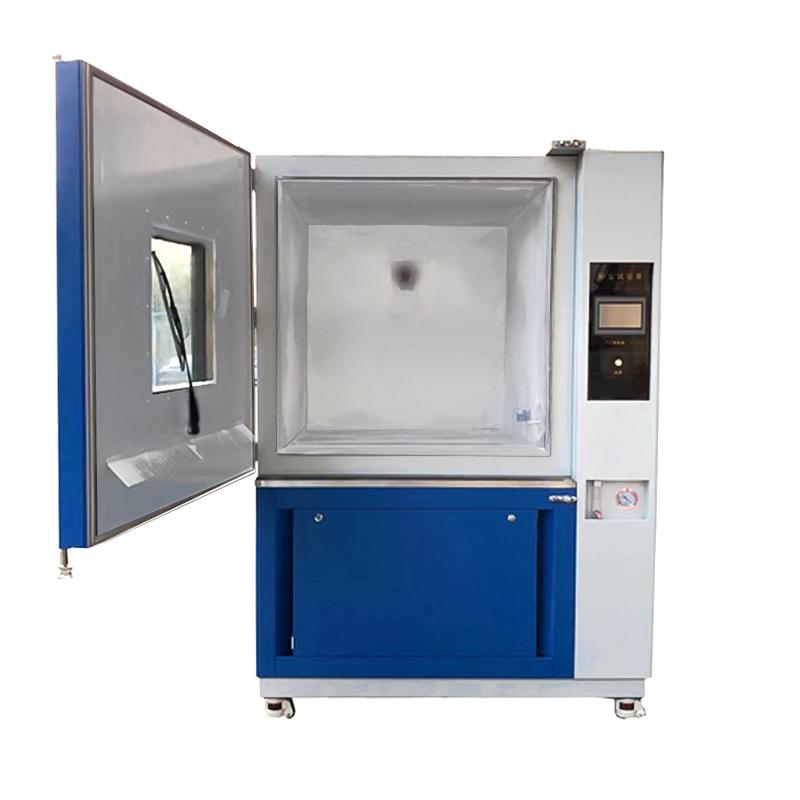
Choose a Test Chamber with the appropriate size of the inner box according to the maximum outline size of the sample to be tested. Conventional chamber chamber sizes range from small (800×800×800mm) to large (1500×1500×2000mm), and it is necessary to ensure that there is still enough space to achieve even sand and dust distribution after sample installation. The volume integral of the cabin is small (50-100L), medium (100-500L) and large (more than 500L), and the super-large Test Chamber can be customized for special needs.
3. Pay attention to the adjustable range of core parameters
• Desert environment testing: Preferential selection of models with high sand and dust concentration (more than 4kg/m³), high wind speed (5m/s to 10m/s), and high temperature (60°C and above).
• Precision electronic components: focus on dust particle size control accuracy (≤75μm) and low wind speed mode (to avoid physical impact damage).
• Temperature and humidity combined environment: Choose equipment with temperature and humidity coordination function (temperature range -10°C to 80°C, humidity 30%-90%RH).
4. Evaluate the scalability and intelligence level of the equipment
Priority is given to equipment that supports functional expansion (such as adding vibration and salt spray composite tests), and is equipped with touch screen controllers and automatic data recording functions to improve test efficiency and result traceability. In terms of safety, it is necessary to confirm that it has basic configurations such as door opening protection, overload protection, and leakage protection.
5. Material and maintenance costs
It is recommended to use high-quality cold-rolled steel plate (sprayed plastic and anti-rust) for the box shell, and the inner liner is made of corrosion-resistant stainless steel (such as SUS304); The air duct material of the dust circulation system should be stainless steel or wear-resistant composite materials; Pay attention to the convenience of dust recovery devices (such as quick dust replacement, filter leakage prevention design) and reduce long-term maintenance costs (such as fan wear, filter replacement frequency).
4. Application scenarios of sand and dust Test Chambers
The application of sand and dust Test Chambers runs through the whole process of product research and development, production quality inspection, certification and testing, typical industry cases include:
• Automotive industry: Test the dustproof performance of lights, engine intake systems, and on-board electronic equipment to verify the reliability of sealing structures.
• Electronic and electrical appliances: Smartphones, outdoor sensors, photovoltaic inverters and other products are tested to prevent sand and dust from clogging heat dissipation holes or eroding circuits.
• Aerospace: Aircraft engines and satellite components simulate sand blowing conditions during takeoff at desert airports to assess wear resistance.
• Medical devices: outdoor first aid equipment, portable monitoring instruments are tested, and IP6X and other high-level dust protection are verified.
5. Common misunderstandings and precautions in selection
The following misunderstandings should be avoided when selecting enterprises:
1. Blind pursuit of parameter extremes: Parameters that exceed the requirements of the test standard (e.g., 200°C high temperature, 50g/m³ sand and dust concentration) will increase costs and reduce the accuracy of core parameters.
2. Neglecting maintenance costs: The sand blowing mode can easily lead to fan wear and screen blockage, so it is necessary to understand the life of wearing parts and replacement costs in advance.
3. Ignore after-sales service: Choose suppliers with on-site installation, calibration qualifications, and complete quality assurance systems to ensure long-term and stable operation of equipment.
4. Scalability is not considered: Modular design equipment can adapt to future test standard upgrades or changes in product requirements.
summary
As the core equipment of environmental reliability testing, the sand and dust Test Chamber provides key data support for the dustproof design and performance verification of the product by accurately simulating the sand and dust environment. Scientific selection should closely follow the test standards, product characteristics and actual working conditions, and comprehensively consider factors such as technical parameters, functional scalability, safety and maintenance costs. Whether it is in the field of electronics and electrical, automotive industry or aerospace, the appropriate sand and dust Test Chamber will help enterprises improve product quality and enhance market competitiveness.
-
![ZKHS SC-020 Sand dust Test Chamber Dust Test Chamber]()
-
![ZKHS SC-015 Sand dust Test Chamber Dust Test Chamber]()
-
![ZKHS SC-010 Sand dust testing chamber]() ZKHS SC-010 Sand dust testing chamber$ 8388.00
ZKHS SC-010 Sand dust testing chamber$ 8388.00 -
![ZKHS SC-800 sand dust Test Chamber aeolian sand climate Test Chamber]()
-
![ZKHS SC-500 Sand dust Test Chamber Dust Environmental Test Chamber]()
-
![HZAOC SC-020 Dust Test Chamber Dust Test Chamber IP5XIP6X protection class test]()
-
![HZAOC SC-015 Dust Test Chamber Dust Test Chamber IP5XIP6X protection class]()
-
![HZAOC SC-010 Dust Test Chamber Dust Test Chamber IP5XIP6X Protection level test]()
-
![HZAOC SC-800 Dust Test Chamber Sand dust Test Chamber IP5XIP6X Protection level test]()