How to choose SO2 corrosion Test Chamber? Principle parameters and application analysis
1. Definition and core value of sulfur dioxide corrosion Test Chamber
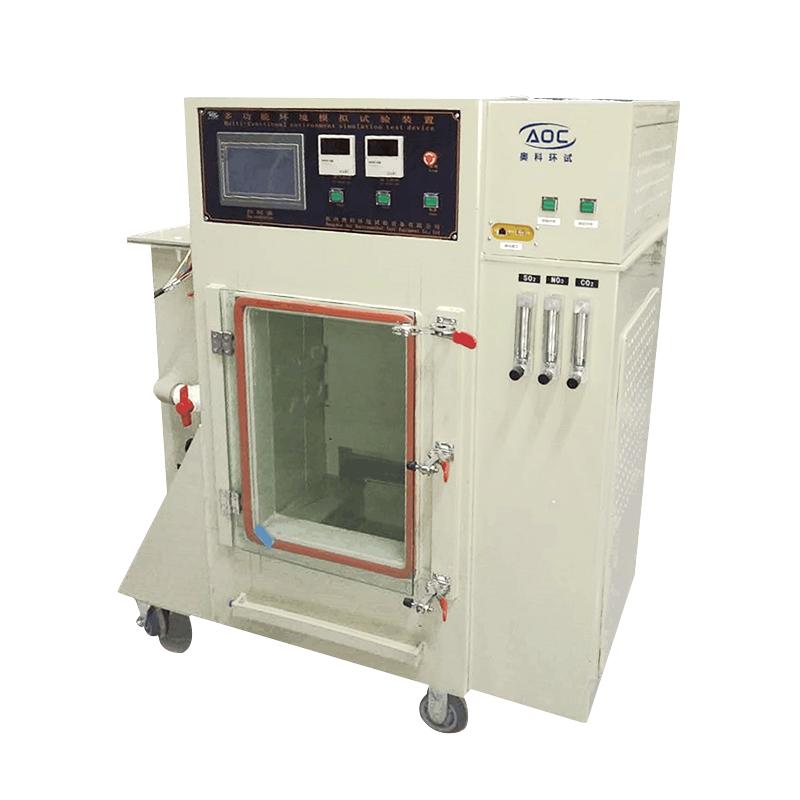
Sulfur dioxide corrosion Test Chamber is a specialized equipment for accelerated corrosion testing of materials, coatings or electronic components by simulating the corrosive environment of sulfur-containing gases (mainly SO₂). Its core value is to quickly reproduce the long-term corrosion process of materials in industrial pollution areas, around coal-fired power plants or in high-humidity acidic atmospheres through controllable experimental conditions, so as to efficiently evaluate the corrosion resistance, effectiveness of protective coatings and environmental adaptability of target objects.
In the industrial sector, sulfur-containing gases (e.g., sulfur dioxide, hydrogen sulfide) are one of the main causes of metal corrosion, coating failure, and degradation of electronic components. Especially in chemical, power, automobile, construction and other industries, long-term exposure of materials to sulfur-containing environments may cause problems such as reduced structural strength, appearance deterioration or functional failure. By accurately controlling SO₂ concentration, temperature and humidity, and gas cycle parameters, this Test Chamber provides efficient and controllable testing methods for product development, quality control, and standard compliance verification, making it a key tool for material durability evaluation.
2. The test principle of sulfur dioxide corrosion Test Chamber: multi-factor synergy accelerates corrosion
The test principle of this Test Chamber is based on the dual mechanism of "environmental simulation + accelerated corrosion", which simulates the corrosion process in the real environment and significantly shortens the test cycle by precisely regulating SO₂ gas, temperature and humidity and airflow conditions. Its core principles can be divided into the following key links:
(1) Precise control of environmental parameters
The Test Chamber needs to accurately control core parameters such as sulfur dioxide concentration, temperature, relative humidity and test time. The sulfur dioxide concentration range is usually 0.1ppm~10000ppm (or 0.2%~0.5% volume ratio), which is stable and maintained by high-precision gas delivery systems (cylinder method or chemical reaction method), and the concentration fluctuates ≤±5%. The temperature control range is generally 15°C~60°C (accuracy ±0.5°C), and the relative humidity can reach 30%~98%RH (accuracy ±2%). High temperature and high humidity environment will accelerate the reaction of SO₂ with water to form corrosive substances such as sulfurous acid, enhancing the corrosion effect. The test time is set according to the material properties and can range from a few hours to several weeks.
(2) Corrosion reaction mechanism
When materials are placed in a specific environment, complex chemical and electrochemical reactions occur. SO₂ first combines with water vapor to form sulfurous acid (H₂SO₃), which is further oxidized to sulfuric acid (H₂SO₄). These acids can damage the material's passivation film or protective coating: for metallic materials, it can lead to electrochemical corrosion (anode metal dissolution, cathode hydrogen ion reduction), forming rust products; For coatings or non-metallic materials, it causes swelling, peeling, or aging degradation.
(3) Corrosion acceleration mechanism
The Test Chamber significantly shortens the natural corrosion cycle through multi-factor synergy:
1. Electrochemical corrosion: The acidic environment promotes the reaction of primary cells on the metal surface and accelerates the formation of rust;
2. Chemical attack: sulfurous acid dissolves the protective oxide layer, exposing the substrate;
3. Coating failure: SO₂ penetrates into the coating/substrate interface to cause swelling and cracking;
4. Cyclic stress: Some equipment supports alternating temperature and humidity cycles, which aggravates the attenuation of the bonding force between the coating and the substrate.
(4) Gas circulation and environmental protection treatment
It is equipped with a forced airflow circulation system (3~10 times per hour) to ensure uniform corrosion conditions, and the exhaust gas is neutralized and discharged after treatment through activated carbon + lye filtration device, which meets environmental protection requirements.
(5) Standardized evaluation process
The test must strictly follow international or national standards (such as ISO 9227, GB/T 2423.33, etc.), and evaluate the corrosion resistance of materials through multiple dimensions such as appearance changes, weight changes, mechanical property tests and microstructure analysis.
3. Guidelines for scientific selection of sulfur dioxide corrosion Test Chambers
The selection of adapted equipment requires a combination of the following key factors:
(1) Clarify the testing requirements and standard requirements
First, determine the type and size of the test sample (affecting the selection of box volume), the range of test parameters (SO₂ concentration, temperature and humidity, etc.) and the test standards to be followed (such as ISO, ASTM, GB, etc.). The parameters required vary significantly across different application scenarios: electronic component testing may focus on long-term stability at low SO₂ concentrations, while metal material protective layer testing may require high concentrations (1000~10000ppm) and long-term exposure (72~168 hours).
(2) Core performance parameter matching
1. Gas concentration control: Preferentially choose equipment that supports 0.1~10000ppm continuously adjustable and fluctuates ≤± 5%;
2. Temperature and humidity accuracy: temperature fluctuation ± within 0.5°C, humidity fluctuation within ± 3% to ensure environmental uniformity;
3. Box material: The inner liner is made of 316L stainless steel or corrosion-resistant PVC, and the box door has excellent sealing performance;
4. Safety protection: Necessary gas leakage alarm, over-temperature protection and emergency shutdown function.
(3) Equipment structure and ease of operation
• Convenient observation: transparent corrosion-resistant box lid design;
• Sample adaptability: flexible and adjustable sample holder design;
• Maintenance-friendly: easy-to-clean structure and accessibility of key components.
(4) Intelligence and cost performance
Prefer devices equipped with touch screen operation interfaces, data logging functions, and remote monitoring capabilities. Balance performance requirements according to the budget, and prioritize the reliability of core parameters such as concentration control accuracy, temperature and humidity stability.
epilogue
The sulfur dioxide corrosion Test Chamber provides key data support for the evaluation of material corrosion resistance through scientific environmental simulation and accelerated corrosion mechanism. The selection of the test should closely focus on the test purpose, standard requirements and sample characteristics, and comprehensively consider factors such as performance parameters, equipment structure and safety protection to ensure the accuracy and reliability of the test results. Whether it is industrial product research and development or quality control, reasonable selection and correct use of this equipment are important guarantees for improving product environmental adaptability and extending service life.
-
![HZAOC LSO2-100 SO2 corrosion Test Chamber]() HZAOC LSO2-100 SO2 corrosion Test Chamber$ 15010.00
HZAOC LSO2-100 SO2 corrosion Test Chamber$ 15010.00 -
![HZAOC SO2-300 SO2 corrosion Test Chamber]() HZAOC SO2-300 SO2 corrosion Test Chamber$ 15243.00
HZAOC SO2-300 SO2 corrosion Test Chamber$ 15243.00 -
![HZAOC SO2-250 SO2 corrosion Test Chamber]() HZAOC SO2-250 SO2 corrosion Test Chamber$ 15243.00
HZAOC SO2-250 SO2 corrosion Test Chamber$ 15243.00

-
![HZAOC LSO2-100 SO2 corrosion Test Chamber]() HZAOC LSO2-100 SO2 corrosion Test Chamber$ 15010.00
HZAOC LSO2-100 SO2 corrosion Test Chamber$ 15010.00 -
![HZAOC SO2-300 SO2 corrosion Test Chamber]() HZAOC SO2-300 SO2 corrosion Test Chamber$ 15243.00
HZAOC SO2-300 SO2 corrosion Test Chamber$ 15243.00 -
![HZAOC SO2-250 SO2 corrosion Test Chamber]() HZAOC SO2-250 SO2 corrosion Test Chamber$ 15243.00
HZAOC SO2-250 SO2 corrosion Test Chamber$ 15243.00