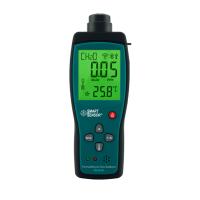
Formaldehyde Detector purchase guide: from test principle to accuracy calibrated full analysis
1. What is a formaldehyde Detector?
The formaldehyde Detector is a professional equipment used to quickly and accurately determine the concentration of formaldehyde (CH₂O) in the air, and converts formaldehyde molecules into quantifiable values through specific technologies to help users judge whether the indoor air quality is up to standard. Its core features include:
• Accurate detection: Convert formaldehyde concentrations into mg/m³ or ppm units using chemical reactions or physical signal conversion principles.
• Various types: Covering portable (home daily testing), fixed (laboratory/factory continuous monitoring) and other forms, some high-end models can simultaneously monitor environmental parameters such as temperature and humidity.
As a key tool for indoor air pollution prevention and control, it is widely used in newly renovated houses, furniture pollutant monitoring, and industrial environmental safety assessment.
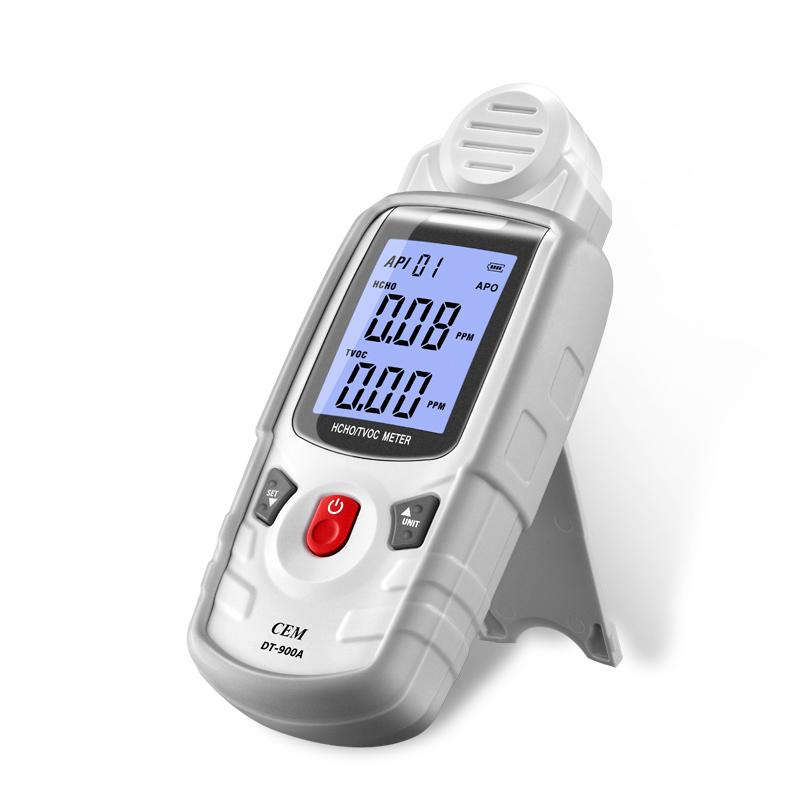
2. The core testing principle of formaldehyde Detector
(1) Electrochemical sensing method: the preferred scheme for real-time monitoring
Principle: Formaldehyde molecules undergo redox reaction with the surface of the sensor electrode, generating a weak current signal directly proportional to the concentration, which is converted into a digital display after being processed by the amplification circuit.
Advantage:
• Fast response: Results are produced within seconds to tens of seconds, suitable for instant detection in home, office, and other scenarios.
• Low power consumption: small size, long battery life (usually ≥ 5 days), easy to carry.
Confined:
• It is susceptible to temperature and humidity (>30°C/>80%RH) interference and needs to be compensated with algorithms.
• Sensitive to volatile organic compounds (VOCs) such as alcohol and perfumes, which may cause cross-error.
(2) Spectrophotometry: laboratory-level precision benchmark
Principle: Formaldehyde reacts with phenol reagents to form zine compounds, which are oxidized to blue-green complexes by high iron ions under acidic conditions, and the concentration is calculated by measuring the absorbance at a specific wavelength (about 630nm).
Advantage:
• High accuracy: the resolution reaches 0.01mg/m³, and the error is ≤±5%, which meets the requirements of the national standard GB/T 18204.2-2014.
• Strong anti-interference: only reacts specifically to formaldehyde and is not affected by other gases.
Confined:
• Complex operation: Waiting for reagent reaction (15-30 minutes) is required, and real-time monitoring is not possible.
• Poor portability: Relies on professional equipment, not suitable for rapid on-site testing.
(3) Multi-technology composite testing: a breakthrough in comprehensive performance
Principle: Combine electrochemical sensor (main formaldehyde measurement) and infrared/catalytic combustion sensor (auxiliary measurement TVOC, carbon dioxide), combined with algorithm to eliminate cross-interference, and some models integrate temperature and humidity compensation function.
Advantage:
• Comprehensive data: Provide formaldehyde and various pollutant concentrations to generate comprehensive air quality reports.
• Strong environmental adaptability: Through sensor fusion algorithms, the influence of high temperature and high humidity on the readings is corrected.
Application scenarios: High-end residences, laboratories, or industrial environments with strict requirements for test results.
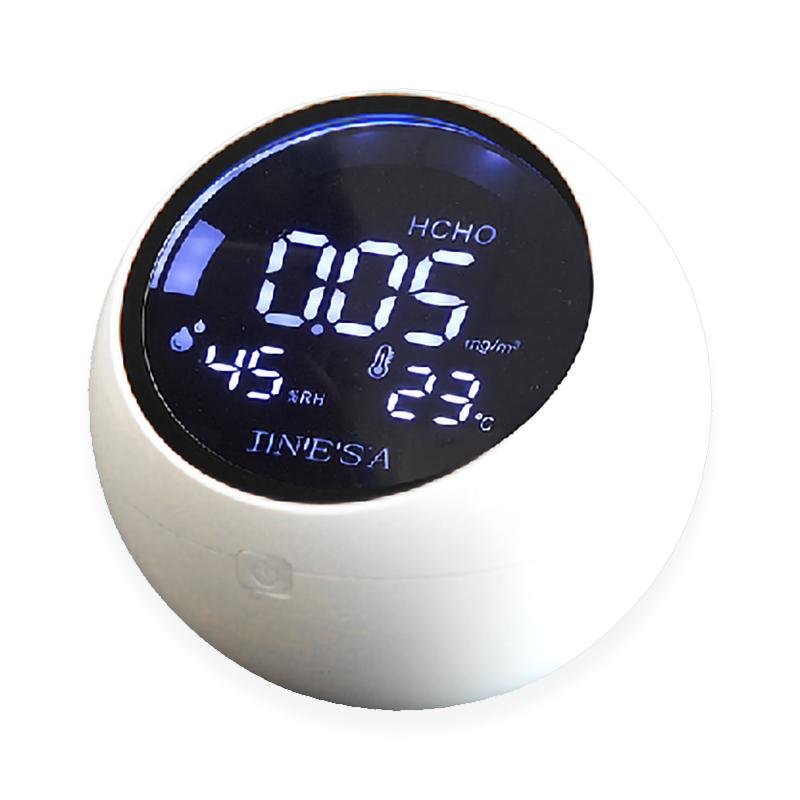
3. Scientific selection guide for formaldehyde Detectors
(1) Clarify testing needs
• Home/Office Daily Monitoring: Prioritize portable electrochemical sensor devices, emphasizing ease of operation and real-time.
• Specialized Institutions/High Precision Requirements: Choose spectrophotometry or gas chromatography instruments to ensure data accuracy.
(2) Core performance indicators
1. Detection range and accuracy
• Range: It needs to cover 0.01-2mg/m³ (national standard safety limit 0.1mg/m³), and the resolution ≥ 0.01mg/m³.
• Accuracy: Error ≤± 5% or ± 0.01mg/m³ to avoid misjudgment at low concentrations.
2. Calibration and reliability
• Preferential selection of products that support zero point calibration (elimination of background interference) and range calibration (correction of sensor drift), recommended every 6-12 months.
• Be wary of low-priced devices that are "no calibration" or "one-time calibration", which can lead to data distortion over time.
3. Environmental adaptability
• Choose models with built-in temperature and humidity sensors to automatically compensate for the impact of environmental factors on readings.
• Equipment with a standby time ≥ 5 days is better suited for long-term monitoring, with semiconductor equipment typically less than 12 hours.
(3) Other key factors
• Ease of operation: Home users choose the model with one-click power on and the screen displays the results directly; Multi-step operation is acceptable in professional scenarios.
• Brand and certification: Preferentially choose brands that have passed CMA/CNAS certification (such as RIKEN, Honeywell) to ensure that the equipment meets national standards.
4. Summary
The selection of formaldehyde Detector should be combined with technical principles, accuracy requirements and usage scenarios:
• Pursue convenience and efficiency: choose electrochemical sensor portable devices (such as Honeywell, Xiaomi).
• Pursuing precision: Choose spectrophotometry or gas chromatography professional instruments (such as RIKEN FP-30).
• Comprehensive needs: select multi-technology complex equipment, taking into account real-time monitoring and comprehensive evaluation.
Through scientific selection and standardized use, indoor formaldehyde risks can be effectively identified and provide a reliable guarantee for healthy life.
- 1Biaozhi GM8801 Formaldehyde Tester Instructions for Use
- 2Do you know the harm of formaldehyde and PM2.5? How to treat and prevent it?
- 3Formaldehyde pollution comparison table