Air Quality Detector Selection Guide: Type Analysis and Scientific Selection Guide
Introduction: Why do you need an air quality Detector?
With the acceleration of industrialization and the increase in urbanization, air pollution has become an important environmental problem affecting public health. Globally, the health risks caused by air pollution continue to increase, and indoor air pollution is an "invisible killer" that threatens children, the elderly and people with chronic diseases. As a professional tool for real-time monitoring of air pollutant concentrations, air quality Detectors can help users accurately grasp the air quality of their environment and provide a scientific basis for health protection. Whether it's a home, office, industrial environment, or public space, it's crucial to choose a Detector that suits your needs.
1. Analysis of the core types of air quality Detectors
The classification of air quality Detectors needs to be comprehensively judged based on the detection principle, target pollutants and usage scenarios, and there are significant differences in the technical path, scope of application and performance characteristics of different types of equipment.
(1) According to the detection principle: the technical path determines the application boundary
1. Optical Detector: Based on the principle of light scattering or absorption, the concentration is estimated by measuring the change in light intensity caused by pollutant particles when light passes through the air. Typical techniques include laser scattering (for PM2.5/PM10 detection) and infrared absorption (for partially volatile organic compounds). The advantage is that the response speed is fast (second-level) and suitable for real-time continuous monitoring; The limitation is that the detection accuracy of small molecule gases such as formaldehyde is low, and it is easily interfered with by particulate scattering.
2. Electrochemical Detector: Uses the electrochemical reaction between pollutants and electrodes to generate current/voltage signals, and quantitatively analyzes the concentration through signal strength. It has high sensitivity to gaseous pollutants such as carbon monoxide (CO), sulfur dioxide (SO₂), and nitrogen oxides (NOx), but the electrode is easily affected by humidity and temperature, so regular calibration and maintenance are required.
3. Gas chromatography Detector: separating mixed pollutants through the column and detecting the concentration of each component in combination with high-precision sensors, which is a representative of laboratory-level high-precision detection. It can identify trace components such as benzene and ozone (O₃), but the equipment is large and complex to operate, and is usually used in scientific research or professional institutions.
(2) Divided according to the detection objective: single vs. multiple needs matching
• Single Contaminant Detector: Targeted design for specific targets (e.g., formaldehyde Detectors, PM2.5 Detectors) to achieve highly targeted detection by optimizing sensor performance. It is suitable for scenarios where there is a clear monitoring need for a specific pollutant, such as formaldehyde investigation in newly renovated houses, specific gas monitoring in industrial sites, etc.
• Multi-pollutant Detector: Integrates multiple sensors to simultaneously monitor PM2.5, PM10, formaldehyde, TVOC (total volatile organic compounds) and other common pollutants, and outputs comprehensive air quality assessment results. It is suitable for occasions that require a comprehensive understanding of air quality conditions, such as daily household monitoring, office environment assessment, and public space management.
(3) According to usage scenarios: mobile monitoring and long-term duty
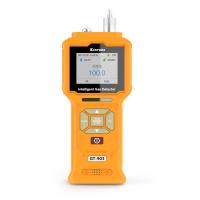
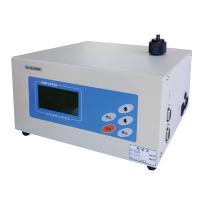
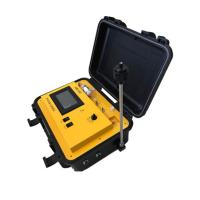
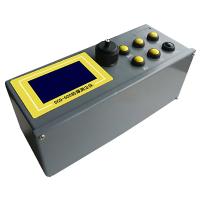
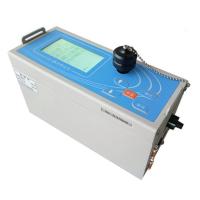
• Portable Detectors: Compact and portable, they are usually battery-powered, making them suitable for rapid on-site testing. Whether it is the daily self-inspection of household users or the on-site spot inspection of environmental law enforcement personnel, it can give full play to the advantages of flexibility and convenience.
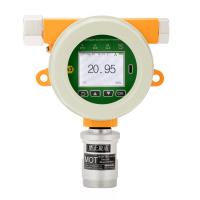
• Fixed Detector: fixed installation in a specific location (such as indoor wall, outdoor monitoring station) to achieve long-term and continuous monitoring, and can transmit the inspection data to the relevant platform in real time. This type of Detector has good stability and high detection accuracy, and is suitable for places that need to monitor air quality for a long time, such as environmental monitoring stations and large public places.

2. Scientific selection: analysis of six key dimensions
In the face of various types of Detector products on the market, users need to start from actual needs and focus on the following selection factors:
1. Clarify core testing needs
First, it is necessary to determine the type of target pollutant: if you only focus on a specific pollutant (such as formaldehyde), a single pollutant Detector can meet the needs; If you need a comprehensive assessment of air quality, including particulate matter and multiple gases, choose a multi-pollutant Detector. At the same time, it is necessary to combine specific usage scenarios - home indoors, office spaces, industrial environments or public spaces, and the performance requirements of the Detector vary from scenario to scenario.
2. Testing accuracy and certification qualifications
Detection accuracy is a key indicator to measure equipment performance, focusing on parameters such as detection range, resolution, and error range. For example, for PM2.5 detection, the equipment should cover common concentration ranges and have a high enough resolution to reflect subtle changes; the accuracy of formaldehyde detection also needs to meet actual needs. In addition, the product should have relevant certification qualifications, such as passing national metrology certification, etc., which can be used as an important reference for judging the accuracy and reliability of equipment.
3. Ease of operation and functional expansion
For ordinary users, simple and easy-to-use Detectors are more practical, such as devices with one-click detection and intuitive display of test results. For professional users, more functional support, such as data storage, export, etc., may be required for subsequent data analysis and report generation. The battery life of the portable Detector is also one of the factors to consider, and the longer battery life can meet the needs of longer on-site testing.
4. Stability and reliability
Air quality Detectors need to work in different environmental conditions, so their stability and reliability are crucial. The stability of equipment can be assessed by understanding aspects such as its service life, failure rate, maintenance needs, and more. Choosing products with high-quality components and mature production processes can reduce the trouble of later use and ensure stable performance during long-term use.
5. Balance cost performance and budget
When choosing a Detector, you need to plan reasonably according to your own budget. Users should comprehensively consider the function, accuracy, stability and other factors of the equipment under the premise of meeting the testing needs and performance requirements, and choose cost-effective products to avoid blindly pursuing high prices or ignoring quality only because of low prices.
6. Brand and after-sales service
Choosing products produced by reputable manufacturers is an important factor in ensuring the quality of equipment. Regular manufacturers usually have a complete production process and quality control system, product quality is more guaranteed, and can also provide good after-sales service, such as product warranty, technical support, etc. When purchasing, you can understand the manufacturer's reputation and product quality by checking its qualifications, user reviews, etc.
Conclusion: Accurate monitoring to protect respiratory health
Air quality Detectors are not only data tools, but also health bridges connecting "perception" and "action". By scientifically analyzing equipment types and systematically evaluating selection factors, users can match suitable products according to their own scenario needs - whether it is portable flexible self-inspection or fixed long-term protection, it can provide reliable protection for every breath indoors and outdoors. When purchasing, keep in mind the principle of "demand first, accuracy-oriented, and quality-based" in order to truly realize "speaking with data and escorting health".

- 1Do you know the harm of formaldehyde and PM2.5? How to treat and prevent it?
- 2Formaldehyde pollution comparison table