Formaldehyde climatic chamber analysis: principles, application scenarios and scientific selection guide
1. Technical principle and core function: detection system that accurately simulates environmental conditions
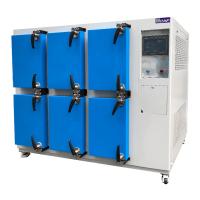
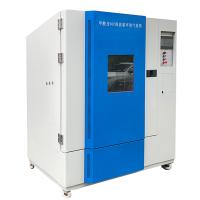
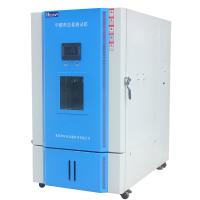
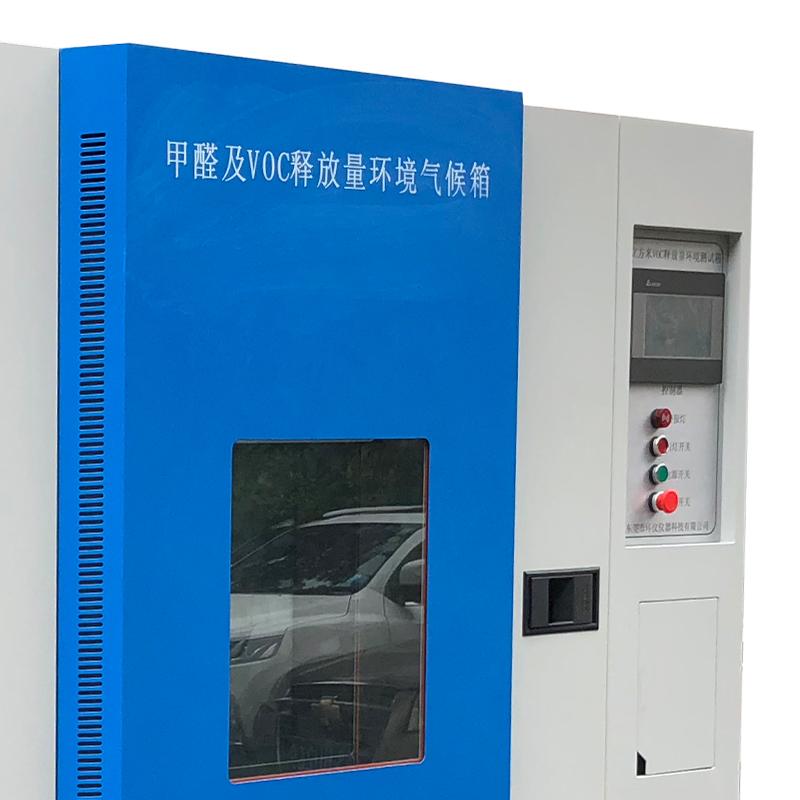
The formaldehyde climate chamber is a professional equipment designed based on the principle of "environmental simulation method", which realistically reproduces the formaldehyde release process of materials in actual use by constructing a controllable temperature and humidity, air flow rate and gas exchange environment. Its technical architecture is mainly composed of a high-precision environmental control system, a dynamic gas circulation module and an intelligent data acquisition unit.
The environmental simulation system adopts a multi-layer composite box structure, and the inner wall is made of 304 stainless steel or anti-corrosion composite material, which effectively avoids the interference of the material itself on the test results. The temperature control module adjusts the electric heating and compressor cooling units through the PID algorithm to achieve precise temperature control of 23±0.5°C (some high-end models support 15-50°C wide-range adjustment); The humidity control system integrates an ultrasonic humidifier and a condensing dehumidifier to maintain a standard humidity range of 45±3%RH. The air circulation system is equipped with a multi-directional equalization fan to ensure that the uniformity of the airflow velocity in the box is less than 5%, and the air exchange rate is 1±0.05 times/hour with the regular air change function.
The detection technology path includes two mainstream modes: the traditional absorbent sampling method collects formaldehyde gas through the built-in absorbent bottle, and the phenolic reagent spectrophotometry method is used for quantitative analysis; Modern direct-read detection systems integrate electrochemical sensors or gas chromatography modules to monitor changes in formaldehyde concentration in the chamber in real time. The advanced model is equipped with an automatic calibration function, which regularly verifies the detection accuracy through standard gases, ensuring that the measurement error is controlled within ±2%.
Compared with the traditional perforation extraction method (only detecting the total formaldehyde content of the material) and the dryer method (simulating limited environmental conditions), the climate chamber method more realistically reflects the formaldehyde release law of materials in long-term use through dynamic environment simulation, and has been adopted as a designated detection method by more than 20 international standards such as GB 18580 in CHINA, EN 717-1 in the European Union, and CARB ATCM in the United States.
2. Typical application scenarios: an essential tool for environmental protection quality control in multiple industries
(1) Furniture manufacturing industry
For wood-based panel furniture (such as wardrobes, desks), parquet flooring and upholstered furniture, the climate chamber can detect the formaldehyde release of substrates such as plywood, particleboard, density board, as well as auxiliary materials such as paint coatings and edge banding strips. An application case of a well-known furniture company shows that the melamine finishing process is optimized through Climate Chamber testing, so that the formaldehyde release of the board is reduced from E2 (5.0mg/L) to E0 (0.5mg/L), and the product sampling pass rate is increased to 99.2%.
(2) Building decoration materials
The scope of testing covers solid wood flooring, laminate flooring, wallpaper adhesives, diatom mud and other materials. Especially for laminate flooring using urea-formaldehyde resin glue, the climate chamber can accurately evaluate its formaldehyde release curve under different temperature and humidity conditions, helping manufacturers adjust the sizing ratio and hot pressing process parameters.
(3) Automobile interior field
For seat leather, dashboard plastic parts, carpet liners and other parts, the Climate Chamber can simulate the formaldehyde release characteristics under high temperature exposure (40°C) and high humidity (80%RH). A new energy vehicle company found through Climate Chamber testing that a batch of PVC skin materials exceeded the standard of formaldehyde by 3 times under high temperature conditions, and the problem was effectively solved after replacing the water-based treatment agent.
(4) Textiles and leather products
Detect formaldehyde residues in textiles such as curtains, sofa fabrics, and car seat covers. Especially for fabrics that have undergone anti-wrinkle finishing and flame retardant treatment, the Climate Chamber can detect the release of free formaldehyde in the finishing agent to ensure that the product meets the requirements of GB 18401-2010 "National Basic Safety Technical Specification for Textile Products".
(5) Scientific research and certification testing
Third-party laboratories use climate chambers to carry out material formulation optimization research, such as comparing the environmental performance differences of different adhesives (MDI vs urea-formaldehyde resin); The quality inspection agency establishes a formaldehyde release database through batch testing to provide data support for the formulation of local standards.
3. Professional selection strategy: analysis of seven core parameters
1. Testing standard conformity
Priority is given to confirming whether the equipment parameters meet the requirements of the target market standards: CHINA GB/T 17657-2013 stipulates temperature 23±1°C/humidity 45±5%RH, EU EN 717-1 requires temperature 23±2°C/humidity 50±5%RH, and the American ASTM D6007 needs to support 1-5 times/h variable air exchange rate. Multi-standard compatible models can reduce the export inspection cost of enterprises.
2. Environmental control accuracy
Laboratory-grade equipment should have high-precision control capabilities of temperature fluctuations ≤± 0.3°C and humidity fluctuations ≤± 2%RH. The high-end model is equipped with redundant sensors and AI algorithms, which can automatically compensate for environmental fluctuations caused by the opening of the box door, ensuring the stability of continuous testing for 72 hours.
3. Sample compatibility design
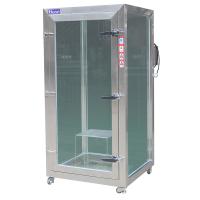
Choose the box volume according to the inspection needs: small equipment (0.05-0.5m³) is suitable for single furniture or board inspection, and large equipment (1-4m³) supports simultaneous testing of the whole set of cabinets or multi-layer floors. The observation window should be designed with anti-fog and explosion-proof to facilitate real-time monitoring of sample status.
4. Intelligent function configuration
Modern models are equipped with PLC+touch screen control system as standard, which supports test program presets, automatic data storage (at least 10 years of storage), and USB/network data export functions. The advanced model is equipped with a remote monitoring module, which can view the temperature and humidity curve and equipment status in real time through the mobile app.
5. Ease of maintenance
Pay attention to the replacement cycle of wearing parts: HEPA filters are recommended to be replaced every 6 months, humidity sensors need to be calibrated annually, and stainless steel liners should have anti-corrosion coatings. The modular design reduces troubleshooting time and ensures an annual equipment ≥ 95% operating rate.
6. Energy consumption and environmental protection indicators
Energy-saving models with inverter compressors are preferred, which can reduce power consumption by 30% compared to traditional equipment. The exhaust gas treatment system should be equipped with an activated carbon adsorption device to ensure that the exhaust gas meets environmental protection requirements.
7. Certification and after-sales service
Priority is given to brands that have passed CNAS, CE and other certifications, and suppliers are required to provide at least 3 years of core component warranty and 48-hour emergency response service. Some vendors provide method development support and standard update training services.

4. Industry development trends and selection suggestions
With the implementation of new national standards such as GB/T 39600-2021 "Classification of Formaldehyde Emissions of Wood-based Panels and Their Products", the market has put forward higher requirements for the detection accuracy and automation of climate chambers. It is recommended that users focus on (1) whether it supports fast switching of grading standards (such as E1, E0, ENF level); (2) Whether it has the ability to test multiple samples in parallel; (3) Whether the data traceability system meets the requirements of CNAS laboratory certification.