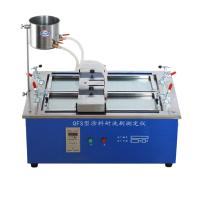
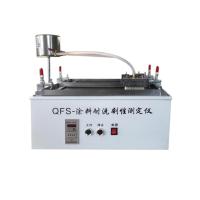
How to choose Scrub washability Testers? From testing principles to selection strategies
Overview of the Washable Brush Resistant Instrument
The washable brush meter judges the durability of the coating by repeatedly rubbing, wiping or cleaning the surface coating of the material by simulating the brushing action in actual use. In the architectural coatings industry, where wall coatings are subjected to daily cleaning, friction, and even chemical cleaners, the performance of brush-resistant quantitative coatings helps manufacturers optimize formulations and verify that products meet industry standards. It is also suitable for surface coating durability testing on a variety of other materials, covering a wide range of scenarios from home decoration to industrial protection.
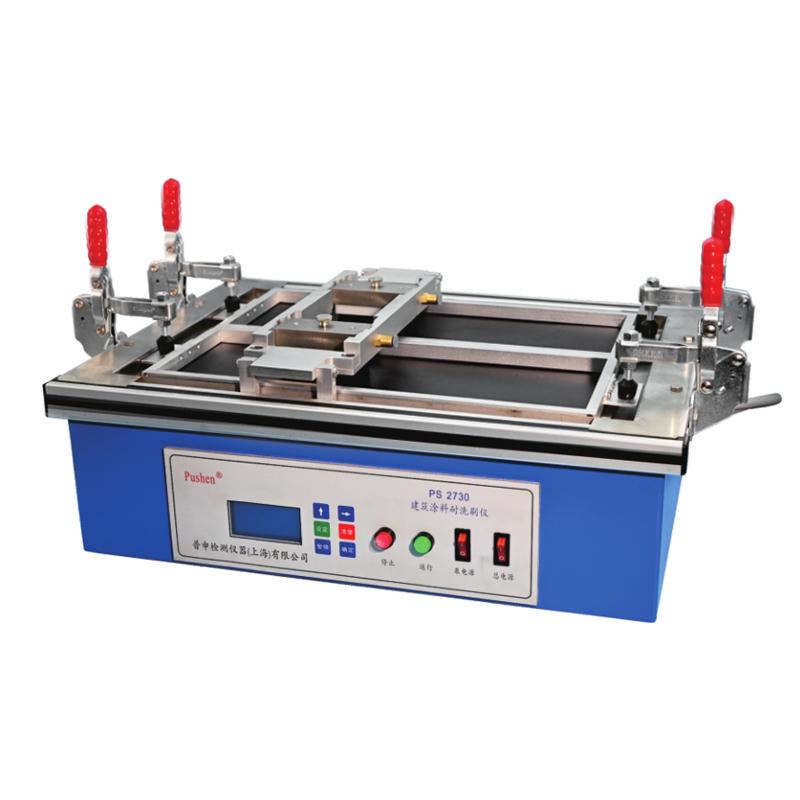
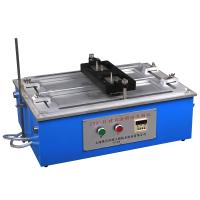
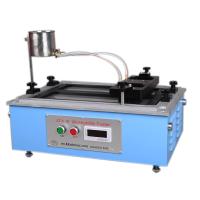
The brush resistance meter is mainly composed of mechanical transmission mechanism, friction head, loading system and control system. The mechanical transmission mechanism drives the friction head to do reciprocating linear motion to simulate the brushing action. The material, weight and contact area of the friction head can be adjusted according to the test needs; The loading system provides constant pressure to the friction head; The control system is used to set test parameters such as friction frequency, stroke, etc. Modern devices are often equipped with intelligent features such as automatic counting, exposed bottom detection, and AI analysis technology based on image recognition, enhancing testing efficiency and accuracy.
Test Principle:
The test principle of the brush resistance meter is based on simulating the mechanical wear process in actual use, and the results are comparable through standardized parameters, and the core steps are as follows:
1. Reciprocating Movement of the Friction Head: The equipment drives the mechanical transmission system through a motor, causing the friction head to move in a straight line on the specimen surface at a fixed frequency (typically 37 to 165 round trips per minute) and stroke (commonly 200 to 300 mm). The material, weight, and contact area of the friction head should be adjusted according to the test standards to simulate the friction conditions in different scenarios.
2. Load and Contact Pressure Control: The friction head is typically loaded with a fixed weight or spring system, ensuring a constant pressure (e.g., 450 grams or more) is applied to the specimen. This parameter directly affects the rigor of the test results and requires strict adherence to relevant standards.
3. Intervention of liquid media (optional): Some tests require the addition of liquid media (such as water, detergent, or oil-based solutions) during the friction process to simulate wet or chemical corrosion conditions in a real environment. The device controls the flow of liquid through peristaltic pumps or drip devices, ensuring consistency in testing.
4. Endpoint Determination and Data Collection: Traditional equipment records the number of frictions through a counter until the coating is damaged or bottomed. Modern wash-resistant meters use high-definition cameras and computer vision algorithms to automatically identify the moment of coating cracking and calculate the length of the exposed bottom or the area of damage. Some high-end models support setting the bottom exposure threshold, and automatically stop the machine after reaching the preset conditions, reducing manual intervention errors.
The test results are usually expressed as "wash resistance" or "exposed bottom threshold", and the higher the value, the stronger the durability of the coating, which provides an important basis for material research and development, production process optimization and product certification.
Selection guide
Choosing the right washable brush resistant device requires comprehensive consideration of the following factors:
1. Matching test standards: Different industries and application scenarios correspond to different test standards, such as GB/T 9266, ASTM D2486, ISO 11998, and other standards commonly used in architectural coatings, which require strict matching of friction head weight, stroke, and speed. The user needs to confirm whether the device supports the required standard parameter configuration.
2. Functional requirements: Basic functions include adjustable friction speed, stroke, and load, suitable for routine brush resistance testing. Intelligent functions such as AI image recognition, exposed bottom detection, automatic shutdown, and multi-station parallel testing are suitable for R&D laboratories or high-precision inspection needs. If testing involves cleaning agents or aggressive liquids, choose a model with a precision drip system.
3. Scalability and Compatibility: Some devices support changing friction head types (such as sponges, scouring pads) or adapting to different specimen sizes, covering a wider range of material testing scenarios. The multi-station design allows for simultaneous comparison experiments and shortens the detection cycle.
4. Ease of operation and maintenance: Intuitive human-machine interfaces (such as 7-inch touch screens), easily removable friction components, and open sink designs can lower the operating threshold and improve maintenance efficiency. For high-frequency usage scenarios, the durability and long-term stability of the device are particularly important.
5. Budget and cost-effectiveness: entry-level equipment meets basic testing needs and is less expensive; High-end models with integrated AI technology or automation capabilities are more expensive but can significantly improve data accuracy and test efficiency, making them suitable for manufacturers with strict quality requirements.
By simulating the actual brushing process, the brush resistant meter provides a scientific basis for the durability evaluation of material coatings. When selecting a model, it is necessary to fully consider factors such as testing standards, functional requirements, scalability, ease of operation and maintenance, and budget to ensure that the appropriate equipment is selected to meet the quality control needs of production and R&D.

- 1Coating performance of Scrub washability Testers
- 2Graphite and carbon laboratory testing instrument solution
- 3List of commonly used testing instruments in laboratories of latex paint manufacturers
- 4QFS Scrub Resistance Tester How to test the scrub resistance of architectural paint coatings?
- 5Test principle of coating scrub resistance
- 6What is the scrub resistance of coatings and why is it important?
- 7JTX-Ⅱ Architectural coatings Scrub washability Testers Instruction Manual
- 8Development of Water-in-Water Colorful Coatings
周 媛;王升福;车文波 - 《海洋化工研究院有限公司;青岛大洋海得润建材有限公司》
- 9How to make a coating scrub resistance test?
-
![JINGKELIAN QFS Coating Washability Tester inter-wall exterior dual-use]()
-
![MODERNER JTX-IV Digital Building Materials Scrub washability Testers]()
-
![MODERNER XD-567 Black PVC Plastic Sheet Scrub washability Testers]()
-
![JFL QFS Wash Resistance Tester]() JFL QFS Wash Resistance Tester$ 623.00
JFL QFS Wash Resistance Tester$ 623.00 -
![SHIBO QFS-III Washing resistance tester Coating washing resistance performance tester]()
-
![TQC SHEEN AB6010 coating resistance Tester, basic version]()