Professional analysis of Abradability Testers: a complete guide to definitions, types, and applications
1. The core definition of the polishing Tester
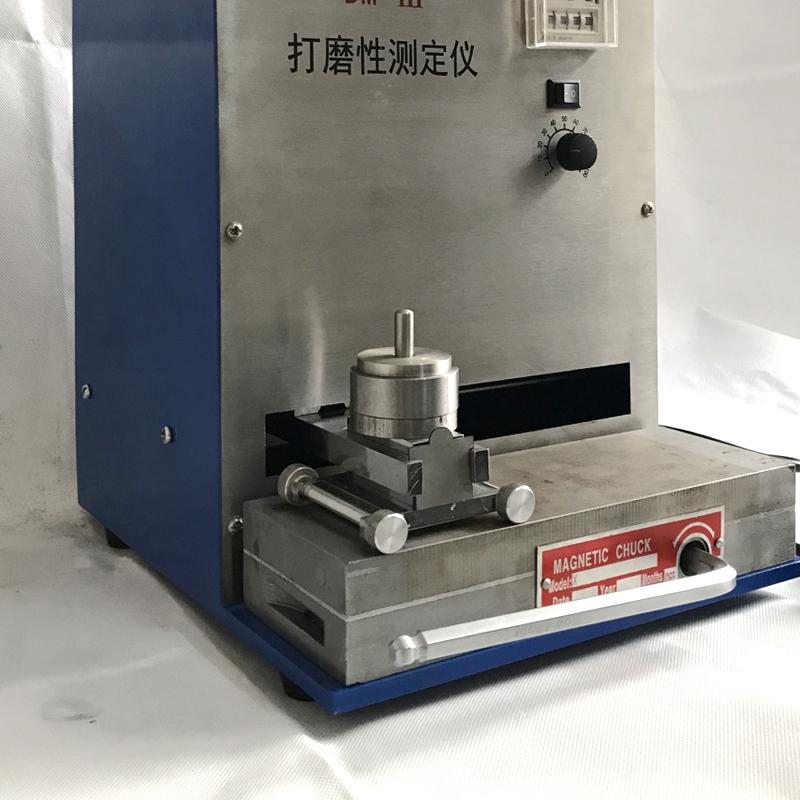
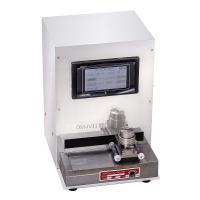
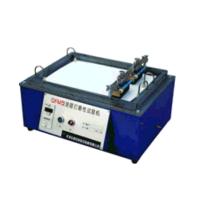
The abrasiveness Tester is a professional testing equipment based on the principle of friction and wear, mainly used to evaluate the polishing performance of coatings, putty, gypsum and other materials after construction. The working principle is to rub the surface of the specimen with a fixed load by a fixed load grinding head to set the frequency and stroke, combined with mass loss measurement or surface morphology analysis, to determine the degree of grinding and process suitability of the material.
In the construction industry, polishing directly affects the construction efficiency of putty scraping, gypsum caulking and coating. For example, high-abrasive putty can reduce labor costs and improve wall flatness, while low-abrasive materials may cause problems such as sandpaper clogging and increased construction time. The instrument helps users accurately control material properties through standardized testing processes and avoid engineering quality problems caused by grinding difficulties.
2. Main types and technical characteristics
According to the difference in application scenarios, the grinding ability Tester can be divided into three types:
1. Building-specific type
Designed for gypsum, putty and other materials, in accordance with JC/T 2075 - 2011 or GB/T 1770 - 2008 and other standards. Construction instruments usually use high-frequency short-stroke friction mode (e.g., 372 times/min, 380mm stroke) to simulate manual or mechanical grinding processes with a load of about 460g. Its structure emphasizes ease of operation and data repeatability, making it suitable for rapid testing of the grinding efficiency of caulking gypsum in the laboratory.
2. Universal detection type
Multi-material testing is supported, with a wider range of friction speeds (5 - 190 cycles/min) and the load system can be flexibly configured (e.g. 570g base weight with additional counterweights). Such instruments adapt to different standards by adjusting parameters, such as GB/T 1770, which requires two-way counting to display the number of grinding times, and evaluate the grinding resistance of putty film by observing the amount of powder residual in the sandpaper.
3. Intelligent compound type
Integrate automatic counting, magnetic cups, and data storage functions to improve testing efficiency and accuracy. Some high-end equipment supports parameter customization, which can be extended to the wear resistance detection of non-building materials such as inks and plastics, demonstrating the cross-field applicability of the technology.
3. Industry application and practical value
1. Building construction optimization
• Putty layer treatment: quantify the grinding rate and dust amount of putty through the measuring instrument, and guide the formulation design to balance hardness and ease of processing;
• Gypsum caulking: ensures that the caulking material maintains a low wear rate at 372 times/min of high-frequency friction, reducing the difficulty of batch scraping after construction.
2. Industrial quality control
Coating companies use this instrument to verify the polishing compatibility of the primer and avoid topcoat defects caused by improper underlying treatment. Scientific research institutions study the self-healing ability or nano-modification effect of new coatings through wear data.
3. Technological development trends
Modern abrasiveness analyzers are being upgraded in the direction of intelligence, such as integrating wireless transmission modules for remote monitoring or analyzing wear patterns through machine learning algorithms. In the future, with the growth of demand for green building materials and functional coatings, the instrument will expand its application scenarios in emerging fields such as new energy and biomedicine.
summary
The abrasiveness Tester provides a reliable tool for evaluating material properties through standardized testing processes. Whether it is the improvement of construction efficiency in the construction industry or the R&D innovation in the industrial field, its technical value is irreplaceable. Selecting the appropriate instrument type and following standard operating procedures is key to ensuring the accuracy of your results.
- 1Summary notes on the determination of film sanding
- 2Determination of sanding property of paint film
- 3Coating performance testing: ensuring the efficiency and mass of the painting process
- 4Explore the determination of sanding property of paint film and putty
- 5Several common types of defects and solutions of self-drying putty
- 6Film primer, putty sanding test
- 7Film sanding identification
- 8Modern environment DM-III Abradability Tester operating instructions
- 9Painting sanding and recoating detection