A complete guide to Dropping Tester types, applications and selection
1. The main types of drop testing machines
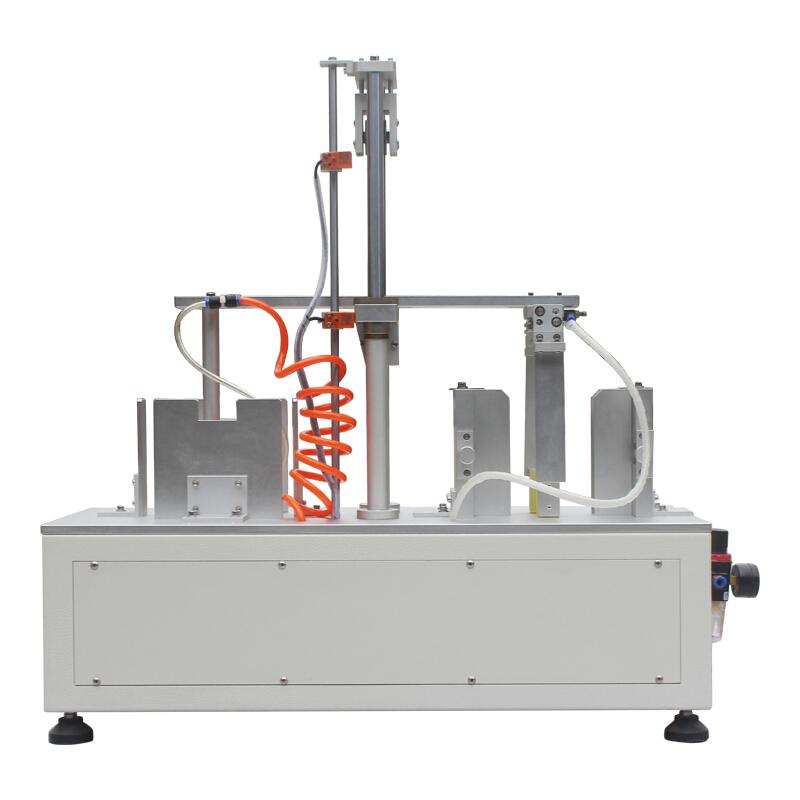
According to the characteristics of test objects, industry needs and differences in test standards, drop testing machines are mainly divided into the following five categories, each of which is designed for specific scenarios and has unique functional advantages.
1. Single-arm drop testing machine
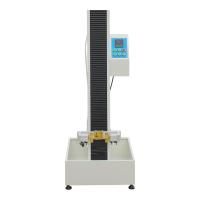
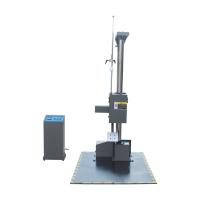
The single-arm Drop Tester adopts a single column support structure, and the overall design is compact and lightweight, which is a common model for packaging testing of small and medium-sized products. Its core function is to simulate the drop impact of the face, edge and corner of the product packaging, realize the free fall of the specimen through electromagnetic control, and is equipped with a digital display height control system, which can accurately adjust the drop height (usually covering the range of 0.3-1.5 meters) to meet the testing needs of most small and medium-sized consumer electronics, small home appliance outer boxes and other products. Its outstanding features are its simple operation and flexible adjustment, making it suitable for daily use in laboratories or small and medium-sized enterprises.
2. Double arm drop testing machine
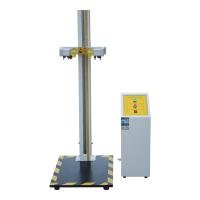
The double-arm Drop Tester adopts a symmetrical structure with double columns, which significantly improves the stability of the single-arm model and can carry larger weights or larger sizes of packages. Its height adjustment range is wider (common 1-2 meters), and the fall angle error is controlled within a very small range (usually ≤5°), which can accurately simulate the impact of falling at different angles (surfaces, edges, corners), and is suitable for the impact resistance test of heavy or high-demand packaging parts such as large home appliances and precision instrument packaging boxes, and is the preferred choice for scenarios with high testing accuracy requirements in the packaging industry.
3. Zero drop testing machine
The Zero Drop Tester is designed to simulate extreme drop conditions, and its working principle is to detach the specimen from the specimen and achieve a free fall "from zero height to set height" (such as simulating the impact of a drop from a pallet to the ground) through a high-speed moving support. This model is mainly used for the impact resistance verification of large or heavy packaging parts (such as home appliances, auto parts, and large equipment), can withstand hundreds of kilograms of loads, and the test height is flexible and adjustable, which can restore the severe fall scenarios that may be encountered in logistics transportation, and is a key equipment to ensure the safety of heavy product transportation.
4. Roller drop testing machine
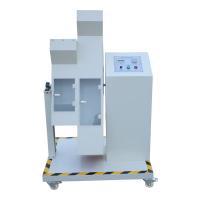
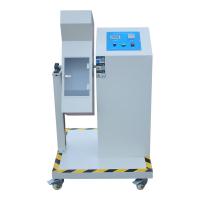
The roller Drop Tester drives the product to fall repeatedly through the rotation of the drum, which is suitable for scenarios that need to simulate multiple continuous drop impacts, and typical applications include durability testing of small consumer electronics such as mobile phones and tablets. Its core advantage is that it can automatically complete high-frequency (hundreds to tens of thousands) drop cycles, helping to evaluate the structural integrity and packaging protection ability of products after long-term use or multiple accidental drops, and is an important tool for the electronics industry to verify product drop resistance.
5. Micro drop testing machine
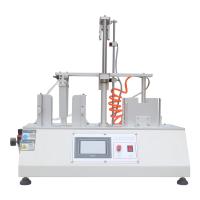
The micro-drop testing machine focuses on the testing needs of low-altitude (usually 0.5-1.5 meters) and small impact scenarios, mainly for precision consumer electronic products such as headphones, USB flash drives, and small remote controls. Although this type of product is small, it is easy to cause abnormal function or appearance damage due to slight drops in daily use, and the micro-drop testing machine simulates the real "slight drop" working condition by accurately controlling the drop height (accuracy up to ±0.1mm) and attitude, ensuring the reliability of the product in daily use, which is an important testing method in the research and development and quality control of small electronic products.
2. Core application areas
The application of drop testing machines covers multiple industries, and its core value is to verify the impact resistance of products and packaging through scientific testing, thereby reducing transportation risks and improving user satisfaction.
(1) Packaging industry
Packaging is the most important application area of drop testing machines. In the process of logistics and transportation, cartons, plastic packaging, cushioning materials, etc. need to withstand multiple impacts such as stacking, collision, and falling. By testing the performance of different packaging solutions at set heights and angles, enterprises can optimize the packaging structure (such as adjusting the thickness of the cardboard and the layout of cushioning materials) and significantly reduce the transportation damage rate (industry practice shows that the damage rate can be reduced by 20%-40% after reasonable optimization).
(2) Electronic and electrical industry
Electronic products such as mobile phones, tablets, laptops, chargers, etc. are extremely sensitive to drop shocks. According to statistics, more than 30% of after-sales problems of electronic products are related to transportation drops. By simulating the impact of different heights (such as 0.5-1.5 meters) and angles (surface drops, angular drops), drop testing machines verify the structural strength and packaging protection capabilities of products, help enterprises find design defects (such as weak points in the shell, battery weak fixation), and ensure the reliability of products in transportation and daily use.
(3) Automobile and parts industry
Precision components such as automotive sensors and control modules can be damaged due to bumps or accidental falls during transportation, which directly affects the performance and safety of the vehicle. The drop testing machine simulates the impact impact that parts may encounter in the logistics process (such as slipping from pallets, falling after stacking and extrusion), tests their impact resistance, and ensures the functional integrity of parts during transportation and storage, which is an important part of the quality management of the automotive supply chain.
(4) Medical device industry
Precision medical devices (e.g., diagnostic instruments, surgical instruments) are demanding in transportation environments – a slight drop can cause internal components to shift and calibration failures, which can affect diagnostic accuracy or patient safety. By verifying the drop resistance of packaging and products, the drop testing machine ensures that the equipment is not damaged by impact during transportation, and meets the requirements of biocompatibility and packaging standards such as ISO 11607, providing medical safety protection.
(5) Toys and consumer goods industry
Toys, household goods and other daily consumer goods are prone to damage or functional failure due to falling during transportation, which not only affects the user experience, but may also cause customer complaints. By simulating the impact impact of different scenarios (such as children's toys falling from the tabletop and glass cups falling from cabinets), the drop testing machine tests the impact resistance of products, helping companies optimize structural design (such as strengthening the strength of the shell and improving internal cushioning) to ensure that the product meets safety standards and market expectations.
(6) Military industry and aerospace
Military products and aerospace equipment often have high-value, high-precision characteristics, and the impact of drops during transportation can lead to the failure of critical components, resulting in significant losses. The drop testing machine verifies the reliability of products under extreme conditions by simulating the fall conditions in extreme environments (such as falling from high altitudes and secondary impact after severe vibration), which is the core testing method to ensure the safety of national defense equipment and spacecraft transportation.
3. Key points of scientific selection
The selection of suitable drop testing machine should comprehensively consider the testing needs, product characteristics and industry specifications, and the following are the five core selection factors:
1. Clarify testing needs
First, it is necessary to determine the basic parameters of the object to be tested: product type (such as electronic products, packaging parts, large equipment), weight range (such as 1kg small electronics or 50kg motor), size specifications (such as mobile phones or refrigerator packaging boxes); At the same time, combined with practical application scenarios, the test goal is clarified - is it to verify the damage limit of a single drop, or to simulate the durability of multiple consecutive drops? For example, express shipping usually focuses on a single drop within 1 meter, while home appliance logistics may need to test heights above 1.5 meters.
2. Match key parameters
According to the testing needs, focus on the load-bearing capacity of the equipment (the maximum weight of the sample to be tested needs to be ≥), the drop height range (covering the height of the target scenario, such as 0.3-1.2 meters for express transportation, 1.5-3 meters for large equipment), and the accuracy of the drop angle (the error is allowed ± 5° for ordinary testing, and the ≤ 3° for precision testing). For example, when testing small electronic products, give priority to models with a load-bearing ≤ of 10kg and a height adjustment accuracy of ± 1mm; When testing heavy packaging, the equipment needs to have a load capacity of ≥ 50 kg and a stable structure.
3. Consider automation and ease of operation
Modern drop testing machines are usually equipped with digital display height control system (precise adjustment of drop height), automatic release device (to reduce human operation error), and some high-end models also support data recording (storing parameters for each drop), anti-secondary rebound protection (to avoid secondary damage caused by specimen rebound), etc., which can significantly improve testing efficiency and safety. Enterprises can choose manual or semi-automatic/fully automatic models according to their own testing frequency and staffing.
4. Comply with industry standards
Different industries have specific specifications for drop testing, such as the packaging industry refers to GB/T 4857.5 and ISTA 3A standards, the electronics industry follows GB/T 2423 and IEC 60068 standards, and medical devices need to meet ISO 11607 and other requirements. When selecting, it is important to ensure that the equipment meets the regulations and customer standards of the target market to avoid delays in product launch due to unaccepted test results.
5. Evaluate the full life cycle cost
In addition to the purchase price, consider the energy consumption of the equipment, the difficulty of maintenance and the calibration interval (it is recommended to calibrate the sensor and release mechanism at least once a year), as well as the supplier's after-sales service capabilities (e.g., response time, repair parts availability). For laboratories with long-term high-frequency use, it is recommended to choose a model with high stability and easy maintenance to reduce the comprehensive cost of use.
4. Summary
As a key tool for product quality control, the type selection and application of drop testing machines need to be closely related to specific testing needs. From the flexibility and lightness of single-arm models to the stability and accuracy of dual-arm models, from the extreme impact simulation of zero-drop models to the fine testing of micro-drop models, different equipment has its own applicable scenarios. When selecting a model, enterprises should comprehensively consider product characteristics (weight, size), test objectives (single/multiple drops), industry specifications (such as GB/T, ISO standards) and budget constraints, and give priority to parameter matching, safe operation, and equipment that complies with regulations, so as to ensure that the test results are true and reliable, and provide a scientific basis for product packaging optimization and quality improvement.
-
![CHINA NBC-8515 wing Dropping Tester]() CHINA NBC-8515 wing Dropping Tester$ 1695.00
CHINA NBC-8515 wing Dropping Tester$ 1695.00 -
![CHINA BLD-613D Single Wing Drop Machine]() CHINA BLD-613D Single Wing Drop Machine$ 1830.00
CHINA BLD-613D Single Wing Drop Machine$ 1830.00 -
![HUIDA HD-6004 Single wing Dropping Tester Encasement Tester 300~1500mm]()
-
![CHINA NBC-5618B Mobile phone micro-Dropping Tester drop life Tester]()
-
![CHINA NBC-5618B electric free Drop Tester, pneumatic Drop Tester 1.5 meters]()
-
![CHINA NBC-1050B Double drum Drop Tester]() CHINA NBC-1050B Double drum Drop Tester$ 1139.00
CHINA NBC-1050B Double drum Drop Tester$ 1139.00 -
![CHINA NBC-1050A single drum Drop Tester repeated tumbling Drop Tester]()
-
![CHINA NBC-5618 Mobile phone Dropping Tester]()
-
![CHINA NBC-8516 single wing Dropping Tester]()
- 1Vertical impact drop test for transport packages
- 2What is a paper and packaging test instrument? its corresponding standard
- 3Why use an automatic Drop Tester?
- 4What are the packaging quality test methods?
- 5What are the standard test methods for hard packaging?
- 6How to check the drop resistance of the packaging box?
-
![HUIDA HD-6004 Single wing Dropping Tester Encasement Tester 300~1500mm]()
-
![CHINA NBC-5618B Mobile phone micro-Dropping Tester drop life Tester]()
-
![CHINA NBC-1050B Double drum Drop Tester]() CHINA NBC-1050B Double drum Drop Tester$ 1139.00
CHINA NBC-1050B Double drum Drop Tester$ 1139.00 -
![CHINA NBC-1050A single drum Drop Tester repeated tumbling Drop Tester]()
-
![CHINA NBC-5618 Mobile phone Dropping Tester]()
-
![CHINA NBC-8516 single wing Dropping Tester]()