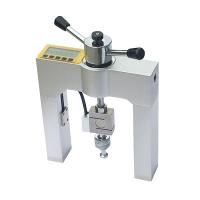
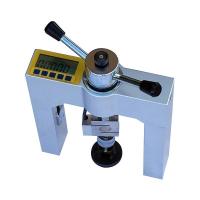
Bond strength Tester type, application and selection full analysis
1. Types of bond strength Testers
(1) Manual hydraulic bond strength Tester
Manual hydraulic bond strength Tester is a more traditional type. It primarily relies on manually operating a hydraulic pump to generate pressure, which in turn applies a pulling force to the bonded material to test its bond strength. The structure of this Detector is relatively simple, usually composed of hydraulic pumps, pull sensors, display devices and other parts. The operator manually presses the handle of the hydraulic pump to make the hydraulic fluid flow through the system, pushing the piston to create a pulling force. Its advantage is that the operation is relatively intuitive, does not require complex power or electronic control systems, and in some on-site inspection scenarios, such as construction sites for rapid inspection of small bonding parts, manual hydraulic Detectors can be easily carried and used. Moreover, its cost is relatively low, making it a more economical choice for some small testing projects with limited budgets. However, manual operation also means that the size and speed of the loading force are difficult to control precisely, which may be affected by the operator's physical strength and operating proficiency, resulting in certain human errors in the test results.
(2) Electric/automatic loading bond strength Tester
The electric bond strength Tester uses an electric motor as a power source to drive the loading system. The motor converts electrical energy into mechanical energy through a series of transmission devices, so as to achieve uniform loading of the bonded material. This loading method provides relatively stable and controllable loading speeds, and its test results are more accurate and repeatable than manual hydraulic types. The self-loading bond strength Tester is further developed on the basis of electric loading, and it is usually equipped with an advanced control system that can accurately control parameters such as loading speed, loading time and peak hold according to pre-set programs. Operators only need to input relevant parameters into the equipment before inspection, and the equipment can automatically complete the entire loading and inspection process, greatly reducing human intervention and improving inspection efficiency and data reliability. This type of Detector is suitable for occasions that require high detection accuracy and efficiency, such as in-depth research on material bonding properties in scientific research laboratories and quality testing of some large-scale engineering projects.

(3) Intelligent digital display bond strength Detector
The intelligent digital display bond strength Tester is the product of the combination of modern technology and testing technology. It integrates advanced components such as high-precision sensors, microprocessors, and digital displays. The sensor can accurately sense the change in force values of the bonded material during the stress process and transmit these signals to the microprocessor in real time. After the microprocessor processes and analyzes the signal, the digital display visually displays key data such as current adhesion value and strength value. In addition, intelligent digital Detectors usually have a variety of measurement modes, which can be selected according to different testing needs, such as force value mode, strength mode, etc. It also has a data storage function, which can automatically record the data of each detection, facilitating subsequent queries and analysis. This Detector is not only easy to operate, but also can provide high-precision detection results and rich data information, and is widely used in laboratories with high requirements for detection accuracy and data management, as well as some large-scale construction projects with strict requirements for engineering quality.
(4) Automatic bonding strength Tester
The automatic bond strength Tester represents a higher level of bond strength testing technology. It can realize the full automation of the entire inspection process, from the beginning of loading, precise control of the loading process to data recording and analysis after the end of the inspection, without manual intervention. The Detector adopts an advanced electric or hydraulic system, which can accurately complete a series of actions such as loading, holding, and unloading according to preset programs, and can monitor the change of force value in real time during the loading process to ensure the stability and accuracy of the loading process. Some high-end automatic bond strength Testers are also equipped with the force value curve display function, which can intuitively display the force value change curve of the bonded material during the stress process, providing more comprehensive and detailed data support for the analysis of material properties. The automatic bond strength Tester is suitable for large-volume, highly repeatable testing tasks, such as mass testing of product quality by large production enterprises and large-scale material property research conducted by scientific research institutions.
2. Application fields of bond strength Tester
(1) Construction projects
In the field of construction engineering, the bond strength Tester has a wide and important application. For bond testing of façade facing tiles, it is a key means to ensure the appearance safety and durability of buildings. If the bonding strength of the facing brick is insufficient, it is easy to fall off, which not only affects the aesthetics of the building, but also poses a threat to pedestrian safety. The bond strength Tester can accurately detect the bond strength between the facing brick and the base wall to determine whether it meets relevant standards and safety requirements. In terms of the application of insulation materials, the bond strength Tester is used to evaluate the bonding performance between the insulation board and the base wall and the layers of the insulation material. Good bonding strength can ensure the overall stability and insulation effect of the insulation system, prevent problems such as hollowing and falling off of insulation materials, thereby improving the energy-saving performance of buildings. In addition, the Detector can also effectively detect the bonding between mortar, coating and other materials used in construction and the base layer, providing an important basis for the quality control of construction projects.
(2) Exterior wall insulation system
The exterior wall insulation system is one of the important measures for energy conservation in modern buildings, and the bond strength Tester plays a crucial role in the quality inspection of the system. Adhesive is the key material for bonding the insulation board to the base wall in the exterior wall insulation system, and its bonding strength directly affects the overall stability of the insulation system. The adhesion strength Tester can accurately measure the adhesion between the adhesive and the insulation board and the base wall to ensure that the adhesive can firmly bond the insulation board to the wall. At the same time, for the anchors and other fixing parts in the insulation system, the Detector can also detect its bonding performance with the insulation board and the base wall, ensuring that the entire insulation system can withstand various external forces without loosening, falling off and other problems during long-term use, so as to ensure the insulation effect and safety of the building.
(3) Industrial manufacturing
In the field of industrial manufacturing, bond strength Testers have a wide range of applications. In the automotive manufacturing industry, many parts are connected using a bonding process, such as body panels and interior parts. Bond strength Testers can be used to detect the quality of these bond parts, ensure the bonding firmness of auto parts, and improve the safety and reliability of automobiles. In the aerospace field, bonding processes are widely used to connect advanced materials such as carbon fiber composites due to the extremely high performance requirements of materials. Bond strength Testers can accurately measure the bond strength between these composites, ensuring the quality and performance of aerospace products. In addition, in the electronics industry, the packaging of electronic components often relies on the bonding process, and the Detector can detect the bond quality between the electronic component and the substrate to ensure the performance and stability of electronic products.
(4) Scientific research and quality control
Scientific research institutions and enterprise laboratories are important application places for bond strength Testers. In terms of scientific research, researchers use the Detector to conduct in-depth research on the bonding properties of various new materials, explore the influence of different material combinations and different bonding processes on bond strength, and provide data support for material research and development and innovation. Through a large number of experiments and data analysis, researchers can optimize the formulation and bonding process of materials and develop new materials with higher bonding properties. In enterprise production, the bond strength Tester is an important tool for quality control. Enterprises can ensure that product quality meets standards and customer requirements by conducting regular inspections of product bonding parts. Through the analysis of testing data, enterprises can timely discover problems in the production process, adjust the production process, and improve the overall quality and production efficiency of products.
(5) Other fields
In addition to the major areas mentioned above, bond strength Testers also play an important role in the detection of bond materials in infrastructure such as bridges and tunnels. In the construction and maintenance of bridges and tunnels, bonding materials are used to connect various structural components, such as bonding between concrete components, bonding between waterproof materials and base layers, etc. Detectors can detect the strength of these bonding materials, ensuring the structural safety and durability of the infrastructure. In addition, for the evaluation of the bond performance of non-metallic materials such as wood, plastics, and ceramics, the bond strength Tester can also provide accurate test results, providing quality assurance for the application of these materials in different fields.

3. Key points for the selection of the bond strength Tester
(1) Clarify the testing requirements
Before choosing a bond strength Tester, first clarify the specific testing needs. This includes determining the type of material being tested, different materials such as facing tiles, insulation panels, composite materials, electronic components, etc., with different bonding properties and testing requirements. At the same time, it is necessary to understand relevant testing standards, such as national standards or industry specifications such as JGJ110 and JGJ144 in the construction industry, to ensure that the selected Detector can meet the standard requirements and ensure the legality and validity of the test results. In addition, the testing environment needs to be considered, as on-site testing usually requires portable, easy-to-operate equipment, while laboratory testing can choose a more comprehensive and accurate model.
(2) Key selection parameters
1. Measurement range: The measurement range is the maximum loading force of the Detector, which should be selected according to the expected bond strength range of the material being tested. For example, for facing bricks with low bonding strength, you can choose a Detector with a smaller range, such as about 5kN; For insulation materials or anchors with high bond strength, it is necessary to choose a Detector with a larger range, such as 10kN or higher, to ensure accurate measurement of the bond strength of the material.
2. Accuracy and resolution: Accuracy and resolution are important indicators to measure the accuracy of the Detector's measurements. For scientific research or application scenarios that require high detection accuracy, high-precision Detectors should be chosen, with a resolution of up to 0.001kN, which can provide more accurate measurement data. For general engineering testing, the accuracy requirements can be appropriately relaxed, and medium precision equipment can be selected to meet the testing needs and control costs.
3. Loading Methods: Loading methods include manual loading, electric/automatic loading, and fully automatic loading. Manual loading is suitable for simple and fast on-site inspection, but the control of loading force is relatively difficult; Electric/automatic loading can provide a relatively stable loading speed, reduce human error, and is suitable for occasions with certain requirements for detection accuracy. Fully automatic loading is suitable for large-batch, high-repeatability inspection tasks, which can fully automate the inspection process and improve inspection efficiency and accuracy. When choosing, the appropriate loading method should be determined according to the actual testing needs and operating conditions.
4. Data Logging and Analysis: If test data needs to be stored, analyzed, and managed for a long time, choose an intelligent Detector with data storage, query, and export functions. Some advanced Detectors also support connection with computers for more in-depth data analysis and processing, providing more comprehensive data support for material property research and quality control.
5. Portability and Ease of Operation: For situations that require on-site inspection, such as construction sites, bridges and tunnels, the portability and ease of operation of the equipment are crucial. Lightweight, easy-to-carry and operate equipment should be selected so that inspectors can carry out testing work quickly and conveniently. For laboratory environments, more attention can be paid to the functional comprehensiveness and detection accuracy of the equipment.
(3) Applicable standards and certifications
Ensure that the selected bond strength Tester meets national or industry-relevant standards, such as JGJ110, JGJ144, etc. Equipment that meets the standard can ensure the scientificity of the testing method and the reliability of the test results, making it credible in engineering testing, scientific research and other fields. At the same time, priority is given to equipment that has passed relevant certifications, such as quality certification, measurement certification, etc., which is not only a guarantee for the quality and performance of the equipment, but also helps to avoid risks caused by equipment non-compliance during use.
To sum up, the bond strength Tester has important application value in many fields, and its types are diverse, and many factors need to be comprehensively considered when selecting the type. By reasonably selecting the appropriate bond strength Tester, it can provide a strong guarantee for the accurate detection of material bonding properties, thereby providing reliable data support for engineering quality, product performance, and scientific research.