How to Select Electrolytic Thickness Gauges Scientifically? Key Factors and Practice Guidelines
1. The main types of electrolytic Thickness Gauges
Electrolytic Thickness Gauges can be divided into various types according to different classification standards, each with its own unique characteristics and applicable scenarios.
Basic electrolytic Thickness Gauge
Basic electrolytic Thickness Gauges usually have a relatively simple structure and are relatively easy to operate. It is generally mechanically adjusted or simply displayed digitally, and is suitable for single or multi-layer thickness measurement of conventional electroplating layers that do not require particularly high measurement accuracy. This type of equipment is easy to operate and is a cost-effective choice for small and medium-sized enterprises or laboratories for basic quality control needs. It mainly supports common plating metals, such as chromium, nickel, copper, etc., and can quickly complete the inspection work through preset parameters, which can meet the approximate detection needs of plating thickness in daily production.
High-precision analytical electrolytic Thickness Gauge
High-precision analytical electrolytic Thickness Gauges are mainly designed for complex coating systems. When encountering complex coatings such as multiple layers of nickel, alloy coatings, or ultra-thin gold layers, ordinary Thickness Gauges may not be able to meet the requirements for accurate measurements, and high-precision analytical equipment plays an important role. It uses constant current source stability control technology, which can analyze the coating thickness layer by layer and can detect the diffusion layer. These instruments are usually equipped with data traceability functions and comply with laboratory standards such as ISO/IEC 17025, which are suitable for quality verification work in scientific research institutions or high-end manufacturing industries, providing accurate data support for scientific research and product development.
Production line special rapid detection type
In industrial production lines, due to the fast pace of production, products need to be inspected frequently. The rapid detection electrolytic Thickness Gauge for production lines is optimized to meet this demand. It optimizes electrolytic algorithms to complete a single measurement in a short amount of time, typically within 30 seconds. This type of equipment is often adapted to semiconductor films or special electrolytes, supports automated operation, and is very suitable for large-scale production of automotive fasteners, electronic components, and other large-scale production sampling inspection scenarios, which can effectively improve production efficiency and ensure the stability of product quality.
Multi-function extended electrolytic Thickness Gauge
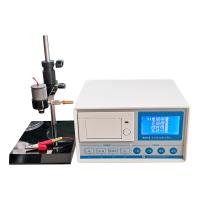
The multi-function extended electrolytic Thickness Gauge adds many additional functions to the traditional electrolytic thickness measurement. For example, it provides multi-area testing options, allowing you to select different test areas according to different testing needs; It has non-metallic matrix compatibility and can measure the coating on non-metallic matrix. It also supports test result printing and data storage, which is convenient for data recording and management. Some models also support potentiometric analysis, which can be used to evaluate the corrosion resistance of multi-layer nickel, further expanding its application scope in quality control and meeting the testing needs in more complex scenarios.

2. Application fields of electrolytic Thickness Gauge
With its high-precision measurement capabilities, electrolytic Thickness Gauges have a wide range of applications in various industries.
Manufacturing and electroplating industry
In manufacturing fields such as automobiles, hardware, and sanitary ware, electrolytic Thickness Gauges have important applications. In the automotive industry, automotive wheels often have multiple coatings, such as copper + nickel + chromium, and the thickness of these coatings can be analyzed layer by layer by layer through an electrolytic Thickness Gauge to ensure that the coating has appropriate wear resistance and appearance quality. In sanitary products, the gold plating layer needs to be controlled at the micron level accuracy to meet aesthetic needs, and the electrolytic Thickness Gauge can accurately measure the thickness of the gold layer to ensure product quality. In the hardware industry, the thickness detection of the plating layer of various metal parts is also inseparable from this equipment.
Electronics and semiconductor industry
The properties of electronic components and semiconductor products are very sensitive to coating thickness. For example, the thickness of the coating of electronic components (e.g., PCB gold fingers, semiconductor lead frames) directly affects conductivity and reliability. The electrolytic Thickness Gauge can measure ultra-thin layers (0.05 - 0.5μm) of precious metal coatings such as gold and silver, and adapt special electrolytes to meet the testing needs of silicon-based materials (such as SiO₂, Si₃N₄) to ensure the stable performance of electronic components.
Aerospace and Navigation Engineering
Spacecraft and ship components are subjected to extreme environments, and the thickness uniformity of their coatings is critical to corrosion protection. Electrolytic Thickness Gauges help monitor the protection of multiple layers of nickel through multi-point detection and potentiometric analysis to ensure long-term corrosion resistance. For example, in the aerospace field, the quality of the coating of aircraft parts is directly related to flight safety, and the testing of this equipment can ensure that the coating meets strict standards.
Scientific research and laboratory research
Scientific research institutions use electrolytic Thickness Gauges to study the coating structure, alloy composition and electrochemical reaction mechanism. For example, the adhesion of the coating is analyzed by diffusion layer detection or the plating process parameters are optimized to improve product quality. Researchers can use this equipment to conduct in-depth research on the various characteristics of the plating layer, providing theoretical support for the improvement of the electroplating process and the application of new materials.
3. Scientific selection method of electrolytic Thickness Gauge
Scientific selection of electrolytic Thickness Gauges requires comprehensive consideration of multiple factors to ensure that the selected equipment can meet actual needs.
Define measurement needs
First, it is necessary to clarify the measurement object, including the type of coating and the characteristics of the substrate. Electrolytic Thickness Gauges are suitable for electroplating layers, such as chromium, nickel, copper, zinc, etc., but cannot detect non-electroplating coatings, such as painting, electrophoresis. For substrates, most electrolytic Thickness Gauges are compatible with both metal and non-metallic substrates, but require a specialized electrolyte. For example, when measuring ceramic coatings, choose an electrolytic solution that does not react with the substrate to avoid corrosion. At the same time, the equipment range should be selected according to the thickness of the coating, and the ultra-thin layer requires a high-resolution sensor, while the thick coating requires the equipment to have long-term electrolytic stability.
Pay attention to core functions and technical parameters
Measurement accuracy and stability are important technical parameters, and accuracy is usually measured by indicative errors, while high-precision equipment uses constant current source technology to ensure the reliability of repeated measurements of micron-level coatings. Detection speed and efficiency are also critical, with single-measurement time being prioritized in line applications and data detail likely to be more focused on laboratory analysis. In terms of ease of operation, basic equipment adjusts parameters through mechanical knobs, which is suitable for simple scenarios; Smart devices support digital interfaces, automatic calibration, and data storage, reducing human errors. In addition, the requirements for expanding functions also need to be considered, such as multi-area testing, potential difference analysis, and data management, and the appropriate equipment should be selected according to actual application scenarios.
Match the application scenario
Different application scenarios have different requirements for electrolytic Thickness Gauges. In laboratories and scientific research institutions, high-precision analytical equipment is preferred, which needs to have multi-layer coating analysis, diffusion layer detection and data traceability capabilities. For industrial production line quality inspection, fast automation equipment is recommended to simplify the operation process, ensure wear resistance and anti-interference ability, and meet the needs of high-frequency testing. Basic quality control for small and medium-sized enterprises can choose economical equipment, focusing on the durability of mechanical structures and the integrity of basic functions. In special environmental challenges, such as high-temperature, humid or corrosive environments, equipment with protective designs and electrolyte-resistant components are required, and non-metallic matrix testing also requires electrolyte compatibility.
Comprehensive selection decision
The selection process revolves around measurement requirements, technical parameters, and application environment. Users need to weigh the functional configuration according to the core needs, and consult the supplier for professional advice on electrolyte adaptation, substrate verification, and after-sales support. Actual sample testing is a critical step in verifying equipment accuracy, operational smoothness, and data output formats, ensuring that the selected equipment meets actual requirements.
conclusion
There are various types of electrolytic Thickness Gauges, from basic quality control to high-end scientific research, providing targeted solutions. Its applications are wide-ranging, covering many important fields such as manufacturing, electronics, aerospace, and more. When selecting a model, users need to comprehensively consider various factors such as measurement needs, application scenarios, and technical parameters, and choose the appropriate equipment through scientific methods. Only in this way can we ensure the effectiveness and sustainability of coating quality control and provide strong support for the development of various industries.