UV analyzer in detail: principles, applications and selection guide
1. What is a UV analyzer? Core principles and function analysis
Ultraviolet analyzer is a scientific detection equipment based on the principle of ultraviolet (UV) interaction with substances, which excites fluorescent substances in samples through specific wavelengths of ultraviolet rays, or directly uses the sterilization, penetration and other characteristics of ultraviolet light to achieve qualitative/quantitative analysis of material composition, structure or state. Its core is to convert invisible ultraviolet light into visual detection signals, which are widely used in scientific research, industry, medical and other fields.
From the technical principle, UV analyzers rely on two key phenomena: fluorescence effect and direct action of ultraviolet light. The fluorescence effect refers to the absorption of ultraviolet light by certain substances (such as proteins, nucleotides, fluorescent dyes) emitting visible light with a longer wavelength (such as blue-violet or green), which can infer the composition of the sample by detecting the fluorescence signal. The direct effects of ultraviolet light include sterilization (such as UVC band destruction of microbial DNA) and development (such as DNA electrophoresis gel observation). The instrument is usually equipped with UV light sources of different wavelengths such as 254nm (short wave, often used for sterilization) and 365nm (long wave, suitable for fluorescence excitation), and filters visible light interference through filters to ensure detection accuracy.
Its core functional modules include: multi-wavelength UV light source (supports wavelength switching or simultaneous emission), filtering system (filters interfering light to protect the operator), and sample adaptation design (such as camera obscura, transmitted/reflected light source, etc.). Modern equipment also focuses on balancing safety and precision, such as optimizing UV lamp materials to reduce heat, using energy-efficient rectifiers for stable operation, and some models support local focus or UV protection windows.
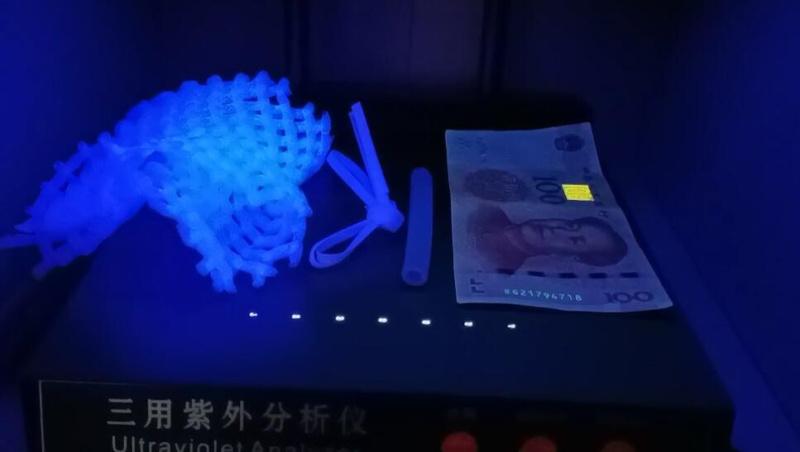
2. Typical application scenarios of ultraviolet analyzers
The functional characteristics of UV analyzers make them a "universal inspection tool" across industries, mainly used in the following areas:
(1) Scientific research and biomedicine
In molecular biology experiments, it is the standard equipment for DNA/RNA electrophoresis gel detection. Through 254nm or 365nm ultraviolet light excitation, the distribution and brightness of nucleic acid bands can be clearly observed, and it can be used for gene cloning and PCR product analysis. In protein detection, concentration and purity can be quickly analyzed with fluorescent dyes (e.g., Coomassie bright blue stained and excited by ultraviolet light). In addition, its UV sterilization function is also used for laboratoryware disinfection or cell culture environment control.
(2) Chemical and materials industry
It is used in the chemical industry to detect the properties of fluorescent materials (such as fluorescent indicators in dyes and coatings) or to analyze the composition of additives in rubber and crude oil. By stimulating the fluorescence properties of the sample, it is possible to identify the type of raw material (e.g., natural vs. synthetic rubber) or to evaluate the uniformity of the additive. It can also be used in petrochemical industry to analyze the aromatic hydrocarbon content of oils.
(3) Food safety and agriculture
In food processing, it is used to detect toxins (e.g., aflatoxin), spoiled ingredients (e.g., expired fats, honey), or illegal additives (e.g., optical brighteners). These harmful substances emit specific fluorescence under ultraviolet light, and the observation signal can quickly screen the problem sample; In the inspection of agricultural products, the fluorescence characteristics of vitamins and other nutrients can also be analyzed to assist in the evaluation of quality.
(4) Public safety and cultural relics protection
Public security criminal investigation uses the "developing" characteristics of ultraviolet light to detect fingerprint residues (obvious fluorescence of sweat and oil), dense handwriting (invisible ink appearance) or blood stains (hemoglobin fluorescence reaction); The Department of Archaeology and Geology assists in judging the authenticity of fossils or mineral types by stimulating the fluorescence signatures of minerals or cultural relics.
3. How to choose the right UV analyzer? Key selection points
The core of the selection is "demand-oriented", which needs to match the instrument parameters and functions according to specific application scenarios:
(1) Clarify application requirements
If biological laboratories are used for DNA electrophoresis detection, prefer 365nm wavelength (high efficiency and low damage to nucleic acid fluorescence) and be equipped with a camera obscura; Chemical detection of fluorescent materials may require multi-wavelength switching functions; On-site testing (e.g., food security checks) requires portable equipment.
(2) Pay attention to core parameters
• UV light source wavelength and type: 254nm (short wave) and 365nm (long wave) are available in the mainstream, and high-end models support multi-wavelength combinations, which need to be selected according to the fluorescence characteristics of the target substance (such as 365nm commonly used for DNA).
• Light source intensity and uniformity: intensity affects the clarity of the fluorescence signal (e.g., nucleic acid detection typically requires ≥ 100 μW/cm²), and uniformity ensures consistent illumination on the sample surface.
• Light Filtering System and Safety: High-precision filters filter visible light interference (transmittance <1%), and the viewing window needs to filter 95% of UV rays to protect ≥the operator.
• Functional expandability: such as built-in camera port (photo recording), spotting hole design (gel positioning), adjustable lamp angle (local irradiation), etc., suitable for complex experimental needs.
(3) Other considerations
• Usage scenarios: The laboratory uses a fixed table selector/camera obscura; Choose portable for on-site testing.
• Light source life and maintenance: high-quality quartz lamps have a lifespan of > 1000 hours, low energy consumption and low heat generation; Some instruments are equipped with thermal design to extend service life.
• Ease of operation: such as independent wavelength switching buttons, Chinese interface, timing function, etc., simplify the operation process.
summary
UV analyzers play a key role in biomedical research, chemical material testing, food safety screening, and other fields through the specific interaction between UV light and substances. When selecting a model, it is necessary to closely follow the application requirements, focus on parameters such as wavelength matching, light source intensity and safety, and functional scalability, and select devices with stable structures or portable equipment in combination with the use scenario (laboratory/field) to finally achieve efficient and accurate detection goals.
-
![Jinan HORIZON ZW-3 UV Analyzer]() Jinan HORIZON ZW-3 UV Analyzer$ 192.00
Jinan HORIZON ZW-3 UV Analyzer$ 192.00 -
![Qiwei WFH-204B Portable UV analyzer]() Qiwei WFH-204B Portable UV analyzer$ 132.00
Qiwei WFH-204B Portable UV analyzer$ 132.00 -
![Qiwei WFH-204B Portable UV analyzer]() Qiwei WFH-204B Portable UV analyzer$ 135.00
Qiwei WFH-204B Portable UV analyzer$ 135.00 -
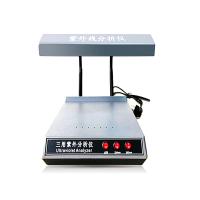
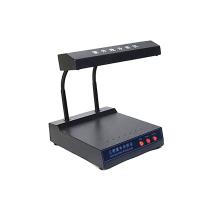
![Qiwei ZF-1S desktop plastic case three-purpose UV analyzer]()
-
![Qiwei ZF-1 desktop three-purpose UV analyzer]()
-
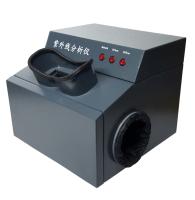
![QIWEI WFH-203B Obscura UV Analyzer]() QIWEI WFH-203B Obscura UV Analyzer$ 207.00
QIWEI WFH-203B Obscura UV Analyzer$ 207.00
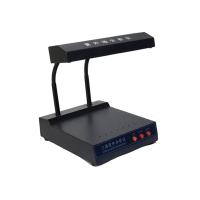
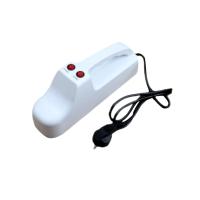
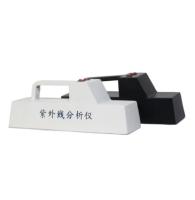
-
![Qiwei WFH-204B Portable UV analyzer]() Qiwei WFH-204B Portable UV analyzer$ 132.00
Qiwei WFH-204B Portable UV analyzer$ 132.00 -
![Qiwei WFH-204B Portable UV analyzer]() Qiwei WFH-204B Portable UV analyzer$ 135.00
Qiwei WFH-204B Portable UV analyzer$ 135.00