Angle of repose meter is what? How to select? Powder flowability detection core equipment full analysis
1. What is a repose angle meter? Core principles and industry values
The angle of rest (also known as the angle of rest) is the maximum stable angle formed between the free surface and the horizontal plane of the powder in the static equilibrium state, which directly reflects the frictional characteristics, cohesion and fluidity state between the particles. The smaller the angle of rest, the better the fluidity of the powder (for example, the angle of reposing of fine sand is about 30°); Otherwise, the fluidity will be worse (e.g., wet clay with a rest angle of more than 50°).
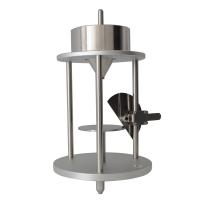
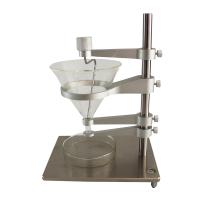
The angle of repose meter provides accurate measurements by simulating the natural accumulation process of powder. The mainstream method is the "injection definite bottom method": the powder is injected into the horizontal receiving tray (diameter about 80mm) at a uniform speed through a specific funnel (taper 60°±0.5°, outlet diameter 5mm), and after the stacking is stable, the angle between the cone bus and the horizontal plane is measured with a protractor (mechanical or electronic sensor). This method complies with a number of national standards (such as GB/T 16913-2008) and is suitable for chemical, food and other fields, providing a scientific basis for production process optimization.

2. Four major application fields of the angle of rest meter
1. Pharmaceutical industry: ensure production stability
The angle of repose of powder raw materials directly affects the filling uniformity and filling accuracy of tablets. If the angle of rest is too large (>45°), it is easy to bridge and agglomerate; Too small (<30°) may cause dust to fly. By determining the angle of repose of API powders or excipients, companies can adjust formulations (e.g., add flow aids) or optimize process parameters.
2. Chemicals and new materials: optimize pellet processing performance
The mobility of chemical products such as plastic pellets and battery materials relies on Cape of Rest data. For example, poorly flowable particles in injection molding can lead to incomplete mold filling; In the preparation of new energy materials, excessive repose angle will affect the mixing uniformity. The instrument can guide the optimization of the granulation process and the selection of conveying equipment.
3. Food industry: Improve packaging efficiency
Angle of rest related automatic packaging machine measurement accuracy of flour, powdered sugar and other food raw materials. For example, in the bread production line, the flour rest angle is too much to block the feeding port; In confectionery production, insufficient fluidity of powdered sugar can prolong mixing time. By measuring the angle of rest, it is possible to screen suitable raw material batches.
4. Scientific research and quality inspection: basic research support
Universities and research institutes study the influence of particle shape, humidity and other factors on fluidity by measuring the angle of repose of nanopowder and ceramic particles. The quality inspection agency verifies the fluidity index of industrial powder according to national standards to ensure product quality compliance.
3. How to scientifically select the angle of rest Tester? Key parameters and scenario adaptation
1. Measurement method: match the powder characteristics
• Fixed funnel method: suitable for conventional powders (such as flour) with medium flow (30°-45° repose angle), simple operation and low cost.
• Injection limited bottom method (mainstream standard): in accordance with GB/T 16913-2008, suitable for high-precision demand scenarios such as raw materials, simulating the actual stacking state.
• Auxiliary vibration method: For materials with extremely poor fluidity such as wet clay, uniform stacking is achieved with the assistance of external forces.
2. Core Parameters: Precision determines reliability
• Funnel specification: The outlet diameter (4-20mm) needs to match the powder particle size (small diameter for fine powder, large diameter for coarse particles), and the taper is usually fixed at 60°±0.5°.
• Tray size: 80±2mm diameter is the industry standard, avoiding edge effects and adapting to small sample volumes (5-50g).
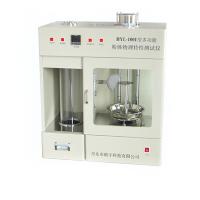
• Angle measurement accuracy: Electronic sensors (±0.5°) are better than mechanical protractors (±1°-2°), suitable for quality inspection scenarios.
3. Sample Adaptability: Flexibility to meet needs
• Small sample volume testing (e.g., laboratory research and development): Choose instruments with a minimum sample volume of 5ml to reduce raw material waste.
• High-volume batch testing (e.g., industrial quality inspection): Devices that support sample cells above 500ml.
• Industries with high hygiene requirements (e.g., food): Contact parts should be made of 304 stainless steel, which is easy to clean and corrosion-resistant.
4. Suggestions for typical scenario selection
• Chemical laboratory: When testing coarse particles or high humidity materials, vibration assist devices and large-diameter receiving trays (diameter 100mm) can be optional.
• Food processing plants: For powders with good flowability (such as powdered sugar), fixed funnel instruments can meet the needs, with a focus on ease of cleaning.