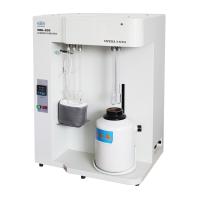
Specific surface area Tester analysis: principle, selection and practical application
1. Overview of the specific surface area Tester
The core function of the specific surface area Tester is to quantify the specific surface area (the total surface area per unit mass of the substance, covering the inner and outer surfaces) and the pore size distribution (statistical law of pore size) of the material through gas adsorption technology. This type of instrument is widely used in materials science, energy-related research, environmental governance, basic scientific research and other fields. As a key physical parameter of materials, specific surface area has an important impact on the chemical reactivity, adsorption capacity, heat conduction efficiency and other properties of materials, so the demand for high-precision testing has promoted the technological development of this type of instrument.
From the perspective of technical classification, the specific surface area Tester is mainly based on the gas adsorption method (such as nitrogen adsorption), which calculates the specific surface area and pore structure parameters by measuring the physical adsorption capacity of gas molecules on the surface of the material, combined with the theoretical model. According to different measurement principles, instruments can be divided into two categories: dynamic method (flow method) and static method (capacitive method), which have significant differences in testing mechanism, scope of application and accuracy, and users need to choose the adaptation scheme according to the material properties and research goals.

2. The core testing principle of the specific surface area Tester
Gas adsorption method is the mainstream technical path of specific surface area Tester, and its theoretical basis is multilayer adsorption theory (BET theory). This theory suggests that at low temperature (usually liquid nitrogen temperature 77K), gas molecules (such as nitrogen) will form monolayer or multilayer adsorption on the solid surface, and the specific surface area and pore structure information of the material can be derived by measuring the relationship between the adsorption capacity and the relative pressure of the gas (P/P₀). Specifically, the test principles are divided into two categories: dynamic method and static method:
(1) The principle of dynamic method (flow method).
The dynamic method flows continuously through the sample tube through a mixed stream of carrier gas (e.g., helium) and adsorbed gas (e.g., nitrogen). When the sample is in a low-temperature environment, nitrogen molecules are adsorbed to the surface, causing a decrease in the concentration of nitrogen in the gas mixture, which in turn causes a change in thermal conductivity (because helium conductivity is much higher than nitrogen). This concentration change is converted into an electrical signal by a thermal conductivity Detector (TCD), forming a desorption peak related to adsorption. During the test, the adsorbed nitrogen was desorbed by removing liquid nitrogen, the desorption peak area was detected, and the volume of adsorbed gas per unit mass sample was calculated in combination with calibration parameters (such as the correction curve of pure nitrogen), and finally the specific surface area was derived according to the BET equation. Dynamic methods typically only measure single-point adsorption at specific relative pressure points (e.g., P/P₀ = 0.3) and are therefore more suitable for rapid screening of medium to high specific surface area materials (>1 m²/g), but have limited analytical accuracy for microporous (pore size <2 nm) and low specific surface area (<0.1 m²/g) materials.
(2) The principle of static method (capacity method).
The static method is based on the measurement of pressure equilibrium in a high-vacuum containment system. The sample is first degassed at high temperature to remove surface impurities and then placed in a sample tube at liquid nitrogen temperature. The system injects nitrogen into a space of known free volume through a dosing tube in steps, closing the valve after each injection, and the gas diffuses into the closed system containing the sample and reaches pressure equilibrium. Changes in equilibrium pressure (Peq) are monitored by a high-precision pressure sensor, combined with the ideal gas state equation (PV = nRT), to calculate the actual adsorption capacity of nitrogen (Δnads) after each injection. This process was repeated to obtain a series of adsorption data at relative pressures (P/P₀, typically in the range of 0.05 - 0.3) to plot the complete adsorption isotherms. Based on the BET theory, the isotherm was fitted to obtain the single-layer saturated adsorption capacity (Vm), and then the specific surface area was calculated (formula: SBET = Vm·NA·σm / (m·Vm, STP) × 10, where NA is the Avogadro constant, σm is the cross-sectional area of the nitrogen molecule, and m is the sample mass). The advantage of the static method is that it can obtain high-resolution isotherm data, and combined with models such as density functional theory (DFT) or non-local density functional theory (NLDFT), it can accurately analyze the distribution characteristics of micropores (<2nm), mesopores (2-50nm) and macropores (>50nm), which is suitable for deep characterization in R&D scenarios.
3. Key factors in the selection of specific surface area Tester
In the face of diverse material testing needs, the selection of specific surface area Testers needs to consider the following core dimensions:
(1) Material type and pore size range
• Microporous materials (e.g., zeolite and activated carbon): Static volumetric instruments are preferred because they can accurately detect the adsorption behavior of micropores (<2nm) through high-vacuum systems and pressure sensors, and analyze pore size distributions in combination with DFT models.
• Mesoporous/macroporous materials (e.g., catalyst supports, ceramics): Both static or dynamic methods can be applied, but if you need to analyze pore size distributions (especially mesopores), the isotherm data integrity of the static method is more advantageous; The dynamic method is more suitable for rapid batch testing of samples with medium specific surface area (e.g., quality control in industrial production).
• Ultra-low specific surface area materials (e.g., some metal powders, < 0.01 m²/g): Only static capacitance methods provide reliable measurements, and dynamic method sensitivity limitations may not accurately capture weak adsorption signals.
(2) Measurement accuracy and resolution
The static capacitance method provides test results with repeatability errors < 1% with high-precision pressure sensors (such as capacitive absolute pressure thin film sensors with an accuracy of up to 0.1%) and tight vacuum control (ultimate vacuum level of 10⁻⁸ Torr), especially for the stringent requirements of data consistency in the scientific field. The dynamic method is affected by the stability of the carrier gas velocity, and the accuracy is relatively low (repeatability error is about 1-3%), but it is easy to operate and fast (a single measurement takes several minutes), which is suitable for online monitoring at industrial sites.
(3) Automation and ease of operation
Fully automated instruments reduce human intervention (e.g., manual adjustment of liquid nitrogen surfaces, sample switching), reducing operational errors and increasing efficiency. In terms of software functions, instruments that support isotherm analysis, pore size distribution fitting (such as BJH model for mesoporous and HK model for microvia) and data export (such as Excel and PDF reports) are more conducive to research in-depth mining. For multi-station parallel testing needs, such as analyzing 4 samples simultaneously, a multi-channel design is available to further increase throughput.
(4) Extended functions and compatibility
Some high-end instruments support a variety of adsorbed gases (such as argon, krypton, carbon dioxide), which are suitable for testing special materials (such as light gas adsorption research) or extreme conditions. Instruments equipped with mercury intrusion modules complement the analysis of macroporous (>50nm) structures for full pore range characterization.
4. Practical logic of specific surface area Tester selection
During the selection process, users need to comprehensively evaluate the following elements based on material properties, combined with research objectives and budget constraints:
(1) Clarify the test requirements: microporous or mesoporous?
If the research object is mainly microporous (such as molecular sieve and activated carbon), a static volumetric instrument with high vacuum capability and pressure sensor accuracy must be selected to ensure accurate detection of <2nm pores. If you focus on mesopores or macropores (e.g., catalyst supports, ceramic poroses), static or dynamic methods can meet your needs, but the isotherm data of the static method can provide richer information for pore size distribution analysis.
(2) Weigh accuracy and efficiency
Scientific research scenarios usually require high repeatability (error <1%) and complete pore structure data, and the static capacity method is preferred. Batch inspection in industrial production is more concerned with speed and cost, and the dynamic method is preferred due to its fast measurement (minutes per sample) and low maintenance. It is worth noting that some high-end dynamic methods can be extended to the low specific surface area range through improved detection techniques such as dual-source chromatography, but their accuracy is still not comparable to that of static methods.
(3) Inspect the internal quality of the instrument
In terms of structural design, fully enclosed modular systems (such as independent vacuum modules and air circuit modules) can reduce environmental interference and improve long-term stability; The performance of core components (such as pressure sensors, Vacuum Pumps) directly affects the test accuracy - for example, the accuracy of imported capacitive absolute pressure thin film sensors can reach 0.1%, while the error of domestic ordinary sensors may exceed 1%. Free-space calculation methods such as automatic control systems for liquid nitrogen surfaces are also key, eliminating measurement errors caused by liquid nitrogen volatilization and ensuring data reliability.
(4) Software and extension functions
The intelligent software system should support a variety of theoretical models (BET, Langmuir, BJH, DFT, etc.), and can automatically fit isotherms, generate pore size distribution curves and specific surface area reports. Multi-gas compatibility (e.g., nitrogen, argon, krypton) expands the range of applications, while remote control functions (e.g., network port connection) facilitate laboratory management. For applications that require compatibility with mercury injection, the choice of an instrument with expandable modules provides more flexibility.
5. Summary
Specific surface area Testers play an important role in material characterization. Its test principle is based on the gas adsorption method, and the dynamic method and the static method have their own characteristics and scope of application. When selecting, comprehensive considerations should be given from various aspects such as material type, measurement accuracy, degree of automation, and extended functions. In the future, specific surface area Testers will develop in the direction of higher precision and intelligence, and designs such as multi-station parallel testing will also improve testing efficiency. When selecting a model, users should make comprehensive decisions based on the actual characteristics of the material, the research stage and the long-term use cost to choose the instrument scheme that suits their own needs.
-
![JINGXIN JB-5 BET Surface Area Analyzer]() JINGXIN JB-5 BET Surface Area Analyzer$ 10252.00
JINGXIN JB-5 BET Surface Area Analyzer$ 10252.00 -
![JINGXIN JB-2020 BET Surface Area Analyzer Dual gas source dynamic test method]()
-
![INESA INESA WBL-830 Automatic specific surface area and porosity analyzer]()
-
![INESA INESA WBL-820 Automatic specific surface area and porosity analyzer]()
-
![INESA INESA WBL-810 Automatic specific surface area and porosity analyzer]()