Putty applicator comprehensive analysis: definition, function, testing principles and selection guide
1. Basic cognition of putty scrapers
1. Definition of putty scraper
A putty scraper is a tool and equipment designed to evenly apply putty materials to the surface of various substrates. In architectural decoration engineering, putty is mainly used to fill the uneven parts of the wall base layer and create a good foundation surface for subsequent coating construction. From a professional point of view, putty scrapers can be divided into two categories: tools for building construction and instruments for laboratory testing.
Putty scraping tools commonly used in building construction include:
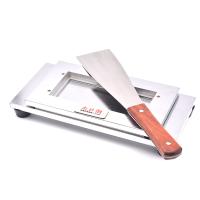
• Putty scraper: Composed of a metal blade and a wooden/plastic handle, suitable for small area repairs and detailing
• Putty trowel: A tool with a large working surface, suitable for large-area putty leveling operations
• Special scrapers: special-shaped scraping tools designed for special construction needs
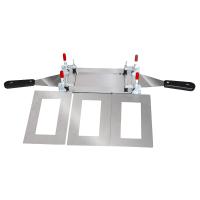
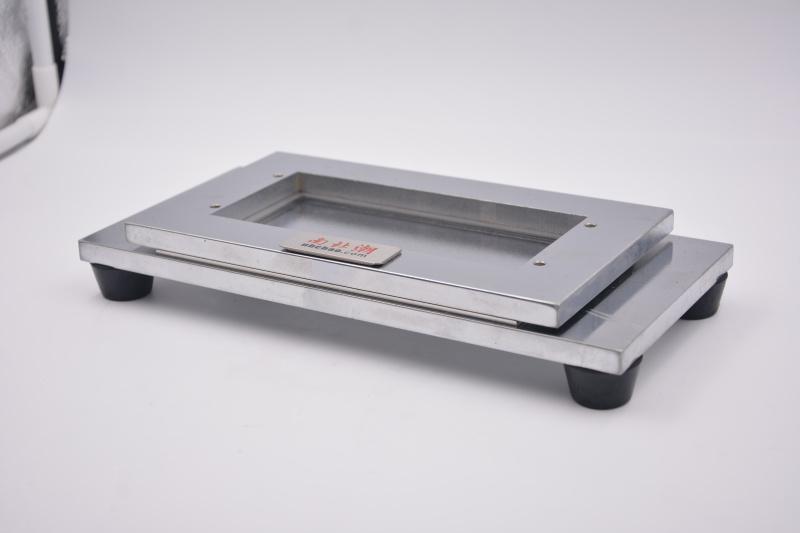
Putty scrapers for laboratory testing are precision instruments manufactured in accordance with relevant standards, mainly used to prepare putty coatings of standard thicknesses for coating performance testing.
2. The main function of the putty scraper
In the field of architectural decoration, the main functions of putty scrapers are:
1) Base layer treatment: fill in wall cracks, holes and other defects
2) Surface leveling: eliminate the unevenness of the base layer
3) Coating preparation: Provide a uniform base surface for subsequent coating application
4) Quality control: Ensure construction quality with professional tools
In the field of inspection, the core functions of putty scrapers are:
1) Standard Coating Preparation: Putty coatings of specific thicknesses are made according to specification requirements
2) Performance testing support: Provide standard specimens for the physical properties of coatings
3) Experimental Reproducibility: Ensure controllability and repeatability of experimental conditions

2. The working principle of putty scraper
1. How construction scraping tools work
Putty scraping tools used in building construction mainly rely on manual operation to achieve their functions:
• The scraper distributes the putty material evenly through the relative movement of the blade to the wall
• The operator adjusts the thickness of the grease layer by controlling the scraping angle and force
• Gradually achieve the desired flatness by means of multiple thin scrapes
The effectiveness of such tools largely depends on the experience and technical level of the operators, and is suitable for conventional construction with relatively low precision requirements.
2. The test principle of the test scraper
Putty scrapers for professional testing follow a standardized operating principle:
1) Datum preparation: Fix the putty material to be tested on a standard-sized substrate
2) Thickness Control: Ensures consistent coating thickness with precision-engineered film frames
3) Uniform scraping: Standardized scraping action is used to ensure the uniformity of the coating
4) Standardized parameters: including film frame thickness specifications (common 0.5mm, 0.7mm, 1.0mm, etc.) and operating specifications
This standardized working principle ensures the reliability and comparability of test results, which is an important guarantee for coating performance testing.
3. Key points for the selection of putty scrapers
1. Select by usage scenario
Building Construction Applications:
• Prioritize the tool's ease of operation
• Choose the right size of the tool according to the construction area
• Focus on tool durability and cost-effectiveness
Laboratory Testing Applications:
• Must comply with the requirements of relevant testing standards
• Precision control is a key consideration
• Matching standard accessories and consumables are required
2. Select by technical parameters
1) Thickness Control Precision:
• Inspection equipment requires precise thickness control capabilities
• Construction tools pay more attention to practicality and operability
2) Applicable substrate range:
• Choose the adapter tool based on the type of substrate you are actually using
• Consider the surface properties and dimensional specifications of the substrate
3) Operation mode:
• Hand tools are suitable for small-scale operations
• Power tools improve the efficiency of large-area construction
3. Other selection considerations
• Ease of Maintenance: The ease of cleaning and maintaining the tool
• Lifespan: The impact of material selection on tool durability
• Compatibility: Coordination with other construction tools
• Cost-effectiveness: Consider both procurement and usage costs
4. Practical application suggestions
1. Precautions for construction applications
1) The base layer should be treated thoroughly to ensure that the putty has good adhesion
2) Control the thickness of each scraping, and it is recommended to use multiple thin scrapes
3) Pay attention to the temperature and humidity conditions of the construction environment
4) Do a good job of cleaning and maintaining tools
2. Detection application considerations
1) Strictly follow the standard operating procedures
2) Ensure standardization of all consumables and accessories
3) Control laboratory environmental conditions
4) Do a good job in recording and managing testing data