NVP anode film FAQ and solution
Sodium vanadium phosphate (Na₃V₂(PO₄)₃, NVP, as a typical cathode material for polyanionic sodium-ion batteries, has attracted much attention due to its stable three-dimensional sodium superionic conductor (NASICON) structure, high operating voltage, and good thermal stability. However, in the actual electrode preparation process, the characteristics of NVP materials also bring a series of challenges in the coating process. This article will systematically sort out the common problems in NVP cathode coatings, analyze their causes, and provide corresponding solutions.
1. NVP material characteristics and their impact on the coating process
Before analyzing a specific problem, it is important to understand the intrinsic properties of NVP materials:
High Density and Hardness:NVP material has a high density and a hard NASICON structure, resulting in easy settling of slurry, which requires high mixing and coating processes.
Surface inertness:It has poor compatibility with carbon materials (such as SP) and is not easy to disperse, which can easily lead to inadequate conductive network construction.
Hydrophilicity:The binder affinity with some PVDF systems is insufficient, and the slurry stability is poor.
These properties are the root cause of many subsequent coating problems.
2. Common problems, cause analysis and solutions
Problem 1: The slurry settles seriously and has poor stability
Phenomenon description:The slurry quickly appears to be stratified after resting, with a hard sediment at the bottom that cannot be re-dispersed evenly by simple stirring.
Genetic analysis:
1) High material density: NVP material has high density and is easy to sink under the action of gravity.
2) Low viscosity of slurry: too much solvent or insufficient thickener (binder) to provide sufficient suspension.
3) Improper selection of dispersant or insufficient dosage: failed to effectively overcome the van der Waals force between particles, and accelerated sedimentation after particle agglomeration.
Solution:
1、Optimize the mixing process:
Planetary Stirring:The planetary mixer that combines rotation and revolution is used to ensure that the slurry is sheared and mixed with high intensity to break the initial agglomeration.
Step by step feeding:The usual sequence is: first completely dissolve the binder (PVDF) in the solvent (NMP) to form a glue → add the conductive agent (SP) for high-speed dispersion → Finally, add NVP powder in batches, stir at low speed to reduce the introduction of air bubbles, and disperse at high speed to mix evenly.
2、Optimize Slurry Formulation:
Adjust the solid content:Appropriately increase the solid content of the slurry to increase the overall viscosity.
Added dispersants:Efficient dispersants (such as PVP, phosphate ester dispersants) are introduced, and their hydrophilic groups interact with solvents, and the hydrophobic groups are adsorbed on the surface of NVP particles, forming steric hindrance or electrostatic repulsion to prevent agglomeration. The appropriate amount of addition (usually 0.5%~2% of the mass of the active substance) needs to be determined through experiments.
Using a cobinder system:CMC (sodium carboxymethylcellulose) can be added to a small amount in the PVDF system, and its long-chain molecules can effectively thicken and prevent sedimentation.
Problem 2: Cracks appear after drying the electrode piece
Phenomenon description:After drying in the oven, cracks or large cracks appear on the surface, which seriously affects the mechanical integrity of the electrode piece.
Genetic analysis:
1)Drying rate too fast:The surface solvent evaporates rapidly, the surface shrinks and the inner solvent does not escape in time, resulting in uneven internal stress and tearing the surface.
2)Poor viscoelasticity of slurry:The binder content is too low or unevenly dispersed, and the cohesion of the slurry is insufficient to resist the drying stress.
3)The thickness of the pole pieces is too thick:The first coating is too thick, which aggravates the difference in drying rate between the surface layer and the inner layer.
Solution:
1)Optimize drying procedures:Adopt "gradient heating" or "sectional drying" mode. In the first stage, use a lower temperature (such as 60-80°C) to dry slowly to allow most of the solvent to evaporate smoothly; The second stage increases the temperature (e.g., 100-120°C) to completely remove the residual solvent.
2)Adjust the slurry formulation:Ensure that the binder (PVDF) content is adequate (typically 3%-8% of the mass of the active substance) and is evenly dispersed to provide sufficient flexibility and adhesion.
3)Controlling coating thickness:If the desired areal density is high, the method of "multiple thin coats" can be used, i.e. one coat is applied → preliminarily dry→ then the next layer is applied, and so on.
Problem 3: The pole piece falls off powder and the peeling strength is low
Phenomenon description:The dried electrode piece is easily stripped off with a gentle rubbing of your fingers, or easily peeled off from the current collector (aluminum foil).
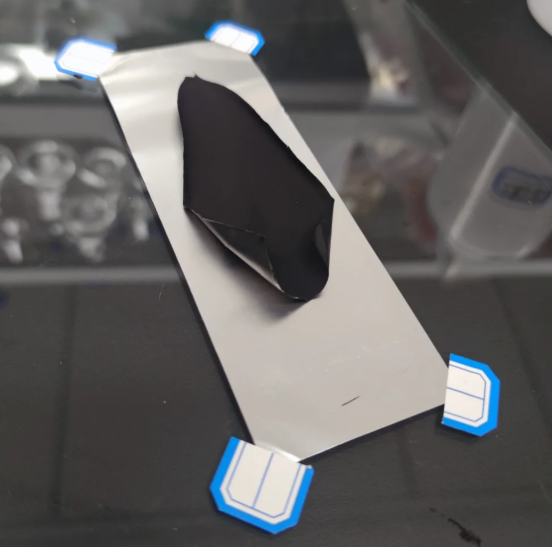
Genetic analysis:
1)Binder failure:Improper binder selection, insufficient dosage, or uneven dispersion.
2)Improper current collector handling:There is an oil or oxide layer on the surface of the aluminum foil, which affects the binder and the foil.
3)Poor permeability of slurry:The slurry failed to effectively infiltrate the microscopic holes on the surface of the aluminum foil, forming a mechanical interlock.
Solution:
1)Ensure binder quality and dosage:Check whether the molecular weight of PVDF is appropriate and ensure that the dosage is within the effective range.
2)Current collector pretreatment:Plasma cleaning or corona treatment of aluminum foil can effectively remove oil stains, activate the surface, improve surface energy, and greatly enhance the wettability and adhesion of the slurry. This is one of the more effective means.
3)Improve slurry wettability:Add a small amount of wetting agent to the slurry (e.g., NMP pre-wetted aluminum foil) or choose a better wettable binder system (e.g., SBR+CMC in an aqueous system).
4)Increase the rolling pressure:The dried electrode pieces are rolled to increase the tightness of contact between the active substance, conductive agent, binder and current collector.
5)Drying Adjustment:For the current collector to fall off, you can try to dry it at 100°C for more than 12 hours, not 60°C

Problem 4: Pinholes and bubbles appear on the surface
Phenomenon description:There are a large number of tiny holes (pinholes) or large bubble bulges on the surface of the pole piece.
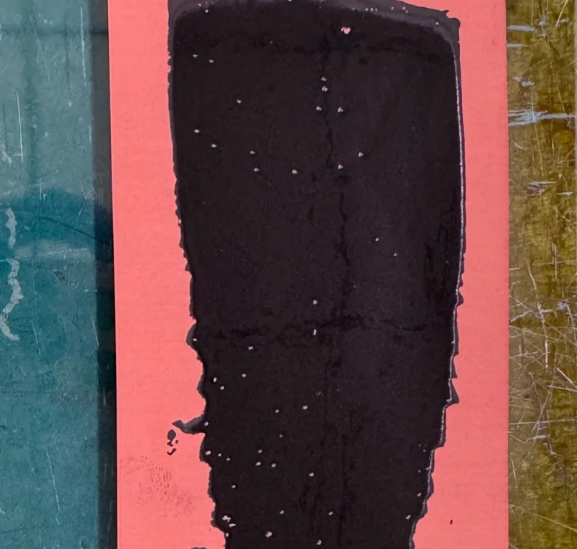
Genetic analysis:
1) Incomplete defoaming of the slurry: too much air is introduced during the mixing process.
2) Coating method: When the scraper is coated, the bubbles in the slurry are dragged by the scraper to form a pinhole trajectory.
Solution:
1) Vacuum defoameration: After stirring, transfer the slurry to a container for vacuum defoaming (e.g., let stand at -0.09 MPa for 15-30 minutes).
2) Adjust the mixing process: Extend the stirring time in the final low-speed mixing stage, which helps the large bubbles to float and rupture.
3) Control coating parameters: adjust the scraper angle, gap and coating speed to reduce the bubble in.

Problem 5: Poor uniformity of the pole pieces (stripes, uneven thickness)
Phenomenon description:There are directional stripes on the surface of the pole pieces, or the thickness difference in different areas is obvious.
Genetic analysis:
1)Uneven slurry dispersion:Aggregates are present in NVP particles or conductive agents.
2)Coating equipment problems:The scraper is chipped or damaged; The back roller or coating rod is not clean and damaged. (Choose a high-precision, easy-to-clean coating machine)
3) The supply of slurry is unstable.
Solution:
1)Ensure the quality of the slurry:Enhanced dispersion and filtration (filter slurry using a 100-200 mesh screen) to remove large particle agglomerates.
2)Equipment maintenance:Regularly inspect and clean and replace scrapers and rollers.
3)Calibration Coating Parameters:Ensure uniform coating gaps and stable substrate tension.
Problem 6: The surface of the electrode piece is rough and the graininess is serious
Phenomenon description:The dried pole piece feels rough, with obvious particle bulges visible to the naked eye and poor surface gloss. It may not be completely flattened after rolling, affecting battery performance.
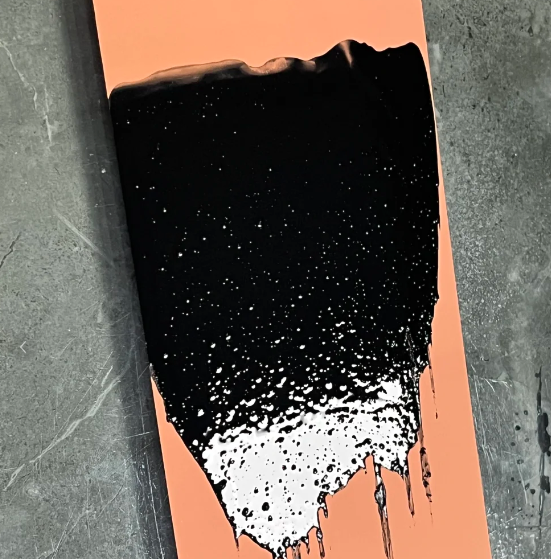
Genetic analysis:
1) NVP material itself has a large particle size or wide distribution: If the particle size of the purchased NVP raw material D50 is too large (such as >10μm) or the particle size distribution is too wide, the large particles will directly lead to the rough surface of the coating film.
2) Extremely inadequate slurry dispersion: This is a common reason. NVP hard particles and conductive agents (such as SP) form hard aggregates that fail to be effectively opened and dispersed, and these aggregates are scraped out by scrapers during coating, forming a graininess.
3) Improper handling of conductive agents: Conductive carbon black (SP) has a very high specific surface area and a strong tendency to agglomerate, and if it is not fully dispersed with the binder adhesive first to form a conductive glue, it will form a huge and hard-to-break conductive agent clumps.
4) Improper filtration of slurry: The slurry is mixed with environmental dust or large particles of foreign matter caused by the wear of the mixing equipment.
Solution:
1) Optimize the feeding sequence: Be sure to follow the order of "binder dissolution→ conductive agent dispersion, → active substance mixing". After adding the conductive agent, it is necessary to perform a long period of high-speed shearing (such as 3000rpm, 30-60 minutes) to ensure that it is fully mixed with the glue to form a uniform conductive glue, which is a key step.
2) Extend the stirring time: After adding NVP, ensure sufficient high-speed dispersion time to break up large aggregates.
3) Use grinding equipment:If the amount is small, it is recommended to use a mortar to mix it yourself, andOKBefore adding NMP, dry grinding is as thorough as possible, and it can also ensure that PVDF and other evenly mixed, after adding the dispersant, quickly grind for about 5 minutes。For mass production, the slurry can be cycled by a sand mill or ball mill, and the collision and shear force of the grinding beads can be used to completely break the agglomeration, which is an effective means to obtain ultra-fine and uniform slurry.
4) Source control - screening materials: select NVP products with moderate particle size (such as D50 in 4-8μm) and uniform particle size distribution (narrow distribution). For conductive agents, you can choose a model with better dispersion or use carbon nanotubes (CNTs)/graphene for compounding.
Enhanced Dispersion Process:
1) Strict filtration: Before coating, use a screen with a suitable mesh to filter the slurry to remove the remaining large particles and impurities.
2) Moderate rolling: By adjusting the pressure and clearance of the roller press, the raised particles on the surface are flattened and compacted, but it should be noted that excessive pressure may cause the pole pieces to break.

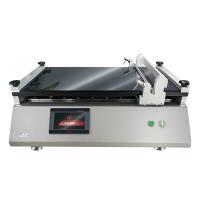
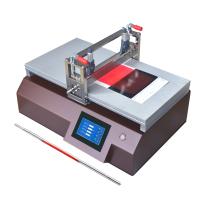
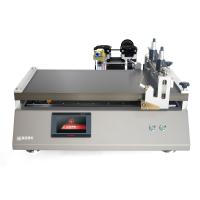
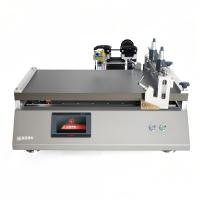
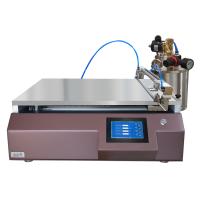
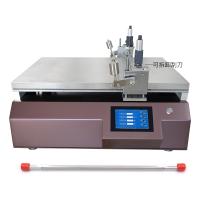
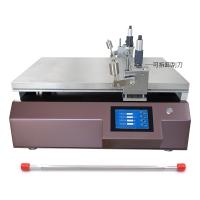
Experimental Automatic Coating Machine: Your professional partner for enhancing your R&D efficiency
In the face of the coating challenges brought by NVP materials, a high-quality laboratory automatic coating machine is undoubtedly the key to improving sample preparation efficiency and data consistency.
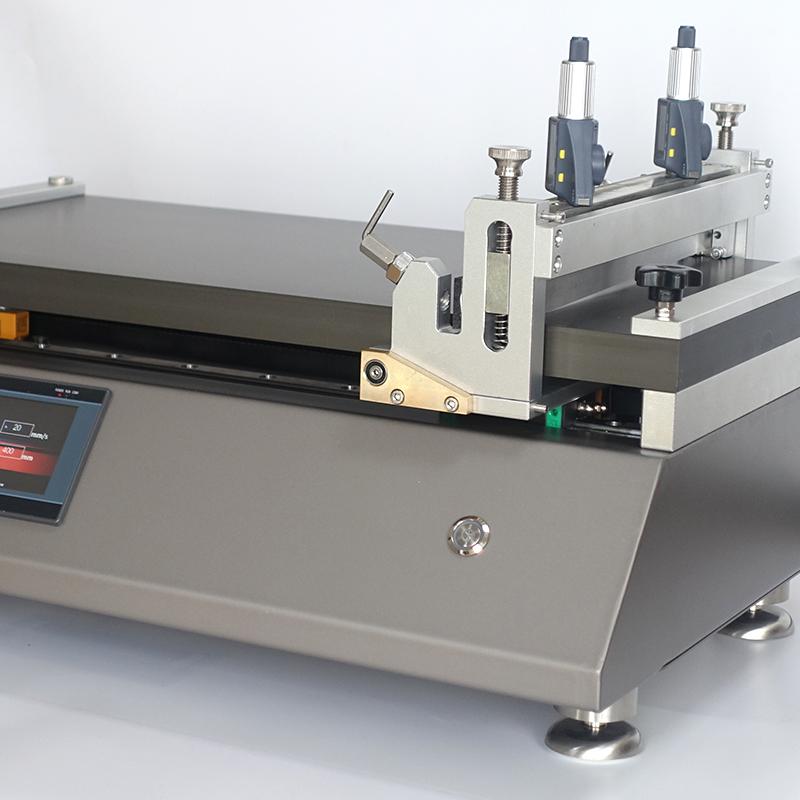
How to solve the problem of uneven thickness and streaks?
The experimental coating machine uses high-precision servo motors to control the coating gap to ensure that the coating thickness can be accurately adjusted and repeated at the micron level, and the difference in areal density of the same batch of electrodes is extremely small, which greatly improves the consistency and reliability of experimental data.
How to ensure that the slurry coating is consistent and avoid the impact of settlement?
The experimental coating machine is equipped with a constant speed and constant pressure feeding system to ensure that the slurry is applied in a uniform state from start to finish, eliminating the uncertainty caused by manual coating due to different operation times and techniques.
How to avoiddryDehiscence?
The equipment integrates a uniform Heating Plate that provides a stable and uniform thermal field to aid in the curing of the electrodes. To solve the problem of drying and cracking, we recommend that users use the "multiple thin coat" process scheme to replace the complex process of heating up: that is, apply a thin layer first, preheat at low temperature to initially cure, and then apply the next layer. This method, combined with the thickness control ability of the coating machine, can effectively withstand internal stress and also obtain high-quality pole pieces without cracks.
In summary, to meet the challenges of coating films for NVP materials, it is necessary to follow the systematic thinking of "material-formula-process-equipment". Among them, the use of high-precision automatic coating equipment is the core technical means to achieve process parameterization, standardization and reproducibility, which can lay a solid foundation for accurate electrochemical performance evaluation.
- 1How Flat Film Applicators Can Build a New Generation of Functional Materials on Fabrics
- 2Application of laboratory coater in LED fluorescent film Spreader
- 3Application Technology of Laboratory Film Applicator in Dielectric Thin Film
- 4Comparison of Advantages and Disadvantages of Three Heating modes for Laboratory Film Applicators
- 5Application and selection of laboratory coater in PDMS thin film prepative
- 6Scraping machine selection case: film substrate large size high accuracy scraping solution
- 7Application of Film Applicator in PEM Research and Preparation
- 8Application of Film Applicator in PVDF-HFP Material Research
- 9Application of Film Applicator in Cosmetic Base Body