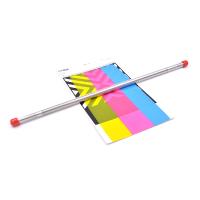
Bar Spreader Technology: Principles, Applications and Advantages over Miscellaneous coating methods
1. Introduction to wire rod coating technology
Line rod coating, also known as measuring rod coating or Meyer rod coating,The basic principle of wire rod coating is to control the amount of coating fluid deposited on the substrate by using microscopic gaps formed by winding steel wires or processing grooves. As the coating rod is dragged through the coating solution, the gap between the rods and wires determines the amount of fluid that passes, allowing for precise control of the wet film thickness. After deposition is complete, capillary forces prompt the coating solution to self-level and quickly form a continuous uniform film. This simple yet efficient working principle makes wire rod coating a widely used coating preparation method in laboratory research and large-scale industrial production.
As a traditional wet coating technology, wire rod coating has continued to evolve and improve over the past few decades, from the initial basic wire winding rod design to the later appearance of extruded wire rods, the technology has become increasingly sophisticated. Today, wire rod coating is one of the common methods for preparing functional coatings, especially in applications that require high precision and uniformity, such as high-end electronics, energy storage devices, and specialty material manufacturing.
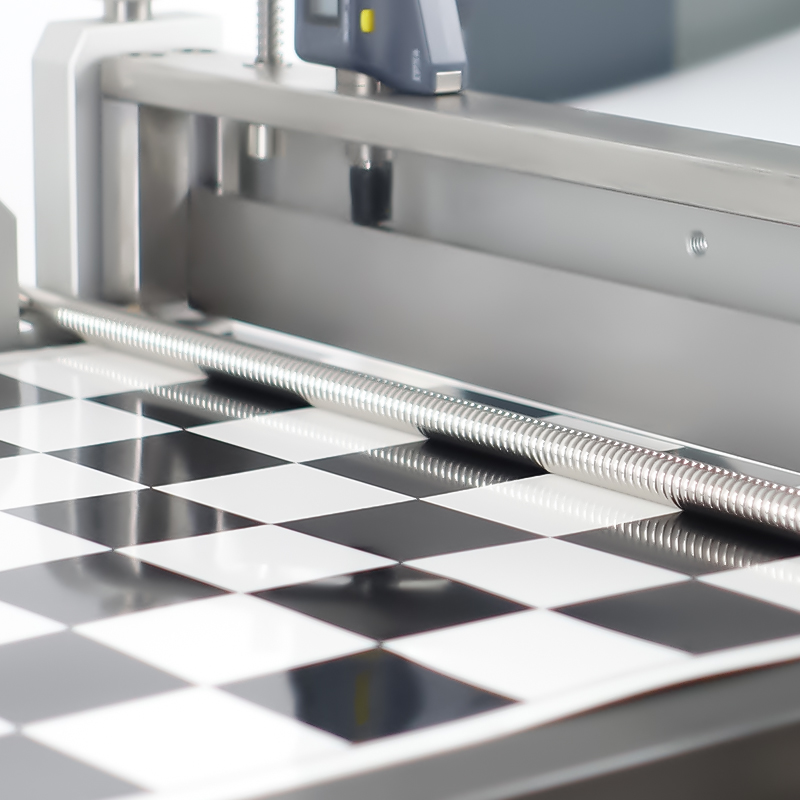
2 Coating wire rod and type
2.1 Winding wire rod
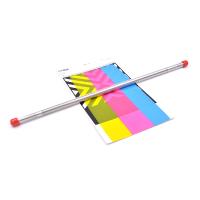
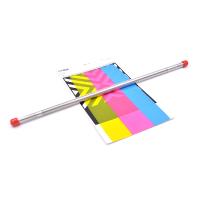
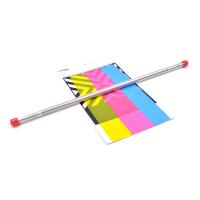
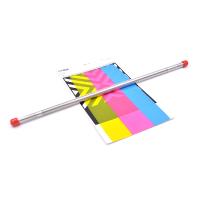
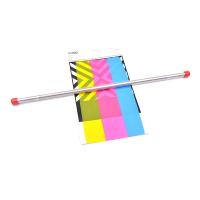
Wound wire rods, also known as Meyer rods, are the traditional and common type in wire rod coating, with a structure consisting of a metal rod body and stainless steel wires tightly wrapped around its surface. The diameter of the wire and the spacing between the windings directly determine the thickness and uniformity of the coating. Generally speaking, the larger the diameter of the steel wire, the greater the thickness of the wet film formed. This type of wire rod manufacturing process is relatively simple, low-cost, and can be available in a variety of thickness specifications to meet different application needs.
However, wire wound rods also have some inherent drawbacks. Due to the surface of the surface wrapped around thin steel wire, the concave and convex surface formed by the winding steel wire also makes cleaning more difficult, and residual paint may accumulate in the gap between the wires, affecting the accuracy of subsequent coating. In addition, traditional wire rods have technical limitations in ultra-thin coating (less than 4 μm), making it difficult to meet the growing demand for ultra-thin coatings.
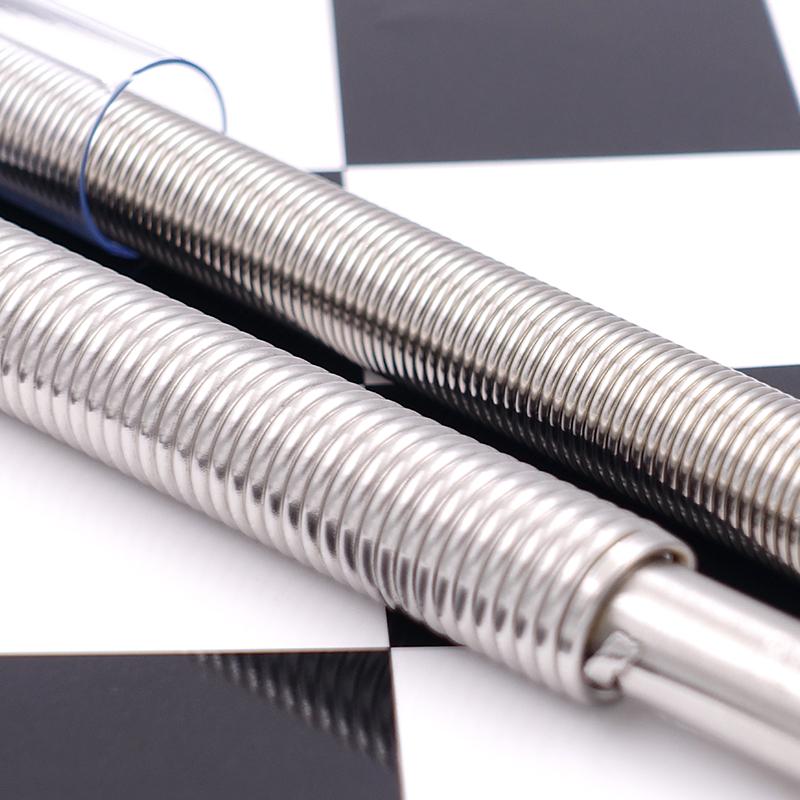
2.2 Squeeze wire rod
In order to solve the shortcomings of wire rods, extruded wire rods came into being. Extruded wire rods (such as those produced by OSP) use cold extrusion processing technology to directly process concave and convex wavy curves on the surface of the steel rod, forming a coating effect similar to that of wire winding rods. This design eliminates various problems caused by winding steel wires and has obvious technical advantages.
The core advantage of extruded wire rod is its integrated structure, which does not have the risk of wire loosening or breakage; Its surface curve is smooth and smooth, making cleaning more convenient; It is worth mentioning that it breaks through the coating limits of wire rods, enabling ultra-thin film coating as low as 1.5μm. In addition, the surface of the extruded wire rod is usually coated with hard chrome with a hardness of up to 1300HV, which greatly improves wear resistance and service life. While extruded wire rods are more expensive to manufacture, their good performance and long lifespan make them significantly cost-effective in precision coating applications.
3 Application fields of wire rod coating
3.1 Lithium-ion batteries
In the field of online energy storage, wire rod coating technology has become a key technology in the manufacturing of lithium-ion battery electrodes. During the coating of battery electrodes, wire rod coating is used to precisely control the thickness of the application of the active material, conductive agent and binder mixture paste on the metal foil current collector. This precise control is crucial for battery performance, as the consistency of electrode thickness directly influences the embedding and de-embedding behavior of lithium ions, which in turn affects the battery's energy density, cycle life, and safety performance.
The advantages of wire rod coating in battery manufacturing are particularly evident in its ability to maintain high uniformity and consistency of coatings at coating speeds of up to several meters, with an error range of within ±1μm. This precision is crucial for mass-produced battery products, ensuring that each battery delivers stable and reliable performance. In addition, by adjusting the parameters of the wire rod, battery products with different specifications and performance can be flexibly produced to meet the needs of different application scenarios, from consumer electronics to electric vehicles.
3.2 Solar cells
In the field of solar energy, wire rod coating technology provides a powerful tool for the development of next-generation photovoltaic equipment, especially in the preparation of perovskite solar cells and organic photovoltaics. Studies have shown that wire rod coating has been used to fabricate perovskite solar cells with an area of more than 100 cm² in combination with air knife post-processing and optimized temperature annealing. This achievement signifies the immense potential of wire rod coating in the preparation of large-area, high-efficiency solar cells.
The application value of wire rod coating in solar cell development is mainly reflected in its ability to provide a uniform large-area coating, which is essential for photovoltaic devices that capture light energy and convert it into electricity. The uniformity of the coating directly affects the generation and collection efficiency of photogenerated carriers, which in turn affects the final conversion efficiency of the cell. At the same time, the process simplicity and cost-effectiveness of wire rod coating make it a reliable bridge for the transition from laboratory research to industrialization, accelerating the commercialization of new solar cell technologies.
3.3 Functional coatings and printed electronics
In the field of functional coatings and printed electronics, wire rod coating shows a wide range of application prospects. For organic semiconductor and catalyst coatings, wire rod coating provides a fast and efficient method for thin film preparation. These functional materials are widely used in flexible displays, sensors, and energy conversion devices, requiring a high degree of uniformity and consistency in coatings.
Wire rod coating is also widely used in the production of specialty papers, packaging materials and viscose products. For example, in the production of special films such as release films, hardening films, reflective films, and decorative films, wire rod coating can accurately control the thickness of functional coatings to ensure the stability of product performance. Similarly, in the production of various adhesive tape products, wire rod coating ensures uniform distribution of adhesive layers, which directly affects the adhesive performance and ease of use.
4 Advantages over other coating methods
4.1 Contrast scraper coating
Squeegee coating is another common coating method that controls coating thickness by adjusting the gap between the squeegee and the substrate. Compared with scraper coating, wire rod coating shows obvious advantages in many aspects. First, wire rod coating provides a more uniform coating distribution because the unique design of the wire rod allows the coating to be better leveled on the substrate, creating a more consistent film.
Secondly, wire rod coating has significant advantages in ultra-thin coating, and the extruded wire rod can achieve a wet film thickness of as low as 1.5μm, which is a great challenge for scraper coating. In terms of coating speed, wire rod coating allows for higher production speeds, making it more suitable for large-scale industrial production. Additionally, wire rod coating is easier to operate, with quick replacement and cleaning processes, reducing production downtime and improving overall production efficiency.
4.2 Contrast Spraying Techniques
Spraying technology forms a coating by atomizing the paint into small droplets that are deposited on the surface of the substrate. The advantages of wire rod coating over spraying technology are high material utilization and environmental friendliness. A considerable part of the material is lost to the environment in the form of haze during the spraying process, which not only causes material waste, but may also cause harm to operators and the environment. Wire rod coating can transfer almost all coatings to the substrate, and the material utilization rate is close to 100%.
During the in-line stick coating process, the paint is applied directly to the substrate and scraped flat without harmful haze or splashes. This characteristic makes wire rod coating particularly suitable for coating expensive functional materials such as semiconductor polymers, perovskite precursors, etc., and can significantly reduce raw material costs. In addition, the coating produced by wire rod coating is more uniform and does not have the orange peel effect or edge effect commonly associated with spraying, providing a higher quality coating surface.
4.3 Competitiveness in other coating methods
Compared with other coating methods, wire rod coating is equally competitive in terms of cost control, ease of operation, and adaptability. For example, compared to spin coating, wire rod coating not only has higher material utilization but also can handle a larger area of substrate; Compared with gravure coating, wire rod coating has lower equipment cost and is easier to clean and replace.
A significant advantage of wire rod coating is its scalability, and the same technology can be used for both small-scale sample preparation in the laboratory and large-scale production at industrial level. This seamless transition from R&D to production allows for smoother technology transfer and significantly shortens product development cycles. In addition, wire rod coating is more adaptable to the environment, and the requirements for environmental cleanliness, temperature and humidity are relatively low, which reduces the cost and difficulty of production environment control.
5 Limitations and coping strategies of wire rod coating
Although wire rod coating has many advantages, it also has certain limitations in practical applications, requiring users to select and optimize according to specific needs. First, wire rod coatings have a certain range of adaptation to paint viscosity, and are less compatible with very high viscosity coatings or coatings with large and unstable particles. High-viscosity coatings can lead to uneven coatings, while large particles tend to form "clogging" between wire gaps, creating a non-uniform coating with streaks.
This limitation can be optimized by adjusting the rheological properties and solids content of the coating. For example, for coatings containing large particles, appropriate dispersants or surfactants can be used to improve the stability of the particles; For high-viscosity coatings, the solvent ratio or coating temperature can be adjusted to reduce viscosity. In addition, choosing an open-wound rod (for wire-wound) or an extruded rod with a specific groove type also better handles high-viscosity coatings.
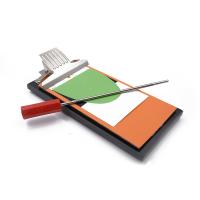
Second, wire rod coating, especially manual operation, is susceptible to small differences in experimental procedures, making it difficult to obtain highly reproducible coatings. To address this issue, automated coating systems, such as automatic stick coaters, can be employed to improve coating reproducibility by ensuring consistent pressure and coating gaps. These systems are usually equipped with CNC panels, allowing users to accurately set coating parameters such as coating distance and coating speed, ensuring a high degree of consistency between different people and different times of operation.
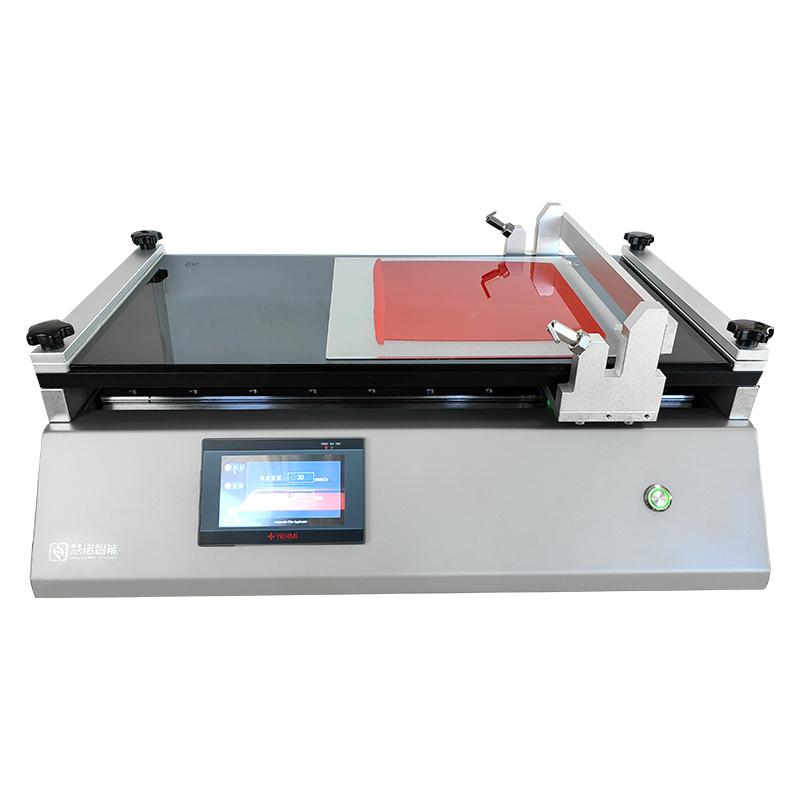
6 Future development trends
With the continuous emergence of new materials and technologies, wire rod coating technology is also continuing to develop and improve. The future development trend of wire rod coating is mainly reflected in the following aspects:
The first is high precision. With the development of electronic products in the direction of miniaturization and high performance, the requirements for coating accuracy are getting higher and higher. In the future, wire rod coating will develop in the direction of thinner and more uniform, and coating thickness control will be more precise, even towards the sub-micron level. The new extruded wire rod technology has laid the foundation for this, and more innovative designs are expected to emerge to meet the growing demand for ultra-thin coatings.
The second is intelligence and automation. Traditional wire rod coating, especially manual operation, relies heavily on the operator's experience and skill, resulting in highly variable results. In the future, wire rod coating will pay more attention to the automation and intelligence of the process, and by introducing sophisticated sensors and control systems to monitor and adjust coating parameters in real time, ensuring a highly consistent and repeatable coating process. These intelligent systems can automatically compensate for environmental changes and fluctuations in material properties, providing consistent and reliable coating quality.
The third is green and sustainable development. With the increasing awareness of environmental protection, wire rod coating technology will also pay more attention to environmental friendliness and sustainability. This includes developing wire rod designs that are easier to clean and maintain, reducing solvent use and cleaning waste generation; and optimize the coating process to improve material utilization and reduce energy consumption. At the same time, the combination of environmentally friendly materials such as water-based coatings and wire rod coating will also become an important research direction, reducing the potential impact on the environment and operators.
7 Conclusion
As a simple and efficient coating preparation technology, wire rod coating has shown a wide range of application value and great development potential in many fields. From its basic principles to practical applications, from comparison with traditional coating methods to future development trends, wire rod coating has become an important tool in modern industrial production and scientific research with its unique advantages.
With the continuous advancement of technology, especially the emergence of extruded wire rods and the development of automated coating systems, wire rod coating is overcoming its original limitations and continuously improving in terms of precision, efficiency and applicability. Whether in the field of energy storage and conversion, or in the field of functional coatings and printed electronics, wire rod coatings have proven their value.