Short range compression meters practical knowledge guide: types, principles and selection
The short-range compression tester is a special equipment for detecting the short-range compressive mechanical properties of materials, which provides data support for material quality evaluation and application by accurately controlling compression parameters and obtaining key indicators such as compressive strength and elastic modulus.
Instrument type
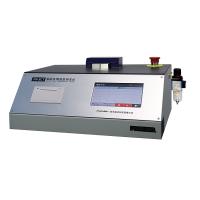
1. Benchtop precision type: Laboratory-specific, with high accuracy and complete data collection, supporting multiple sets of data comparison and analysis, and adapting to high-precision test scenarios.
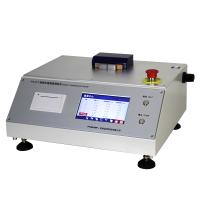
2. Portable and fast type: lightweight design, easy to detect on site, easy to operate, can quickly output core results, meet the needs of instant quality screening.
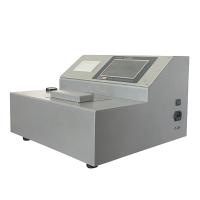
3. Servo control type: servo motor driven, smooth and controllable loading, support custom compression mode, suitable for multi-working condition testing of complex materials.
Test principle
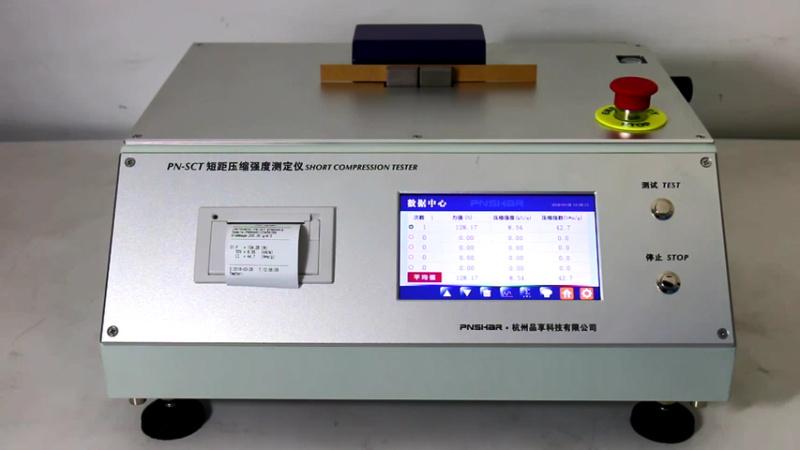
Prepare specification specimens according to industry standards and fix them in the fixture, and set the compression stroke, speed and termination conditions (up to the set compression amount or specimen failure). The instrument loading mechanism applies axial pressure, the sensor collects pressure and deformation data synchronously, and after the test, the system automatically calculates the compressive strength, elastic modulus and other indicators and generates a report.
Fields of application
Paper industry: Test the short-range compressive strength of paper and cardboard and evaluate the resistance to extrusion during printing and packaging.
Packaging industry: Testing the compressive bearing capacity of corrugated cardboard, cushioning materials, etc., to ensure the safety of warehousing and transportation.
Building materials industry: suitable for compressive stability testing of gypsum board, insulation materials, etc., to ensure construction quality.
Composite material industry: Assess the short-range compression characteristics of fiber-reinforced composite materials to support high-end applications.
Common faults and solutions
1. Pressure display drift: restart the instrument to recalibrate the zero point of the sensor, clean the interface dust, and check the wiring connection.
2. Loose clamping of the fixture: Replace the adaptive clamp and adjust the clamping pressure to avoid slipping or additional deformation of the specimen.
3. Compression stroke deviation: overhaul the transmission parts (lead screw, guide rail), replace the worn parts and recalibrate the positioning system.
4. Abnormal operating noise: Add special lubricating oil, tighten the loose connection parts of the fuselage, and troubleshoot the motor bearing problem.
Selection method
First, match the material characteristics, and choose the appropriate pressure range and stroke according to the thickness and hardness of the material. Refer to industry standards (such as GB/T 2679.8 for papermaking) to ensure compliance with specifications; Priority should be given to equipment with pressure accuracy of 0.5 or above and stable data collection; Combined with scene selection, the laboratory selects the benchtop precision type, the on-site testing selects the portable type, and the complex test selects the servo control type.
summary
Short-range compression testers are divided into three categories: benchtop precision, portable fast, and servo control, which are widely used in papermaking, packaging, building materials and composite materials industries to obtain material mechanical indicators through standardized compression testing. During use, it is necessary to solve common faults such as pressure drift and clamping loosening, and combine the material characteristics, industry standards, core parameters and usage scenarios to ensure the accuracy of testing and application adaptability.