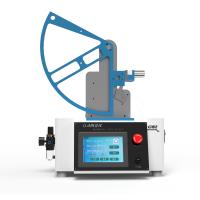
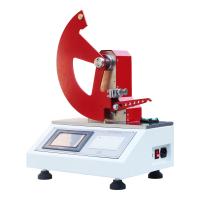
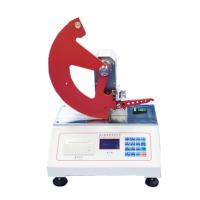
Tear tester core knowledge guide: types, principles, applications and selection points
The tear degree tester is a precision detection instrument specially designed to quantify the ability of paper, film, fabric, rubber and other materials to resist tear damage, and provide objective data support for quality control, performance evaluation and product development by simulating tear scenarios in actual use of materials.
type
Classified by test principle/standard
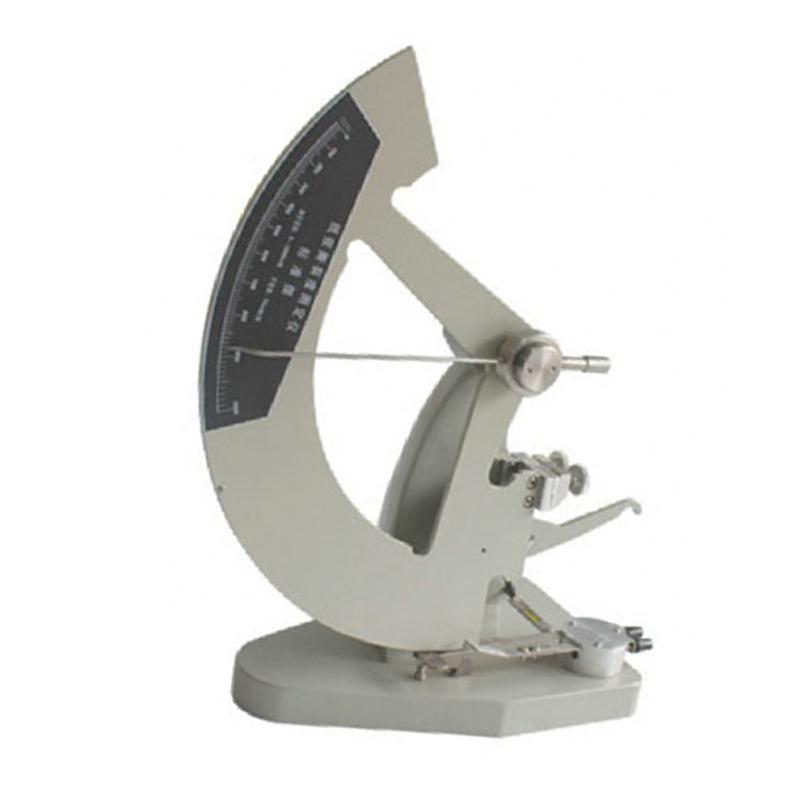
Elemendorf type (pendulum impact type, suitable for thin materials, according to ISO 6383, GB/T 455), trouser torn type (tensile tear type, suitable for tough materials, according to ISO 13937, GB/T 3917.2 standards), right angle/incision ripper (for special materials, prefabricated incisions required).
Classified by degree of automation
Manual type (manual operation, low cost), semi-automatic type (automatic clamping, release, automatic data display), fully automatic type (integrated sampling, sample preparation, continuous testing and report generation, high accuracy).
Classified by applicable materials
Paper/cardboard type, film/plastic type, fabric/nonwoven type, rubber/leather type.
Test principle
The core is to tear the material along the cut by standardizing the external force, measuring the required energy or force value. The Elemendorf type calculates the degree of tear based on the pendulum energy loss by releasing a pendulum impact specimen with known energy; The trouser tear meter fixes the "trouser leg" specimen on the fixture, stretches it at a constant speed, and records the force value and tearing work during the tearing process. The right angle/incision type is prefabricated and then torn to adapt to the special material properties.
Fields of application
It is widely used in papermaking (packaging paper, toilet paper, etc.), plastic/film (food packaging film, geotechnical film, etc.), textile/non-woven fabrics (clothing fabrics, mask non-woven fabrics, etc.), rubber/leather (tire rubber, leather products, etc.) industries, and provides support for material research and development and quality sampling inspection of scientific research institutions and quality inspection departments.
Common faults and solutions
Large deviations in test results – may be due to irregular sample preparation, uncalibrated instruments, fixture slippage or mismatched pendulum energy. The solution is to cut the specimen to the standard, calibrate the instrument regularly, clean or replace the fixture pad, and choose to adapt the pendulum energy.
Pendulum not released/not reset – mostly caused by mechanical buckle jamming, damaged return spring, or electrical failure. It is necessary to clean the buckle and lubricate and replace the spring, and if it is an electrical problem, you can restart the instrument or contact the after-sales service.
Sensor unresponsiveness – it could be a loose connection, a damaged sensor, or a software glitch. Replugging and unplugging cables, detecting and replacing sensors, reinstalling software, or factory reset.
Unstable specimen clamping – due to worn grips, insufficient pressure, or uneven specimen edges. It can clean and replace the clamp pad, adjust the clamping pressure, and ensure that the specimen edge is neat.
The instrument operates with abnormal noises - mostly due to lack of oil in the pendulum shaft, poor gear meshing or loose parts. It is necessary to apply special lubricating oil, check and replace gears, and tighten loose parts.
How to choose
1. Match the material and standard: Choose the corresponding type based on the test material (e.g., Elemendorf type for tissue paper, pants type for fabric) and industry standards.
2. Clear precision and efficiency: small businesses can choose manual/semi-automatic type, and fully automatic type is preferred in laboratory or R&D scenarios.
3. Adapt to parameter characteristics: Select the pendulum energy according to the material's tear strength range to ensure that the instrument supports standard specimen sizes.
4. Consider additional features: Choose functions such as data statistics, export, and LIMS system compatibility as needed.
5. Balance budget and after-sales: Choose a fully qualified manufacturer to ensure calibration services and warranty (warranty period ≥ 1 year).
summary
The tear degree tester is the core equipment for the detection of material tear resistance, and its type and principle need to be accurately matched with the test materials and industry standards, and it is widely used in multiple industrial fields and scientific research quality inspection scenarios. Material characteristics, testing needs and usage costs should be taken into account when selecting, and the occurrence of failures can be reduced through standardized operation and regular calibration in daily use. Mastering its core knowledge can effectively ensure the accuracy of material quality control and the efficiency of product research and development, and provide key technical support for quality improvement in related industries.