Ink absorbency tester core knowledge
In printing and packaging, ink production and other industries, the absorption performance of substrates to ink directly affects the quality of printed products, and the ink absorbency tester is the core equipment to quantify this performance. This article simplifies the analysis from the core dimensions to help you quickly grasp the key information.
Instrument type
Classification by test method
Gravimetric method: It is suitable for porous materials such as paper and cardboard, and the absorbency is calculated by measuring the weight difference before and after the sample is coated
Reflectance method: suitable for low porosity materials such as film and coated paper, and the degree of absorption is judged by the change of reflected light before and after ink application
Solvent extraction method: For high-viscosity inks or metal foils, the absorption rate is calculated by extracting unabsorbed inks with organic solvents
Classified by degree of automation
Manual type: Requires manual completion of ink application, weighing and other steps, suitable for small-batch testing
Semi-automatic type: Some steps are completed automatically (such as automatic ink application), balancing efficiency and cost
Fully automatic type: automatically complete testing, data recording and export, suitable for batch testing
Test principle
Core logic: quantify the adsorption/penetration ability of the substrate to ink
Gravimetric method: The weight difference measured after coating the quantitative standard ink → drying → calculated as "absorption = weight difference / ink area"
Reflectance method: The reflectance of uncoated (reference) and inked sample (test) is measured separately → with a specific wavelength of light→ and the absorption is reflected by the rate of change of reflectance
Solvent extraction method: Organic solvent soaking ink samples → extracting unabsorbed ink→ calculating the absorbance rate after conversion
Fields of application
Paper/cardboard production industry - test the absorbency of materials to avoid ink penetration and plate pasting during printing
Ink manufacturers – used for formulation research and development and quality inspection to ensure that inks match substrates
Packaging and printing industry - measuring substrates before printing and optimizing process parameters (e.g. ink volume, drying temperature)
Quality inspection and scientific research institutions - standard formulation, quality spot checks, research on new substrates (such as biodegradable materials).
Thin film/coating industry – detecting ink adhesion and absorption characteristics of non-porous materials for printing processes
Common faults and solutions
The test results are too biased
Possible causes: uneven ink coating, uncalibrated instrument, insufficient drying time
Solution: Pre-treat the sample according to the standard, check the ink coating device, calibrate with the standard sample, and extend the drying time
The instrument fails to start/freeze
Possible causes: poor power contact, mechanical parts jamming, software failure
Workaround: Check the power supply, clean the components, and lubricate, restart, or reinstall the software
Reflectance method data fluctuations
Possible causes: light source attenuation, sample tilt, contamination of the detection window
Solution: Change the light source and calibrate, adjust the sample fixture, wipe the window with anhydrous ethanol
The gravimetric method is not accurate
Possible causes: decreased balance sensitivity, ink area error, sample impurities
Solution: Calibrate the balance, confirm the ink area, and wipe the sample
The solvent extraction method is incomplete
Possible causes: wrong solvent selection, insufficient soaking time, sample not cut
Solution: Change the matching solvent, extend the soaking time, and cut the sample into small pieces
Selection skills
Gravimetric method for porous sample selection, reflectance method for non-porous selection / solvent extraction method, solvent extraction method for high-viscosity inks
Laboratory/quality inspection institutions select high accuracy, and production site rapid testing selects medium accuracy
Batch inspection is fully automatic, and small batches are manual/semi-automatic (cost control)
Preferentially select models that support multiple standards (such as ISO 3236, GB/T 12911) and interchangeable test modules
Choose a manufacturer with a good reputation and pay attention to calibration services, spare parts supply and subsequent consumables costs
epilogue
Ink absorption tester is the key equipment for quality control in the printing and packaging industry, mastering its type, principle, fault handling and selection points, which can help accurately select instruments, standardize operation, and ensure the stability of printed quality.
-
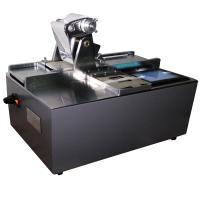
![YINUO YN-SXY01 Ink absorbency Tester Cardboard inks performance]()
-
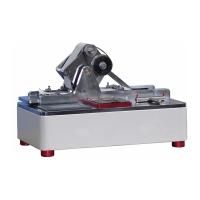
![Paper inks absorbency test ZY-YM-20 Ink absorbency Tester conforms to GBT12911]()
-
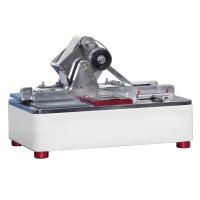
![JINGHUAYIQI LD - YXS-A Ink absorbency Tester printing Encasement testing equipment]()
-
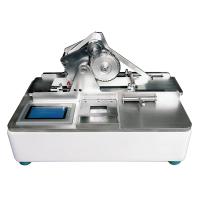
![PUYUN PY-H619 inks Absorption Tester]() PUYUN PY-H619 inks Absorption Tester$ 3830.00
PUYUN PY-H619 inks Absorption Tester$ 3830.00 -
![IMT-227 Ink absorbency Tester]()
-
![JINGHUAYIQI JH-YMXS-Z inks Absorption Tester]()
-
![YANTE YT-YM20 Ink absorbency Tester GBT12911 standard]()