UV Analyzer Practical Operation and Knowledge Guide
UV analyzer is a precision instrument that uses the interaction characteristics of ultraviolet rays with substances to achieve qualitative, quantitative analysis and structural characterization of substances.
type
According to the function and scenario, it can be divided into four core types: fluorescence ultraviolet analyzer (focused fluorescence signal detection, suitable for trace substance screening),
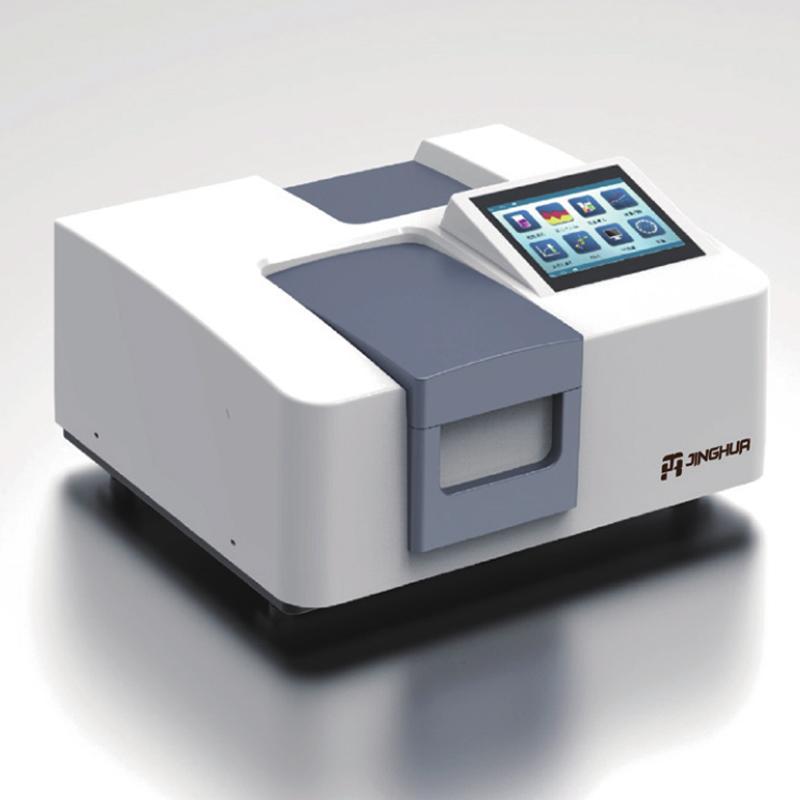
(Covering the 190-900nm band, supporting high-precision quantitative analysis, including single/double beam models), UV transmission/reflection analyzer (focusing on sample light transmittance and surface properties testing), portable/desktop model (portable adapted to on-site rapid testing, desktop model focusing on high precision and multi-function).
Test principle
The core is based on three mechanisms: ultraviolet absorption principle (substances absorb specific wavelengths of ultraviolet light and follow Lambert-Beer's law to achieve qualitative quantification), fluorescence excitation principle (substances emit fluorescence after stimulation, and trace analysis is completed through fluorescence signals), and transmission/reflection principle (characterize the physical properties and structure of samples through ultraviolet light transmission/reflection intensity).
Fields of application
Extensive coverage of multiple technical scenarios: aging detection, thickness and light transmittance analysis of plastics, coatings, and films in materials science; It is used in the chemical field for compound qualitative, purity detection and reaction monitoring; Screening for additives, harmful substances and pollutants in food and environmental testing; It is also suitable for academic research and industrial quality control scenarios.
Common faults and solutions
1. Insufficient light source intensity: replace the aging lamp, clean the optical path lens and mirror, and check the stability of the power supply;
2. Unstable test results: re-prepare the sample, calibrate the instrument according to the standard, and place it in a constant temperature environment to avoid interference;
3. The instrument cannot be started: check the power cord connection, replace the damaged fuse, and contact the manufacturer for maintenance if the fault is not solved;
4. Baseline drift: purge the optical path dust, clean the sample cell, and start the machine to warm up for more than 30 minutes;
5. High qualitative and quantitative errors: calibrate the wavelength, dilute the sample to a linear range, and use a well-paired cuvette.
How to choose
Qualitative analysis can be selected as a basic type, high-precision quantitative priority dual-beam UV-Vis spectrophotometer;
The wavelength range, light source stability, and detection accuracy should match the requirements of GB/T and other relevant standards.
On-site testing selects portable models, laboratory analysis selects benchtop models, and industrial online testing focuses on corrosion resistance and response speed;
Priority should be given to models with simple operation, easy availability of consumables, and perfect after-sales service, and match performance and cost according to needs.
summary
As the core instrument of material science, chemical analysis and quality control, UV analyzer adapts to the needs of scientific research, industry, environmental protection and other fields with a variety of types and clear test principles. In daily use, standardized operation and targeted fault handling can effectively ensure the detection accuracy and instrument stability, and provide reliable support for various analysis work.