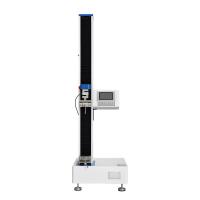
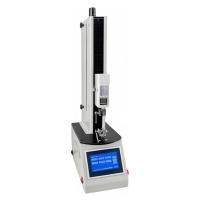
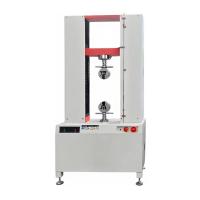
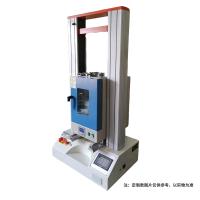
Universal Testing Machine Core Components: Sensors, Fixtures, Control systems Detailed explanation
As the core equipment of material mechanical property testing, tensile testing machine is widely used in metal, plastic, rubber, textile and other industries, and its detection accuracy and stability directly determine the reliability of material evaluation results. The core of the equipment's performance depends on three key components—sensors, fixtures, and control systems—that work together to accurately test the mechanical properties of materials, such as tensile, compression, and bending.
Sensors: the "perceptual core" of mechanical signals
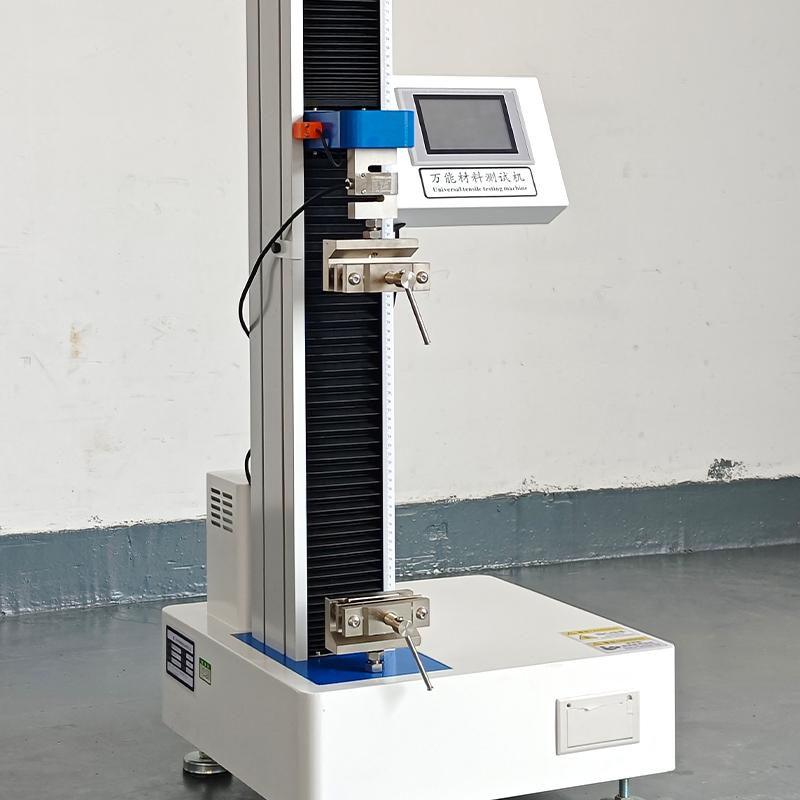
The sensor is the signal acquisition center of the tensile testing machine, and the core is the force sensor, which converts the mechanical load in the test process into an identifiable electrical signal, which is the first line of defense to ensure the accuracy of the test. At present, the mainstream force sensor adopts a strain gauge structure, which is pasted on the elastic element through the strain gauge, and when subjected to load, the elastic element produces a slight deformation, and the resistance value of the strain gauge changes accordingly, which is converted into a voltage signal by the Wheatstone bridge and then transmitted to the control system.
The performance parameters of the sensor directly affect the detection quality, among which range adaptability, accuracy level and stability are the most critical. When selecting, the range should be reasonably matched according to the maximum load of the test material to avoid overload damage or excessive range leading to insufficient accuracy. The accuracy level usually needs to reach 0.5 or above to meet industrial-grade testing standards, and at the same time, it needs to have good temperature stability and anti-interference ability to reduce the impact of environmental factors on signal acquisition.
Fixture: "Precision carrier" for specimen fixation
As a key component connecting the testing machine and the test specimen, the rationality of the design and the stability of the clamping directly determine the smoothness of the test process and the accuracy of the results. The fixture needs to meet two core requirements: first, firmly clamp the specimen to avoid slippage and loosening during the test, and to prevent the test data from being distorted due to clamping failure; The second is to adapt different types of specimens and design the corresponding clamping structure according to the material characteristics (such as hardness, toughness, and ductility).
Common clamp types include wedge clamps, flat clamps, winding clamps, etc., which are suitable for different scenarios: wedge clamps rely on inclined pressure to achieve self-locking, adapting to hard materials such as metals and alloys; The flat clamp is clamped through a flat surface and is suitable for flexible or brittle materials such as plastics and plates; The winding fixture is aimed at wire and fiber specimens to avoid excessive clamping force damaging the specimens. High-quality fixtures should have adjustable clamping force, wear resistance and corrosion resistance, and ensure uniform contact between the clamping surface and the specimen, reducing the interference of local stress concentration on the test results.
Control system: the "brain center" of equipment operation
The control system is the command and operation core of the tensile testing machine, responsible for coordinating the coordinated work of sensors, drive mechanisms, and actuator components to realize the automatic and precise control of the testing process. Its core functions include test parameter setting (load, speed, displacement), real-time data acquisition and processing, test curve drawing, result storage and output, etc.
Modern tensile testing machines mostly use microcomputer control system, combined with PLC and touch screen operation, with visual interface and convenient parameter adjustment function. The control accuracy depends on the closed-loop control technology, which dynamically adjusts the running speed and load output of the drive mechanism by collecting sensor signals in real time and comparing them with the set parameters, so as to realize the closed-loop control of load, displacement and speed. At the same time, the control system needs to have perfect data processing capabilities, which can automatically calculate key indicators such as tensile strength, yield strength, elongation, etc., and generate test reports that meet the standards to meet industry testing specifications.
Three-way synergy: determine the overall performance of the equipment
The sensor, fixture and control system do not work independently, but form an organic whole: the fixture accurately fixes the specimen, the sensor captures the mechanical signal in real time, and the control system processes the signal and adjusts the operation of the equipment. If the sensor accuracy is insufficient, the fixture clamping slips, or the control system response lags, it will lead to deviations in the test data and affect the scientific evaluation of material properties.
summary
When selecting and maintaining tensile testing machines, it is necessary to focus on the performance adaptation and daily maintenance of the three core components to ensure timely sensor calibration, fixture wear and replacement in place, and stable operation of the control system, so as to ensure the accuracy and reliability of testing work and provide strong support for material research and development and production quality control.