Differences and Applicable Scenarios between Static Universal Testing Machine and Dynamic Universal Testing Machine
Tensile testing is the basic method of material property evaluation, and static and dynamic tensile testing machines together form the core system of material mechanics testing. Both have their own emphasis on principles, functions, and applications to meet the testing needs in different scenarios.
Fundamental differences
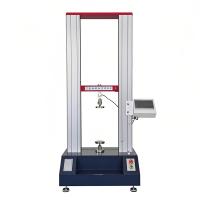
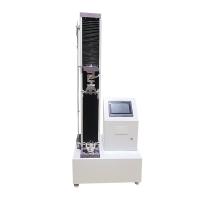
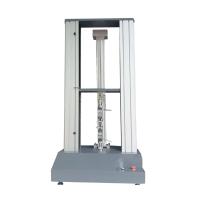
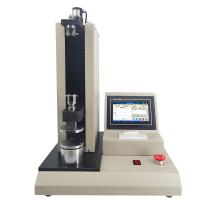
Static tensile testing machines use a constant speed loading mechanism to apply a unidirectional tensile force to the specimen at a preset, relatively slow speed through a mechanical or hydraulic system. Its design focuses on frame rigidity and measurement accuracy, ensuring minimal system deformation during testing, resulting in accurate material strength data. Typical test rates range from 0.01 to 500 mm/min, enabling precise drawing of stress-strain curves.
Dynamic tensile testing machines (often referred to as fatigue testing machines) are based on servo-hydraulic technology that applies cyclically varying loads to the specimen. The core of this type of equipment is a high-performance hydraulic actuator and a fast-response control system, which can simulate a variety of waveforms such as sine wave and triangle wave, and can compile complex load spectra for testing according to actual working conditions.
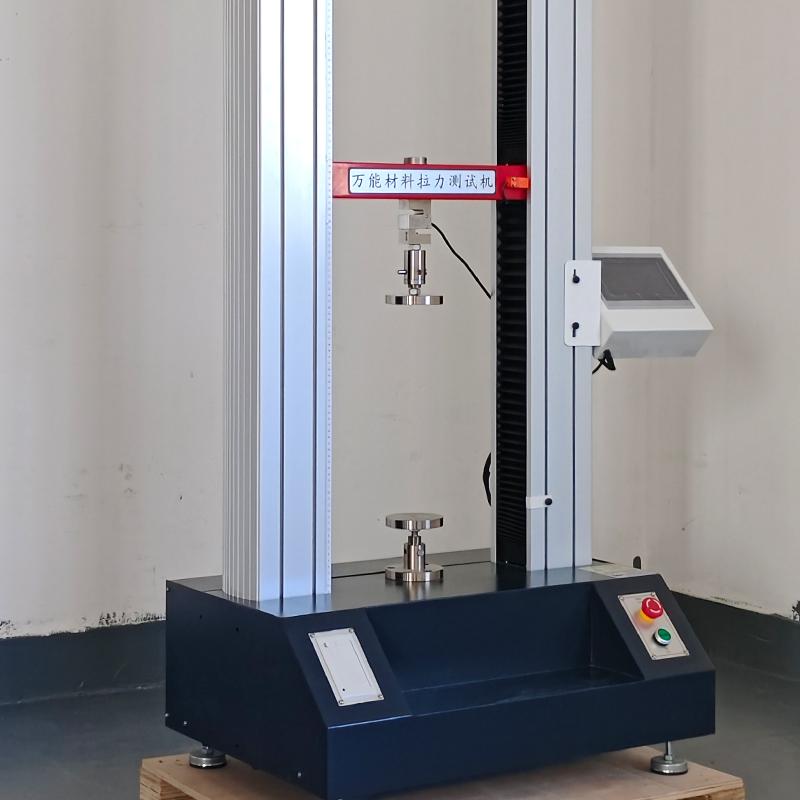
Main functional features:
Static testing machine
Parameters such as elastic modulus, yield strength, and tensile strength are measured
The loading rate is usually less than 500mm/min
The system is rigid to ensure measurement accuracy
Dynamic testing machine
Fatigue life (S-N curve) and endurance limit were measured
Loading frequencies up to hundreds of Hz
The control system is fast and has high waveform fidelity
Comparison of application scenarios
Application of static tensile testing machine
Material research and development - evaluation of basic mechanical properties of new materials such as metals, plastics, and rubber
Quality control - strength inspection of finished or semi-finished products on the production line
Standard Conformity Testing:- Verify that the product meets industry standards (e.g., ASTM, ISO, etc.)
Component verification - static strength testing of solder joints, bonding joints, fasteners
Application of dynamic tensile testing machine
Fatigue life study - life prediction of key components such as automobile suspension parts and aero engine blades
Equipment durability testing - durability evaluation of implants such as artificial joints and cardiovascular stents
Study on material fatigue characteristics - Changes in the properties of metals and composites under alternating loads
Environmental simulation test - fatigue behavior under the synergy of environmental factors such as temperature and corrosion
Select considerations
Test purpose: Static for basic performance testing, dynamic for durability evaluation
Material type: Brittle materials are mostly subjected to static testing, and components subjected to cyclic loads need to be tested dynamically
Budget constraints: Dynamic testing machines are usually 2-5 times more expensive than static machines due to higher technical complexity
Industry Requirements: Different industries (such as aerospace, equipment) have specific testing standard requirements
It is worth noting that with technological advancements, many modern universal testing machines have incorporated static and dynamic testing capabilities, allowing users to switch between the two test modes by changing components or adjusting configurations.
epilogue
Static and dynamic tensile testing machines represent two dimensions of material testing: the former reveals the intrinsic strength of a material, and the latter predicts the service life of the product. In practical engineering applications, these two testing methods often complement each other and together form a complete material evaluation system. Understanding their differences and characteristics helps engineers and researchers make reasonable choices based on specific needs, thereby more effectively evaluating material properties, optimizing product design, and ultimately improving product reliability and safety.