High temperature tensile testing technical difficulties and solutions
High-temperature tensile testing is the core method for evaluating the mechanical properties of materials in high-end manufacturing, which can accurately test key indicators such as strength and plasticity of materials at high temperatures. However, the experiment is affected by multi-factor coupling and is prone to data bias, and the core difficulties and solutions are briefly described below.
Core technical difficulties and corresponding solutions
(1) The uniformity and stability of the temperature field are insufficient
The uneven power of the heating device and the difference in heat conduction can easily lead to the temperature gradient exceeding the standard of the specimen, and the temperature fluctuation will also accelerate the oxidative phase change of the specimen, affecting the authenticity of the test.
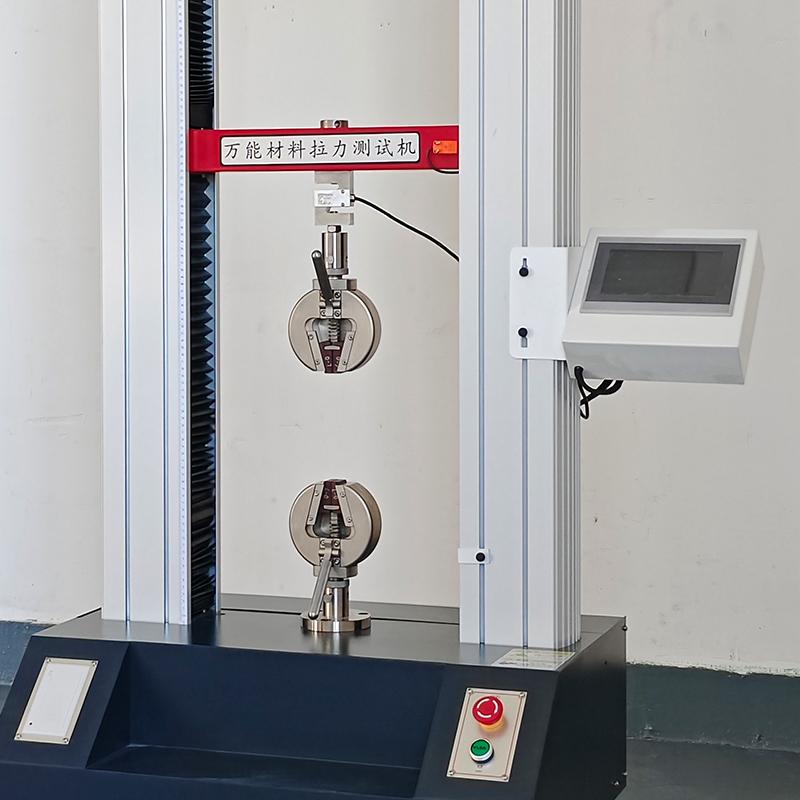
Solution: Adopt segmented heating device and multi-zone power closed-loop control, with dual thermocouple temperature measurement and PID adjustment, to control the temperature deviation within ±2°C; Before the test, calibrate with a standard temperature measuring block, and introduce inert gas to prevent oxidation during the insulation stage.
(2) The force eccentricity of the specimen is not compatible with the fixture
The thermal deformation of the fixture at high temperature can easily cause the specimen to be eccentric, and the adaptability of the conventional fixture is insufficient, resulting in a test deviation of more than 10% or the failure of the specimen in advance.
Solution: Thermal expansion compensation fixture is selected, with self-centering structure to eliminate eccentric load; The special liner is matched according to the material of the specimen, and the force uniformity is calibrated by pre-loading the extensometer before the test.
(3) Interference between environmental media and equipment systems
High temperature media is easy to cause oxidative corrosion of specimens, electromagnetic interference and mechanical vibration of equipment will cause fluctuations in data acquisition, affecting the reliability of results.
Solution: Inhibit oxidation with vacuum or inert gas protective box, equipped with a special atmosphere furnace on demand; The equipment adopts shielding and shock absorption design, with high-precision sensors and digital filtering algorithms to eliminate interference signals.
(4) Irregular operation and data processing
The specimen processing, clamping and heating parameters are not uniform, and the data processing ignores the phase transition characteristics of the material, which will cause the results to be biased.
Solution: Establish a standardized operation process and clarify the parameters and requirements; Combined with the phase transition characteristics of the material, the abnormal data is eliminated, and the professional software is used to fit and calculate to ensure the accuracy of the index.
summary
The accuracy of high-temperature tensile test is restricted by four factors: temperature control, stress stability, environmental interference and operating specifications, and the difficulties are coupled with each other. By optimizing the test system, building a controllable environment, and strengthening standardized processes, deviations can be effectively avoided. In the future, the intelligent integrated test system will further break through the bottleneck and provide accurate support for the evaluation of high-end manufacturing materials.