Key Characteristics of Plastic film and Rubber Universal Testing Machine
Due to the characteristics of soft texture, strong ductility, and easy nonlinear deformation under force, plastic film and rubber materials put forward special requirements for the accuracy, adaptability and stability of tensile testing machines. The special tensile testing machine needs to specifically solve the core pain points in material testing, taking into account the needs of multiple tests such as tensile, peeling, and tearing, and its key characteristics directly determine the reliability of test data and compliance with industry standards.
Precise and controllable load and deformation measurement system
The tensile strength, elongation at break and other indicators of plastic film and rubber are sensitive to measurement accuracy, and special testing machines need to be equipped with high-precision load sensors and extensometers. The load sensor should be a small-range high-precision model, usually with a range of 0-50kN and an accuracy level of not less than 0.05, which can accurately capture the small load changes in the early stage of material stretching and avoid data distortion caused by "low sensitivity in a large range".
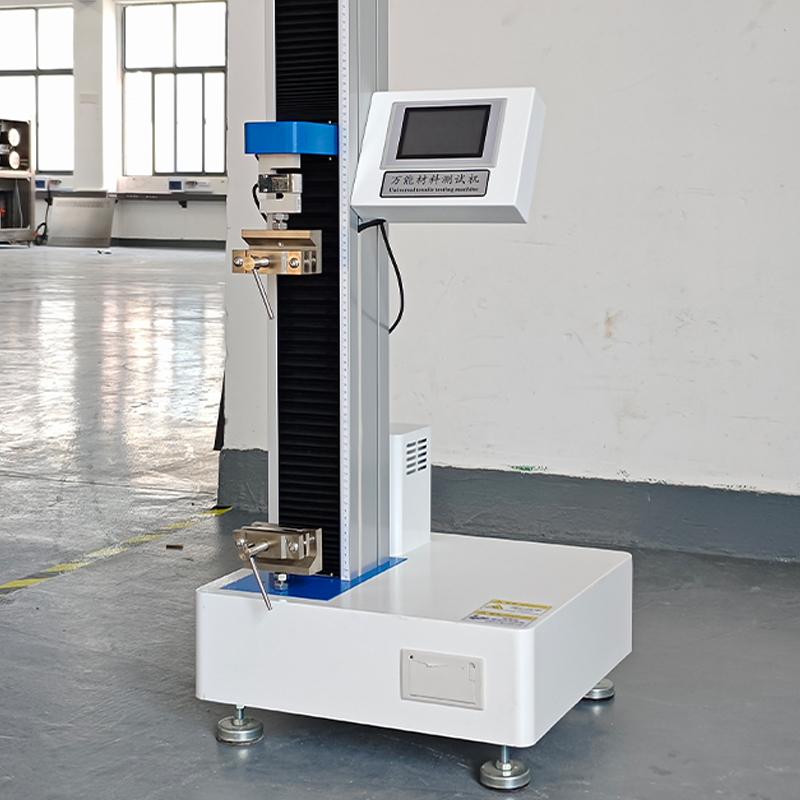
In terms of deformation measurement, priority is given to non-contact video extensometer, which does not need to contact the specimen, which can effectively avoid the interference of the probe on soft materials, and accurately measure the large deformation of thin films and thin rubber, especially suitable for elastic rubber testing with a fracture elongation of more than 500%. At the same time, the equipment needs to have the function of simultaneous acquisition of load and deformation, and the sampling frequency is not less than 100Hz to ensure the capture of instantaneous data on key mechanical behaviors such as material yield and rebound.
Adapts to the structure and clamping design of soft materials
Soft materials are easy to slip and break at the clamping site, resulting in test failure, and the clamping system design of special testing machines is particularly critical. The gripper needs to adopt a multi-specification replaceable structure to adapt to different widths and thicknesses of specimens - for plastic film, a flat pneumatic gripper is selected, and the blessing surface is covered with a non-slip rubber pad, and the clamping force is adjusted by air pressure to avoid excessive local pressure damage to the specimen; For rubber materials, it can be equipped with a wedge-shaped mechanical gripper to enhance the clamping stability and prevent the specimen from slipping during the stretching process.
The equipment frame should be rigid enough, and the high-precision ball screw drive should be used to run smoothly and without impact, so as to avoid the impact of mechanical vibration on the low-load test data. At the same time, the travel range of the testing machine needs to adapt to the needs of large deformation of the material, and the vertical stroke is usually not less than 1000mm to meet the full stroke measurement of rubber material stretching to fracture.
Multi-experimental mode and data processing function
In addition to the basic tensile test, it also needs to support peel test (such as film composite layer peeling), tear test (such as rubber pants tearing, film Elemendorf tearing), compression and rebound test, etc., which can switch test standards through the program and adapt to GB, ISO, ASTM and other domestic and foreign industry standards.
The data processing system needs to have intelligent analysis capabilities, which can automatically calculate key indicators such as tensile strength, yield strength, elongation at break, elastic modulus, peeling force, etc., and generate standardized test reports. At the same time, it supports real-time data storage and curve superposition and comparison functions, which is convenient for data analysis and traceability after batch sample testing, and meets the dual needs of industrial quality control and scientific research and testing.
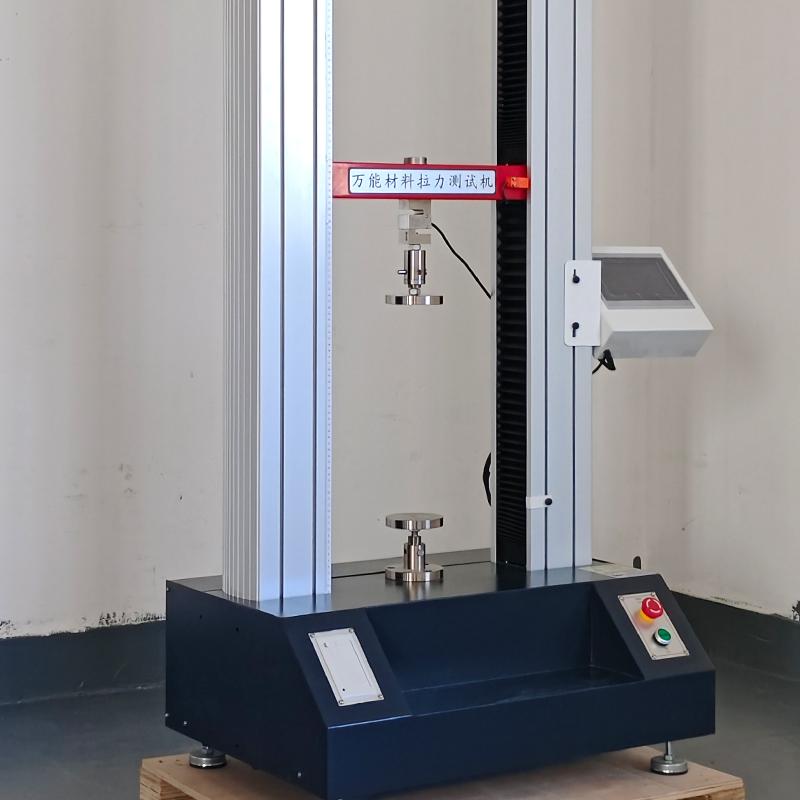
Environmental adaptation and safety guarantee characteristics
The mechanical properties of plastic film and rubber are significantly affected by temperature, and high-end special testing machines can be equipped with constant temperature test chambers to achieve high and low temperature environmental tests in the range of -40°C to 80°C, simulating the mechanical behavior of materials in actual use scenarios. The equipment should have a complete safety protection mechanism, including overload protection (110% automatic shutdown of overload), travel limit protection, emergency stop button, etc., to prevent specimen fracture and splashing or equipment failure caused by potential safety hazards.
In addition, the equipment needs to have good sealing and anti-interference ability to avoid the impact of environmental dust and humidity on sensors and control systems, ensure long-term stable operation, and adapt to different scenarios of workshop production line sampling and laboratory precision testing.
summary
The core competitiveness of plastic film and rubber special tensile testing machine lies in "precise adaptation", through high-precision measurement system, exclusive clamping structure of soft materials, multiple test functions and reliable safety design, to achieve accurate capture of the mechanical properties of soft materials. When selecting and using, it is necessary to focus on key characteristics such as load accuracy, clamping stability, and test mode compatibility around material characteristics and test standards, so as to provide reliable data support for material quality control and formula research and development, and help the industry upgrade product quality.