Automatic Film Applicator vs Manual coating applicator: Is the extra money worth it?
In the laboratory, you can often see such a scene:
Someone holds a manual applicator, a wire stick, pushes it with both hands, and gets a piece in a few seconds; Someone guards the automatic coating machine, sets parameters, starts, waits, and takes more than a minute to apply a piece.
Manual coaters can be bought for a few hundred yuan, and automatic coating is not mobile for thousands or even tens of thousands. The price difference is more than ten times, what is the difference?
Today we will not talk about parameters or configuration, but talk about the most real question: is it worth spending more money?
First, figure out what these two things are
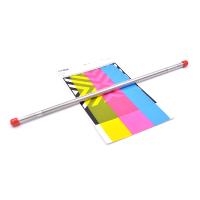
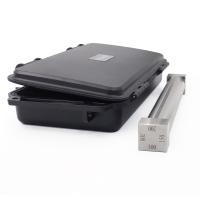
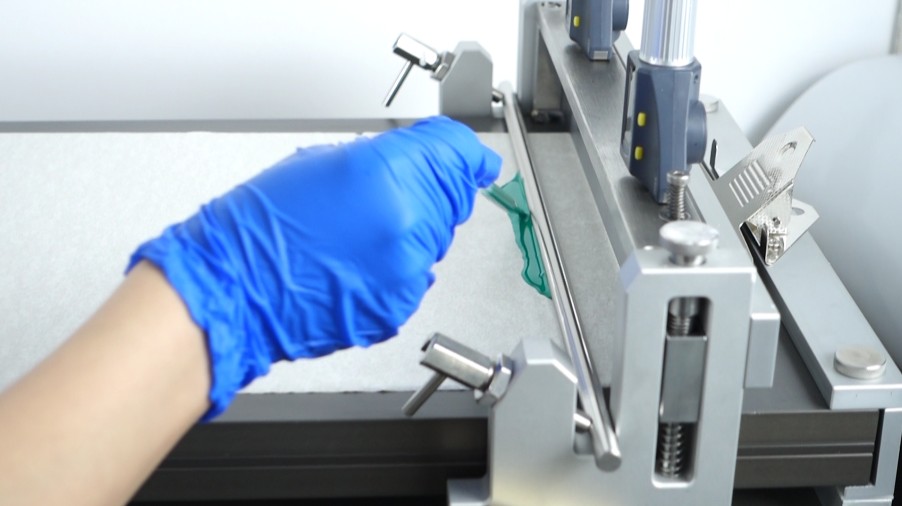
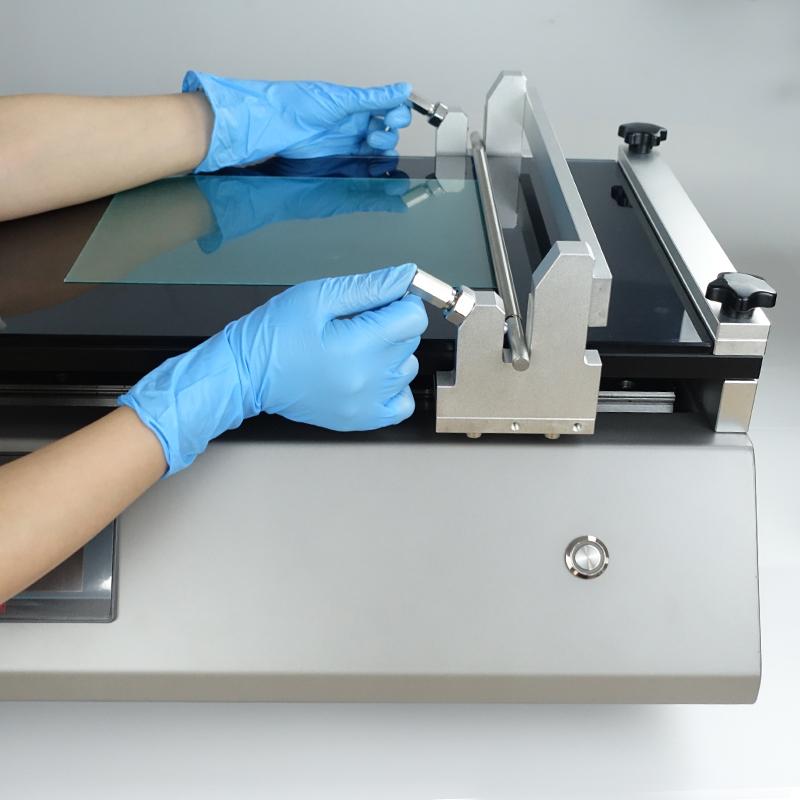
A manual applicator is usually a coating base plate with a wire rod, and the wire rod or scraper is pushed forward by hand. The structure is simple, no motor, no control system, purely mechanical, purely manual.
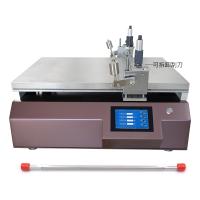
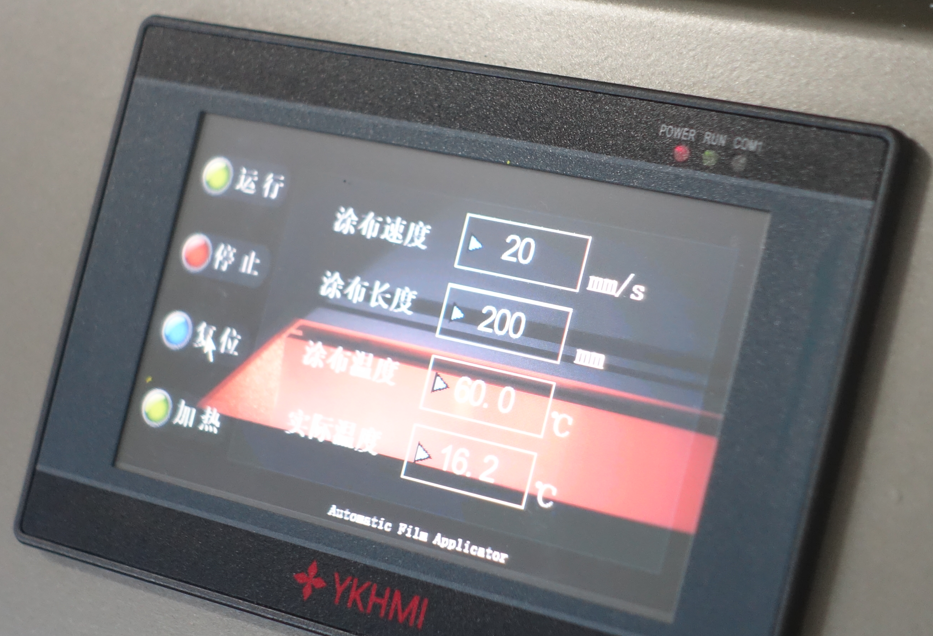
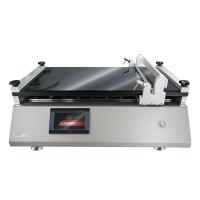
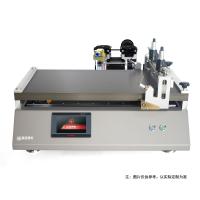
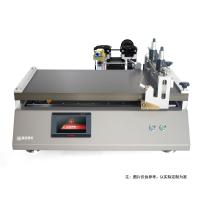
Automatic coating machines, with motor drive, speed adjustment, vacuum adsorption, and some can also be heated and programmed. You set the parameters, press start, and it pushes through by itself, with a constant speed and uniform force.
One is pure labor, and the other is machine replacement labor. The core of the price difference is here.
2. The real situation of manual applicators
The biggest advantages of manual coaters are two: cheap and solid.
A few hundred yuan, don't feel bad if it breaks, anyone can get started, it looks very cost-effective.
But it has several limitations that cannot be avoided:
Unstable speed is a hard injury
Push manually, no matter how skilled a person is, there is no way to ensure that the speed of each push is exactly the same. The start may be faster, slower in the middle, and then pause again when it is close to the end. As soon as the speed changes, the applied film changes - thickness, uniformity, surface quality, it all depends on the feel.
You are in a good mood today, pushing steadily, and painting beautifully; Tomorrow my hands are sore, push fast, and the same slurry is all stripes. Data cannot be reproduced, and processes cannot be solidified.
The strength cannot be controlled
The force of the wire rod and scraper pressing down also depends on the feel. When the pressure is heavy, the groove of the wire rod is squeezed, and the actual transfer of slurry becomes less; If it is lightly pressed, the slurry cannot be scraped clean, and the coating is thick. This force, even you can't tell how much it is.
The substrate is fixed by luck
Most manual coaters do not have vacuum adsorption, and thin substrates such as PET and aluminum foil are put on it, and they will run when pushed by hand, and wrinkling and curling are common. If you want to paint well, you have to rely on tape to stick, and after gluing, you may tear the substrate if you peel it off.
The thickness is adjusted by changing the rod
Want to change the thickness? Manual applicators can only change the wire rod or manually screw the scraper screw. There is no problem with changing rods, but if you want to do a thickness gradient experiment and adjust several thicknesses in a row, it will be difficult to operate manually.
3. Where does the automatic coating machine spend the money?
The automatic coating machine is expensive because it turns the "human feel" into "settable parameters".
Constant speed
Motor drive, set as much as you want, 20mm/s is 20mm/s, it will not slow down because of sore hands. If the speed is constant, the shear rate will be constant, the rheological state of the slurry will be constant, and the coated film will be stable.
This is the case today, the same is the case tomorrow, and next week it will be operated by another person. This is the repetition of R&D.
Constant pressure
The force of the scraper on the substrate is constant and does not fluctuate between light and heavy. Some models can also set the downforce of the scraper to fine-tune the slurry with different viscosities.
Vacuum adsorption is a watershed moment
The vacuum adsorption standard of the automatic coating machine solves the most troublesome problem of substrate fixation for manual coaters. PET, aluminum foil, copper foil, flattened when sucked up, and the grain does not move when pushed. The problems of wrinkled edges and bulging in the middle are more than half less.
The thickness is continuously adjustable
The squeegee-type automatic coating machine adjusts the gap to adjust the thickness, which can be continuously adjusted from 0 to a few millimeters. I want to do a thickness gradient experiment, set several different gap values, apply a few pieces, and the data will come out. No need to change the rod, no need to disassemble and assemble repeatedly.
Data traceability
Some automatic coaters have a storage function, which can record the speed, clearance, and heating temperature used this time. Next time you want to reproduce, just call up the parameters. Writing papers and reporting data are well documented.
4. Whether the extra money spent is worth it depends on how you use it
Scene 1: Use it once in a while, and take a rough look
If you only apply it occasionally, look at the color changes, make a simple qualitative observation, and have no requirements for data repeatability, then a manual applicator is indeed sufficient. A few hundred yuan, throw it into the drawer after use, it doesn't take up space, and it doesn't feel distressed.
Conclusion: Not worth it. Money can be saved on automatic coating machines.
Scenario 2: To do formula screening, you need to compare different systems
In the formula screening stage, dozens of samples may be applied a day, and the viscosity and solid content of each sample are different. At this time, the problem of the manual applicator arises: the feel is inconsistent, is the difference in application due to the change in formula or because the hand is shaking? I can't tell the difference.
The automatic coating machine removes human variables, and the formula changes when the formula changes, which has nothing to do with the operation. The filtered trends are real and reliable.
Conclusion: value. The cost of trial and error saved far exceeds the price difference of the machine.
Scenario 3: Publish articles and report projects, and the data must be reproducible
What are you most afraid of when publishing articles? The reviewer asks you to supplement the data, and you find that the same formula can no longer be applied to the original effect. The manual applicator leaves only the sample and no parameter records.
The automatic coating machine can at least tell you: at that time, 50mm/s, 200μm gap, 100°C hot table was used. According to this parameter, do it again, eight or nine are not separated from ten.
Conclusion: value. The reproducible value of data cannot be measured by money.
Scenario 4: Thin substrate, high precision requirements
PET, aluminum foil, ultra-thin film, manual coating is basically a disaster. When the hand pushes, the substrate is wrinkled, and eight pieces are coated with ten pieces. The automatic coating machine has vacuum adsorption, which absorbs and then pushes, and the success rate is greatly improved.
If your research involves flexible electronics, thin-film batteries, optical coatings, it's hellish for manual applicators, but it's just routine for automatic coaters.
Conclusion: Great value. Without vacuum adsorption, some experiments cannot be done at all.
Scenario 5: The research group is shared by multiple people
Several people share a manual applicator, and the result is that everyone's method is different, and the smeared data cannot be compared horizontally. Student A said that this formula was good, but student B said no, and argued for a long time that it was a difference in technique.
The automatic coating machine standardizes the technique, and everyone who uses it is a parameter, and the data can be compared together.
Conclusion: value. The efficiency of teamwork is worth the price.
5. Two points that are easy to overlook
First, automatic coating machines can also be operated manually
Don't think that if you buy an automatic one, you can only be automatic. Many models can turn off the motor and use the pusher as a manual applicator. If you want to try it quickly, push it manually; The formula should be done carefully and run automatically. Neither of them was delayed.
Second, it is not the machine that is expensive, but the time and samples
Calculate the account: manually coating a waste sample may only lose a few cents of substrate; However, if the formulation optimization enters a bottleneck period, repeated trial and error due to unstable coating will waste several months of research and development time. Buying stability and repeatability for tens of thousands of dollars is a cost-effective deal for R&D.
It is true that automatic coaters are more than ten times more expensive than manual coaters. But whether it's worth it or not depends not on the price tag, but on your needs.
If you just need to apply it casually, manual is enough; If you need reliable data, reproducible experiments, and thin substrates that can be coated, every penny spent by the automatic coater will be slowly saved in subsequent experiments.
Which one do I choose, ask yourself: do I want to "paint it out" or "paint it out reliably"?
Welcome to exchange technology with the North and South Chao.




- 1 Automatic Film Applicator in preparatory self-healing acrylic coatings
- 2Application and optimization of Automatic Film Applicator in preparation of eye patch
- 3Automatic Film Applicator in refractive index matching film prepative
- 4Application of Coil Coater Spreader on Non-woven Fabric
- 5Precision Spreader: Automatic Film Applicator in the production of shading film
- 6Application and Technical Advantage Analysis of Coater in LR Film
- 7Automatic Film Applicator technology and application of PU film coil
- 8Automatic Film Applicator technology analysis
- 9Overview of film coater technology and process requirements