Determination of cold resistance of several films
Measuring Durability of Coating Films by the Zigzag Method
The base resistance of the coating film can also be measured by the degree of damage when it is bent on rods of various diameters. (Related instrument: bending Tester)
For the above-mentioned purpose, some devices consisting of a cryostat and a device for bending the sample during the test have been proposed.
The cold resistance can be expressed by the time when the coating film is stored in a cryostat at a specified temperature until it breaks when it is bent on a rod of a certain diameter.
Determination of cold resistance of coating film of electric wire by inflection test
When carrying out the test, take two sections of metal studs coated with the varnish to be tested. Put the sample into the cryostat, and its time in the container and the temperature of the cryostat are all in accordance with the technical conditions. After that, when the sample is not taken out of the cryostat, it is Inflected on 100mm wooden columns. While inflection, the paint film should not appear cracks and tears.
Determination of cold resistance of coating film by "heat shock method"
Coating films are often subjected to rapid changes in very low and high temperatures (eg from -40°C to +30°C) under application conditions. In this case, the temperature difference can reach 70°C. Such severe temperature deterioration, due to strong deformation stress (similar to impact), can cause cracking of the coating film in practical applications. Therefore, the test when the coating film is subjected to rapid changes in low temperature and high temperature is called the "thermal shock" test.
In each individual case, the test procedures are developed according to the technical requirements of the coating film.
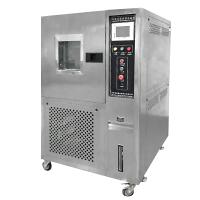
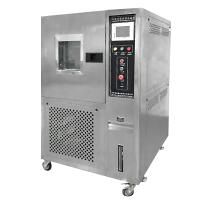
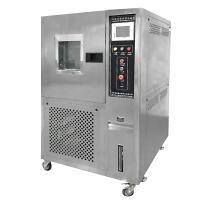
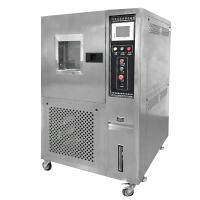
The following test methods are given as examples. On a pre-ground iron plate with a size of 40x.180 mm, the sample is coated by dip coating (coating film thickness is about 60µ). After the specified dry operation time, place the test panel in a small chamber with a temperature of -40°C for 2 hours. The test panel was then immediately placed in a thermostat and heated at 120°C for 1 hour. After this, the test plates were removed and the wells were immediately placed again in the cryostat (-40°C) for 2 hours. Regarding the test results, it can be judged by observing the state of the coating film under a microscope with a magnification of 100 times. (Related instruments: constant temperature and humidity Test Chamber)
Determination of the resistance of coating films at high humidity
The water content in the calibration test paint film is of great significance in the cold resistance test. The cold resistance of the paint film placed in particularly humid air or water before the test is worse than that of the dry paint film.
Therefore, in order to determine the cold resistance of the coating film, the test is often carried out under relatively harsh conditions with the presence of moisture (humidity).
The following examples can be cited as standard test methods. Submerge the test film coated on the iron plate in running water. After 12 hours, the test panel (still wet) was placed in a cryostat. After 6 hours, take out the well of the test plate and put it into water again. After 1 hour, the test panel was put into the cryostat again, and after 5 hours, it was put into water again. This cycle is repeated until the coating film starts to be damaged (peeling, cracking, etc.).


- 1How does dip coating work?
- 2Advantages and disadvantages of dip coating process and ideal use
- 3How to troubleshoot dip coating defects?
- 4Some theory you need to know about the dip coating process
- 5What are the advantages of dip coating?
- 6What is dip coating?
- 7Coating Spreader dipping
- 8Dipping operation precautions and equipment maintenance
- 9Two typical dipping methods