Film defect analysis and solution summary
grain
The surface particles of the coating film seriously affect the appearance, and the particles are polished with 1500° water sandpaper, and when the frequency particles are large or large, they are re-sprayed with 8oo# water sandpaper. The surface particles of the coating film are the main reason for the high repair rate of the advanced layer removal (such as the New Year coating), therefore, the key to the coating particles is to take preventive measures, and the factors that cause the coating particles are as follows:
(1) The working environment is gray. In the layout of the workshop, it is necessary to carry out partition management, the grinding section should be far away from the spraying operation area, and the workshop floor should be brushed with ground paint to prevent ash, and be cleaned frequently to keep it tidy. Humidification treatment should be carried out in the car to reduce dust fluttering.
(2) The paint is not filtered, the paint should be filtered after it is thin, the primer is filtered with a 120-mesh screen, and the topcoat is filtered with a 180-day screen.
(3) For coatings that are easy to precipitate, the stirring is not sufficient before dilution; Or when it is diluted, it will be new according to the requirements, and the pigment will be coarse (for example, the charcoal fruit in the black paint is particularly easy to flocculate and coarse). (Related Instruments: Stirrer)
(4) There is a resin with poor solubility, and when the thinner material with poor solubility is diluted, the insoluble surface is precipitated and resin particles are generated; Or the broken patent leather remains in the paint.
(5) During the production of flash paint, the aluminum slurry is poorly dispersed, and a lot of particles are produced during spraying.
(6) The dust is easily adsorbed by the electrostatic charge on the surface of the coating, and the topcoat is better to blow it with ionized compression and wipe it with a sticky rag before coating. Many particles are caused by the fibers of work uniforms, spray booth transition materials or wipes, and measures should be taken to reduce fibrous particles.
Exposed
Causes and Measures:
(1) Poor hiding power of the selected paint; (Related Instruments: Concealment Paper)
(2) Before use, the settled pigment is not stirred, or the stirring is not sufficient, resulting in a decrease in hiding power;
(3) The paint is too thin and too thin;
(4) The thickness of the spraying film is uneven;
(5) The contrast between the tone of the base coat is too large, for the metal flash paint, the spraying is very thin for the base color, and the color of the middle coat is better and similar to the top coat.
Bite layer
Bottoming is a phenomenon in which the solvent in the coating produces serious swelling and wrinkling on the bottom layer when the upper coating film is sprayed. The reasons and measures are as follows:
(1) Apply a strip before the bottom layer is dry. For different paint varieties, paint in strict accordance with the construction interval cycle.
(2) The primer and the topcoat are not matched, and the primer coating film is easy to be swollen by the strong solvent in the topcoat, such as alkyd primer/nitro surface method (or thermoplastic acrylic enamel), which is most likely to produce the phenomenon of biting the bottom, because the oxidation cross-linking process of the alkyd paint film is slow, the coating film is soft, and the strong solvent in the magnetic paint is easy to penetrate into the bottom layer to make it swell.
For example, when the two components of A/B are reconciled, less curing agent components are added, so that the cross-linking density of the bottom layer is not enough, the coating film is soft, and it is easy to be swollen and bitten by the upper coating.
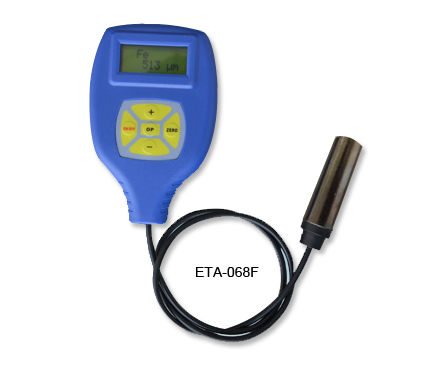
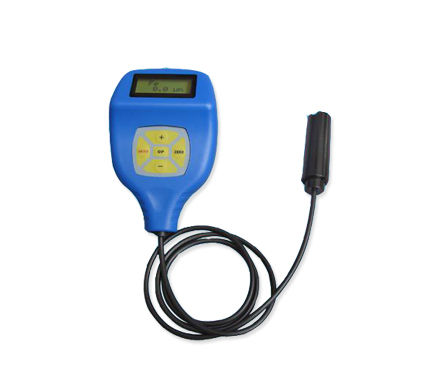
(3) The surface layer of paint is too thick at one time, and the strong solvent that has been stuck for a long time has the opportunity to penetrate into the bottom layer in large quantities to swell and wrinkle. During construction, you can spray a thin layer first, and then re-spray after the table. (Related Instrument: Thickness Gauge)
White
In the construction of fast-drying coatings, there is often a whitish phenomenon, and the coating film is lost and can not be recovered, these coatings are mainly nitro paint, pergase-ethylene method, phosphating primer, thermoplastic acrylic magnetic method, etc., the reasons and measures are as follows:
(1) The humidity of the working environment is too high, and the solvent takes away a lot of heat when it evaporates rapidly, causing the surface temperature of the local wet film to drop below the "dew point". The water vapor condensation infiltrates into the wet film to produce an emulsified white film, and the water finally evaporates to produce voids and is replaced by air, and finally forms a porous and matte white film that cannot be recovered, and the relative humidity of the environment is controlled below 70%, and the temperature is about 20 °C.
(2) The volatility of the coating solvent is too fast, choose a diluent with suitable volatility, or add some slow volatile strong solvent to the original thinner to adjust the volatility of the thinner, such as diacetone alcohol, cyclohexa, butyl acetate, butanol, ethylene glycol and acetic acid cool, etc., (3) The surface temperature of the coated object is too low, and the workpiece can be heated to an ambient temperature of 10 °C.
(4) The wet film contains water. Check whether the paint and thinner contain moisture, whether the oil-water separator of the Air Compressor fails, and whether the oil and water of the Air Compressor and oil-water generator are discharged in the future.
(5) Improper selection of dilution agent. The true solvent in the thinner is too volatile and the non-solvent volatilizes slowly, and when the wet film is dry, the resin is insoluble in the non-solvent and precipitates to white.
Drawing
When spraying, the paint is sprayed out in a filamentous form, which affects the appearance of the coating film, and this problem is prone to acrylic paint, chloroethyl paint, gasified rubber coating, epoxy resin paint, etc.
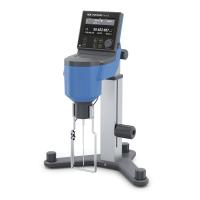
(1) The construction viscosity of the coating is too large, the atomization is not good, and it is easy to produce filamentous spray. Adjust the application viscosity. (Related Instrument: Viscometer)
(2) The solubility of the thinner is not enough, and the interpretability is too poor. A strong solvent is added to enhance the solubility of the thinner.
(3) The molecular weight of the coating resin is too high, and the viscosity is very large under the normal construction solid content. Increase the dosage of most of the release agents.
Shrinkage
When the surface tension of the coating is different from the surface tension of the substrate, it is easy to cause the coating to have poor wettability of the substrate, and the general angle is large, so that the coating has a tendency to maintain a droplet shape and expose the coated surface, and the pore size is generally 0. 1-2mm。 In particular, varnishes and pigments with less pigment are more susceptible to this defect and are not easy to repair.
(1) The coating itself, such as too much surface tension and poor fluidity, resulting in poor wetting and poor bubble release.
(2) When there is oil or water on the surface of the substrate, the coating film will be poorly wetted.
(3) The smooth old paint film is also easy to make the coating film poorly wet. Give this as polished.
(4) The paint is mixed into the oil at medium temperature, such as the oil and water of compressed air are mixed into the coating department. (Related Instruments: Air Compressor)
(5) The bottom layer of the material contains silicone oil additives or plastic surfaces with release agents, and the surface tension of the substrate is too low, resulting in poor wetting. The low-polarity surface layer is removed by sanding.
(6) Drying indoor air pollution waves is also easy to cause shrinkage holes. (Related Instruments: Oven)
(7) The wet film is contaminated with water, oil and other splashes.
Bubbles and stomata
Porosity is the hole that is turned over when the air bubbles trapped in the coating film forcibly break through the coating film during the drying process of film removal. The coating film that does not break and bulges is called a bubble. The bubbles can be air bubbles formed when the paint is stirred, or solvent bubbles formed by the rapid volatilization of the solvent during drying:
(1) Solvent evaporation is too decisive, adjust the solvent volatility, and prolong the flash drying.
(2) The bottom coat layer is not transparent and contains solvents, so recoat it after the bottom layer is dry.
(3) The viscosity of the paint is too high, and it is rare according to the construction specifications
(4) If the paint is stirred too vigorously, or sprayed immediately after stirring, some defoamer or alcohol solvent can be added, and let stand for 3omin after stirring.
(5) When brushing, the brush moves too fast or the bristles are too hard.
(6) Thick coating or water-based paint rises sharply when baking, prolonging the flash drying time and heating process.
(7) There is residual moisture on the coated surface. Add a surface drying process to improve the drying effect.
pinhole
Pinhole refers to a small hole that has been punctured by a needle on the surface of the membrane, similar to a leather pore, with a pore diameter of about 1001m.
(1) The varnish is poorly refined and contains impurities.
(2) The solvent in the coating volatilizes quickly, and its dosage is large.
(3) Poor material dispersion.
(4) The surface tension of the coating is large, the viscosity is high, the fluidity is poor, and the bubble release is poor.
(5) The mutual miscibility of the paint base is poor, and the local precipitation or viscosity increases with the decrease of ambient temperature, which is easy to cause particles and pinholes, such as asphalt paint is the most prone to this defect
(6) The paint is stirred for a long time to form countless micro-groups of air bubbles
(7) The coated material is not cooled, so that the wet film solvent evaporates sharply
(8) The coating film is sprayed too thickly, and the surface dries too quickly
(9) The working environment is too high, or there is moisture brought into the coating film during spraying
(10) Insufficient flash drying. Bake up too quickly.
Flowers
Hair is the appearance defect of color stripe caused by inconsistent surface tone, spots and stripes (1) The pigment in the color paint is unevenly dispersed, or the color is not mixed sufficiently during color matching. Such as gray, light blue, green paint and so on are more prone to this problem.
(2) The solubility of the thinner material is poor, or the viscosity is improper, which is not conducive to the uniform dispersion of the material and color number
(3) The upper and lower layers of the thick coating film are flowing, and the density difference between the two kinds of pigments is large, and it is easy to form hexagonal small patterns.
Floating
The floating color is a pigment with a large difference in density, which is easy to produce frequency material distribution in the upper and lower layers, so that the surface of the coating film is inconsistent with the internal hue, such as the gray paint modulated by carbon black and titanium dioxide, and the light basket color of phthalein basket and titanium self-modulation. When the wet paint film is drying, the uneven evaporation of the solvent causes the surface tension difference and causes the convection phenomenon, which is the driving force for the floating color. Therefore, the solution to floating color is:
(1) Reduce the difference in pigment density and improve the dispersion performance of pigments;
(2) Add a little silicone oil additives, and the thin layer of silicone oil with low surface strength avoids the surface tension difference caused by solvent volatilization, eliminates the convection phenomenon from the surface, and has a significant effect on preventing floating color.
bleeding
Bleeding is when the color of the base scene is dissolved into the topcoat, which stains the surface layer and changes color.
(1) The bottom layer contains organic frequency materials with poor solvent in the front f, which is dissolved by the solvent of the topcoat and infiltrated, and the black paint base is also easy to be dissolved into the upper paint film and dyed black due to the poor solvent resistance of asphalt paint
(2) When the colored wood is painted, the coloring dye is easy to be dissolved and seep into the topcoat
(3) The topcoat contains solvents with too strong solubility, and the bottom layer is not fully dried
A better way to solve the problem of discoloration is to spray a sealing coating, which contains a hard resin coating film with high color, filler content, or flake pigment filler, which generally has good sealing.
The shimmer paint is unevenly toned
Tongguang paint is a high decorative coating with peculiar decorative effect, and the construction technology and technical requirements are high, and improper construction is prone to defects such as uneven tone and poor flash effect
(1) The powder content of the paint pin is too low, and the hiding power is very poor; The coating has poor film fixing ability; The surface drying time of the paint is too much
(2) The base color paint is sprayed too thin or clear, and the background color is revealed.
(3) The base paint is sprayed too thickly, and the thickness is uneven
(4) The interval time of the "wet on-wet" process is too short
(5) The air pressure is too low during spraying, and the atomization is poor; Or the air pressure is too high, which deforms the flake pin powder.
The flash paint should be sprayed with a lower construction body and construction oil, and a special shouting and grabbing uniform thin spray should be used, with a thin spray of about 8 μm dry film thickness for two times, and then covered with varnish after full internal drying.
Low gloss
This problem contains two aspects, one is that the coating film is very low after drying; The second refers to the phenomenon that the new coating film has decreased its luster after a short period of time:
(1) The miscibility of the resin in the removal is poor, and the coating film is foggy and dull
(2) Poor dispersion of the material and poor fineness of the coating; or the volume concentration of the frequency material of the pigment is higher.
(3) Poor solubility of the solvent
(4) The substrate is rough and porous, and the absorption of paint is large. to seal with sealing coatings
(5) The bottom coating is rough and uneven, or the sandpaper is too coarse, adjust the painting process parameters to use fine sandpaper for wet sanding.
(6) The air in the drying room is dirty, or the baking temperature is too high and the light is lost
(7) The topcoat or overprint paint is too thin, and increasing the thickness of the topcoat is of great benefit to improve the gloss, flatness and overall decoration
(8) The topcoat is polished and modified.
spalling
This is due to the poor force or interlayer adhesion of the coating film, resulting in local and even metal peeling:
(1) Improper pre-treatment of paint, residual oil, water or release agent on the surface; or non-ferrous metals have not been properly treated
(2) The surface of the substrate is too smooth
(3) The bottom layer is placed for too long, and the recoating interval period is too long; or the coating is over-baked, which affects its own adhesion and surface adhesion.
(4) The surface of the old paint strand is used to polish the direct paint.
(5) The bottom and surface materials are not matched, resulting in poor interlayer adhesion
(6) Scrape putty directly on the substrate without primer.
(7) The primer coating contains magnetic oil additives, which affects the wetting bond of the repainted paint film
(8) Improper selection of pre-coated primers for non-ferrous metals and plastic surfaces.
The measures are as follows:
(1) Adopt the pre-method surface treatment of suitable Xuan to strengthen the degreasing effect; The film should be meticulous and not too thick; Polishing and roughening the surface of the difficult paint
(2) Improve the construction process specifications, grasp the order of coating workers and the coating interval cycle, and master the baking process conditions, such as spraying too thick than the ethylene coating at one time, and re-spraying after full surface drying, and the coating that is not dry and hard is easy to complete the glass
(3) Special substrate to use a special pre-painted primer to make the primer. For example, the surface of the pin alloy and the zinc aid plate is thinly coated with yellowing primer, total burden primer or qualified primer; The surface of modified polysiene products is thinly sprayed with adhesion enhancer (commonly known as plastic primer), which can effectively improve the adhesion of the layer.
The above are often defects in the construction process of coatings, in the process of coating crystals, the film will also occur fading, chalking, blistering, cracking, brittleness, falling off, rust and other problems, these same topics are also affected by the construction operation in the process of coating operations, but to a large extent are restricted by the quality of the coating, not introduced here.





- 1The reason for the coating defects caused by the aging of the paint film turned out to be...
- 2Analysis of coating defects caused by oil pollution on metal surface
- 3Cause analysis and control measures of anti-corrosion coating blister defects
樊志勇;吕建伟;杨媚媚 - 《全面腐蚀控制》
- 4What are the causes of defects in coating construction?
- 5Causes and treatment methods of common defects of films in electro-coating
- 6Cause analysis and countermeasures of film defects
- 7Introduction of coating porosity (GB6554-86) detection method
- 8Film peeling defects and countermeasures
- 9Analysis and Countermeasures of Disclosure and Biting of Film