Determination of Liquid Stability under Accelerated Conditioning
paint storage stability
The paint storage stability test can also be used to store liquid paints and varnishes in airtight containers and store them in a natural environment or under accelerated conditions to measure the viscosity change, pigment sedimentation in the paint, and remixing of the paint to make it suitable for use. As a test method for paints and varnishes storage stability.
(1) Instruments and equipment
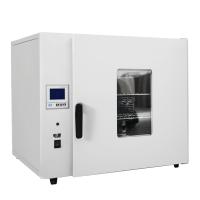
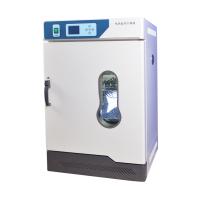
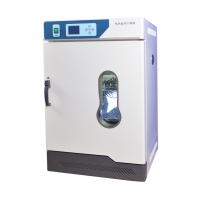
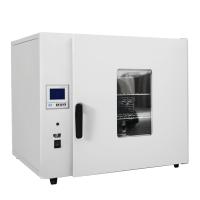
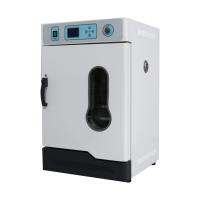
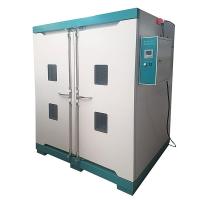
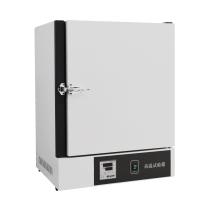
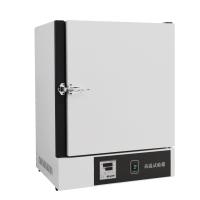
①Drying oven can maintain (50 ± 2) ℃ Forced Air Drying Oven; ②Container standard gland type metal paint can, volume is 4L; ③The scale division value is .2g; Tu-1 viscometer or other suitable viscometer; ⑤ stopwatch division value .1s; ⑥ thermometer 0~50 ℃, division value 0.5 ℃; About 30g in mass; ③Wolf hair brush for paint brush, about 25mm wide; ⑨Test plate 120mmx90mmx(2~3)mm flat glass plate.
(2) Test method and evaluation
①Sampling and preparation of samples Take out representative samples according to the regulations, take three samples and put them into the three specified containers. After tightening the lid tightly, weigh the sample weight to an accuracy of .2g, then put it in a constant temperature drying box, and store it under accelerated conditions of (50±2)°C for 30 days, or store it under natural environment conditions for 6~12 months .
Before the storage test, another can of the original sample should be tested according to the test procedure ③ to check the original properties for comparison.
After the sample is stored for the specified period, take the sample out of the constant temperature Drying Oven, and weigh the sample after standing at room temperature for 24 hours. If the difference between the weight before storage and the weight before storage exceeds 1%, it can be considered that the container is not sealed tightly. Therefore, its performance test results are questionable.
Note: Storing for 3 days under accelerated conditions of (50±2)°C is roughly equivalent to half a year to one year under natural environment conditions. If there is any dispute or doubt about the test results of the accelerated condition of (50±2)°C, it can be stored at the standard temperature [(23±2)°C or (25±1)°C], according to the storage period specified by the product, and store for 6 hours. After ~12 months, check the performance again, and use it as a referee test.
③Test steps
A. Inspection of orange peel, corrosion and putrefaction smell When opening the cover, pay attention to whether there is pressure or vacuum in the container. After opening the container, check whether there is orange peel, corrosion and putrefaction smell, foul smell or sour smell.
B. Evaluation of skinning, pressure, corrosion and putrefaction smell, each item is scored according to the following six grades: 10=none, 8-very slight, 6-slight, 4=moderate, 2=serious, 0=serious .
C. Check the degree of settlement. If there is orange peel, remove the crust carefully, and then place the adjusting knife vertically on the center of the paint surface without vibrating or shaking the container. The top of the adjusting knife is in line with the paint can Align the top surface, drop the adjusting knife from this position, and use the adjusting knife to measure the degree of settlement.
If the pigment has settled and hard lumps are formed at the bottom of the container, pour the suspended part of the upper liquid into another clean container and keep it for later use. Stir the pigment block with a spatula to disperse it, add a small amount of the spare liquid poured out, Make it re-mix and disperse, stir well. Then add the decanted reserve liquid one after another, and stir and mix until the pigment is remixed and dispersed to form a homogeneous paint suitable for the sample, or it has been determined that the pigment block cannot be remixed and dispersed into a uniform paint by the above operation .
D. Evaluation of the degree of settlement 1: Completely suspended, compared with the original state of the paint, there is no change.
8 : There is a noticeable settling touch and a small amount of deposited pigment appears on the spatula. There is no obvious resistance to push with the knife face.
6 : Pigment lumps with obvious settling. With the weight of the spatula, it can pass through the paint block and fall to the bottom of the container. There is a certain resistance when moving with the knife face of the knife. Agglomerated lumps can be transferred to the spatula.
4: The self-weight of the adjusting knife cannot fall to the bottom of the container. The spatula passed through the paint block and had difficulty moving with the face of the spatula, and there was slight resistance when pushing the spatula blade along the edge of the can, but was able to easily remix the paint to a homogeneous state, 2: When applying force to the spatula When the knife penetrates the settled layer of paint, it is very difficult to push it with the spatula blade, and there is obvious resistance when the spatula blade is pushed along the side of the tank, but the paint can be remixed to a uniform state,,0: knotted and hard lumps These lumps cannot be remixed with the liquid to form a uniform color paint by manual stirring within 3~5 minutes.
E. Inspection of paint film particles, rubber blocks and brush marks. Brush the stored color paint on a test board. After the paint film is completely dry, check the test board with a diameter of about .8mm. Granules and larger glue blocks, as well as brush marks caused by such particles or glue blocks, for paints that are not suitable for brushing, use a 74μm mesh filter to dilute the tested paint to observe the particles or glue blocks.
F. Evaluation of particles, glue blocks or brush marks on the paint film Each item is evaluated according to the following six grades: 1=none, 8=very slight, 6=slight, 4=moderate, 2-more serious, =serious .
Note: If the test sample is significantly thickened, it is allowed to dilute it with a solvent within 1% or according to the amount specified in the product, and then carry out the brush test.
G. Inspection of viscosity change If all the sediment can be uniformly dispersed after the sample is stirred according to C in ③, the paint should not be placed again, and the viscosity of the paint should be measured immediately with a viscometer. If there are any debris or crusted pieces, they can be filtered through a mesh sieve before testing. The temperature of the sample for viscosity measurement can be kept at (23±.5)°C or (25±1)°C according to the requirements of the product regulations (the temperature should be specified). The viscosity is expressed in time (s), accurate to .1s.
H. Evaluation of viscosity change value After the paint is stirred evenly and filtered, measure the viscosity with a suitable viscometer specified by the product, and evaluate according to the following grades according to the ratio percentage of the viscosity after storage to the original value.
1: The viscosity change value is not more than 5%; 8: The viscosity change value is not more than 15%; 6: The viscosity change value is not more than 25%; 4: The viscosity change value is not more than 35%; 2: The viscosity change value is not more than 40%; 0: The viscosity change value is not more than 45%.
The final evaluation of this method is conclusive with "pass" or "fail". When all the evaluations are "" or "0" only according to D, the sample is considered "failed", and in other cases it is "passed" or evaluated according to the product. However, according to the rating scores of each item, it can be Relatively compare the pros and cons of the storage stability of each sample.
④Precision
Electrophoresis bath stability
See JB/T10242-2001.
The use stability of electrophoretic coating
There are also continuous stirring under open conditions, with the volatilization of organic solvents, and the contact of the bath with air, which has an impact on the stability of the bath. Generally, it is stirred for one month in the open. Under the condition of only adding pure water, the bath and coating If there is no significant change in the properties of the film, it can be considered that the coating has good open-stirring performance. This stability is actually to investigate the influence of the volatilization of the organic solvent on the stability of the coating and the performance of the coating film.
The imitation production use stability test method is to investigate the change in the performance of the bath solution during continuous use, that is, continuous electrophoresis, and the paint consumption is 15 times that required for the preparation of the bath solution (so it is also called the 15-fold stability test method). In this process, if the various properties of the bath solution (such as the pigment-base ratio, etc.) still meet the technical requirements, it can be considered that the paint has good stability in use. In the case of used electrophoretic paint), the storage stability of the electrophoretic paint and the use stability of the bath solution need to be carefully examined, and the general paint factory should consider this stability.
- 1The relationship between natural aging and accelerated aging
- 2Artificial climate accelerated weathering test and natural aging conversion
- 3Application of accelerated weathering Test Chamber in respirator
- 4UV accelerated weathering Test Chamber for weathering resistance of epoxy resin
- 5Application analysis of ultraviolet accelerated weathering Test Chamber in PEVA film
- 6Application and test method of UV accelerated weathering Test Chamber in automotive Glass film
- 7Application of xenon arc aging Test Chamber in outdoor Coating
- 8Application of xenon arc aging Test Chamber in water-based paints industry
- 9Application of xenon arc aging Test Chamber in paints industry