Coating Color and color difference detection method
Color and color difference
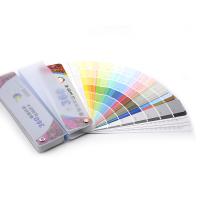
At present, the visual method is usually used for the measurement of coating color. Generally, the sample and the standard product are prepared on the tinplate under the same conditions to prepare the paint film. When inspecting under light, the distance between the eyes and the sample is 30~50cm, forming an angle of about 120°~140°. Check the color according to the product standard. If there is no significant difference between the sample and the standard color, it is considered to meet the technical allowable range. In addition, it can also be compared with the standard Color Chart after the sample is made, and the standard Color Chart can be determined by the production or user department. The national standard GB/T3181-1995 "Paint Film Color Standard Sample" determines the standard Color Chart of 51 kinds of colors that are currently produced and used more commonly, as shown in Table 21-19.

During the test, place the sample plate and the color difference plate side by side, and make the corresponding sides contact each other or overlap a certain area. The eyes are about 500mm away from it, and the observation line of sight is nearly perpendicular to the surface of the sample plate. If the color of the sample plate is between the color difference plate Occasionally match the color with one of the color difference plates, that is, it is considered to meet the color difference range. When observing, it cannot be carried out under light and sunlight, but can only be carried out under bright natural light, otherwise, large observation errors will occur.
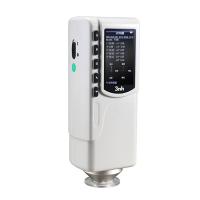
Although the difference in coating color can generally be distinguished by visual inspection, this is only a qualitative method, and due to the limitations of color memory ability and natural conditions, human errors will inevitably occur. In addition, in some cases, the visual method to determine the difference in color is far from meeting the actual needs. In order to solve this problem, the computer color measurement system is used in places where conditions permit. It uses a Spectrophotometer to decompose the reflected light of the coating to decompose various colors. After being processed by the computer, it is represented by a set of coordinate values.
The photoelectric Colorimeter can be used to quantitatively measure the coating, and people's perception of color can be expressed in numbers. The most commonly used color measurement system in the world is the C, I, E coordinate system promulgated by the International Commission on Illuminance, that is, to measure the three-element stimulus values z, y, z. Since all colors can be synthesized by red, green and blue light, the principle of ternary stimulation value is calculated according to the difference in the amount of stimulation caused by human eye nerves to red, green and blue eyes, so In the Colorimeter, under a fixed light source, the ternary stimulus values of the comparison sample and the test sample were tested respectively, and the reflectance measured by the red filter was , value; the reflectance measured by the green filter was The y value, the reflectance z value measured by the blue color filter, and then calculated by the formula, and the reflectance readings are converted into color scale values in turn, or directly read the very good scale value through an instrument that can perform automatic calculations. The magnitude of the difference is calculated from the difference in color values representing the color scale difference between the comparison and test panels. The unit of color difference is NBS, which was originally formulated by the National Bureau of Standards . One NBS unit represents the difference between extremely small colors that can be discerned by ordinary eyes. The relationship between the value of this unit and human perception is as follows:


- 1Tristimulus Colorimeter:principle, application, operation and selection
- 2Application in color difference detection of automobile surface painting
- 3Determination of the color of transparent liquids with a Roviben Colorimeter
- 4Introduction to professional terms about color difference meter color knowledge
- 5Tristimulus values
- 6CS-610 Applied to Cigarette Label Color Detection
- 7CS-580 Spectrophotometer for color difference measurement of Coating lame plating
- 8Study on Color Determination of Oil
- 9The thing between Colorimeter and Color
-
![3NH SC-10 handheld Colorimeter 4mm caliber, suitable for plastics, Coatings, automobiles, printing, Spinning & weaving, food, etc]()
-
![3NH NR10QC Colorimeter 4mm aperture, suitable for Spinning & weaving, Food, Plastic, Coating, Hardware, Photography, Toys, etc]()
-
![JZ-630 High Precision Colorimeter Suitable for Textile, coating powder industry color difference detection measurement diameter 14mm]()
-
![3NH NR60CP handheld Colorimeter φ 8/φ 4 dual caliber, suitable for plastics, Coatings, automobiles, printing, food, etc]()
-
![3NH NR20XE Colorimeter 20mm large diameter, suitable for plastic, Color plate, Coating, Spinning & weaving, food, etc]()
-
![CHNSPEC CS-580B Computer Colorimeter 6mm]() CHNSPEC CS-580B Computer Colorimeter 6mm$ 2233.00
CHNSPEC CS-580B Computer Colorimeter 6mm$ 2233.00