How to solve the defects of chalking, cracking and crazing after painting?
 1. Pulverization
 1. Pulverization
(1) phenomenon
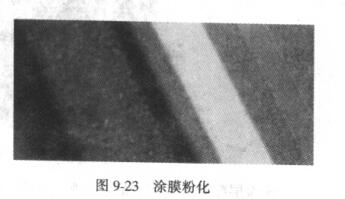
The surface of the coating film is affected by ultraviolet radiation, oxygen and moisture in the sun, aging in the form of powder and falling off, and colored powder is precipitated on the surface, as shown in Figure 9-23.
(2) The main reason is the separation of certain components in the paint
①The coating film is affected by ultraviolet rays, oxygen and moisture during use, aging occurs, and the paint base (resin) is destroyed to expose the pigment.
② The weather resistance of the selected paint is poor, or the interior paint is used as the body paint.
③The coating film was cleaned with a strong detergent.
(3) Preventive measures
① Choose car repair paint with excellent weather resistance, and do not use interior paint (such as nitro spray paint for interior use) to repair the car body.
②Strengthen the maintenance of the coating film, such as regular application of car wax.
(4) Remedy
①Slight chalking can be removed by light polishing to restore luster.
②Heavier pulverization needs to be polished with group wax.
2. Crack, crack

(1) phenomenon
Partial cracks appear on the surface of the coating film, which can be divided into hairline cracks, shallow cracks, cracks and alligator cracks according to the shape of the cracks (size, depth and width).
Modern automotive coatings are extremely strong and durable enough to withstand climate conditions around the world. However, sudden and strong temperature changes can still cause pressure on the coating, causing brittle cracks or shallow cracks on the surface of the coating, and the varnish layer is more sensitive to cracking. Cracking often occurs with age and weather erosion, especially in climates with high humidity and strong sunlight.
Cracks generated only on the surface of the top coating film and distributed in the shape of skin lines are called brittle cracks and shallow cracks (Figure 9-24); cracks that extend from defects under the topcoat and cause cracks to penetrate at least one layer of the coating film are called cracks. Cracked, cracked. Cracking is a common defect in plastic coatings.
(2) Reason
①Excessive varnish is added to the natural color topcoat or the varnish layer on the topcoat is too thin. In order to increase the gloss and drying speed of the topcoat layer, unspecified additives are mixed, which will affect the performance of the resin.
② Spray the repair coating on the cracked and undetected old paint surface.
③The top coat or overall coating is too thick. In normal use, the thicker the topcoat (especially self-drying spray paint), the poorer the cold resistance (or temperature resistance) and the easier it is to crack.
④ Coating matching is not appropriate, and the bottom coating film is softer than the surface coating film.
⑤The topcoat used has poor weather resistance and poor temperature resistance.
⑥In the case of repair coating, cracking of the putty layer will also lead to cracking of the topcoat layer.
(3) Preventive measures
① Do not use additives indiscriminately in the paint.
②Excessive varnish should not be added to the base paint. The film thickness of the finish varnish layer on the paint must be moderate.
③ Avoid too thick coating. The following thicknesses are used as a guide: the film thickness of the topcoat must not exceed 76µm, the total film thickness of the coating shall not exceed 152µm, and the total film thickness of the original coating and repair coating shall not exceed 304µm.
④ Choose a topcoat with excellent weather resistance and temperature resistance, and the hardness and flexibility of the primer and topcoat should be similar.
⑤Before spraying the topcoat, it should be confirmed that there are no cracks on the old paint surface (including the putty layer).
⑥ As far as possible, the newly repaired and painted vehicles should be avoided from being subjected to strong temperature changes.
(4) Remedy
①If there are slight cracks (skin-like), use sandpaper to effectively polish until there are no cracks, and then re-spray. Carefully inspect the surface to ensure that all traces of cracks have been removed.
②In severe cases, only the cracked paint layer can be polished or removed until it reaches the substrate, and then re-sprayed.
- 1What is film chalking and how to measure it?
- 2Causes and treatment methods of common defects of films in electro-coating
- 3Cause analysis and countermeasures of film defects
- 4Film Appearance performance test summary
- 5Analysis and Treatment of Cracking and Cracks on Film Surface
- 6Film defect analysis and solution summary
- 7FAQ and solutions in exterior wall painting
- 8How to solve the problem of defects caused by scars on the film surface?
- 9Classification of film defects
刘磊 - 《基于计算机视觉技术的汽车涂膜缺陷检测方法的研究》