Instructions for refractometer operation
A refractometer is an instrument that can measure the refractive index and average dispersion of transparent, translucent liquids or solids (among them, transparent liquids are mainly used. Refractive index is one of the important physical constants of substances, and the refractive index of substances can be quantitatively calculated. out
The concentration or purity of the substance. At the same time, the refractive index is also an important tool for the study of the structure of matter.
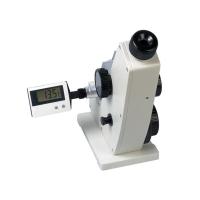
The following describes the working principle and usage of Abbe refractometers commonly used in laboratories. In addition to measuring the refractive index of liquid and solid substances, the instrument can also directly measure the concentration of sucrose solution.
1. Structural principles
When a monochromatic light from medium A enters medium B (the densities of the two mediums are different), the light changes its direction when passing through the interface. This phenomenon is called the refraction of light, as shown in Figure II-20. Under the conditions of temperature, pressure and wavelength of light, according to the law of refraction,


2. How to use
1. Calibration of the instrument
The zero point of the refractometer scale sometimes moves, so when the zero point needs to be calibrated before using the Abbe refractometer, a standard liquid (such as distilled water) with a known refractive index or a standard glass block with a known refractive index can be used.
When pure water is used as the standard liquid, measure its refractive index according to the instrument operation steps introduced below, compare the measured average value with the standard value, and the difference is the calibration value. The ni)° of pure water is 1.3325, and the temperature coefficient between 15 and 30°C is -0.0001. In the precise measurement work, it is necessary to use several standard liquids with different refractive indices in the country to be calibrated, and draw a calibration curve to check against the 11i measurement. Appendix 7 lists the relevant data of the refractive index of several commonly used standard liquids.
Calibrate with a standard glass block. Before opening the measuring prism, add a drop of bromonaphthalene on the polished surface of the standard glass block, a protective cover, and adjust the reading of the dial to be equal to the polishing of the measuring prism attached to the glass block. The marked refractive index, the dividing line between light and dark in the telescope is; snow, in the cross line, if there is any deviation, use the accessory "square hole adjustment wrench" to turn the indication adjustment screw on the measuring telescope, so that the dividing line between light and dark is exactly on the cross The intersection of the lines is on again.
2. How to use the instrument
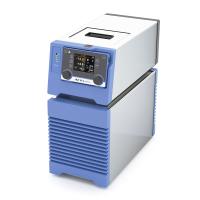
(1) Place the refractometer in a bright place, but avoid direct sunlight exposure. Use a super constant temperature bath to pass constant temperature water into the prism jacket, and the temperature is based on the reading of the thermometer on the refractometer.
(2)扭开测量棱镜和辅助棱镜的闭合旋钮,并转动镜筒,使辅助棱镜斜面向上,若测量棱镜和辅助棱镜表面不清洁,可滴几滴丙西同清洗镜面(注意滴管管尖不要触碰镜面).必要时可用擦镜纸吸干镜面或用擦镜纸按单一方向轻擦镜面(不能来回擦,切勿用滤纸)。
(3)待镜面干燥后,用滴管滴加2~3滴试样于辅助棱镜的毛镜面上,合上棱镜,扭紧闭合旋钮。若液体样易挥发,则动作要迅速,或在两棱镜接近闭合时从加液小槽中注
入样品,然后再闭合两校镜,锁紧闭合旋钮。
(4)转动镜筒使之基直,调节反射镜使入射光进入棱镜,同时从测量望远镜中观察,使视场最亮。调节目镜的焦距,使目镜中十字线清晰明亮。
(5)转动位于“刻度盘罩”下方的“棱镜转动手轮",使刻度盘标尺上的示值逐渐增大,直到观察到视场中央出现彩色光带或黑白临界线为止。
(6)转动“消色散手轮”,使视场内呈现一个清晰的黑白两色的明暗临界线。
(7)转动“棱镜转动手轮",使临界线正好处在十字线中心,若此时又呈现微色散,需要重调“消色散手轮'·,使临界线明暗清晰。
(8)当明暗清晰的临界线正好处于十字线中心时,即可读数c读数时先打开罩売上方的小窗,使光线射入,然后从读数望远镜中读出标尺上相应的示值。为减少读数误差,应转动“棱镜转动手轮",重复测定3次,3个读数相差不能大于0.0002,然后取平均值。此平均值即为待测试样的折光率。
试样的成分对折光率的影响是很灵敏的⊠由于玷汚或试样中易挥发组分的蒸发都会导致读数不准确,因此,测一个试样的折光率更好是重复取3次样,测定3个样品的数据,再取其平均值。
(9)测量固体的折光率时,固体上需有一画个互相垂直的抛光面,测定时不用反光镜和辅助棱镜,而将固体一i也光面用溴代萘粘在测量棱镜的抛光面上,另一抛光面向上,随后操作按上述步骤(4)一、一(7)进行。若被测固体的折光率大于1.66,则粘固体应该用二碘甲烷而不用溴代萘。
(l0) When measuring semi-permeable solids, there must be a polished plane on the solid, stick the plane on the measuring prism with bromine, take off the protective cover as the light-incoming surface, use the reflected light to measure, and the rest of the operations are as follows The above steps, steps (4)~(7) can be completed.
(11) When measuring the mass fraction of sugar in the sugar solution, the operation process is the same as measuring the refractive index of the liquid. At this time, read the indicated value on the left side of the dial, which is the mass fraction of sugar in the sugar solution.
3. Maintenance of the instrument
(l) For corrosive liquids such as strong acid, strong alkali and fluoride, the Abbe refractometer cannot be used for measurement.
(2) The instrument should be placed in a dry and ventilated room to prevent the optical parts from becoming moldy after being damp.
(3) After the instrument is used, it needs to be cleaned and put into the box, which contains desiccant silica gel.
(4) Always keep the instrument clean. After lightly wiping it with high-grade suede or absorbent cotton, it is strictly forbidden to touch the optical parts with oily or sweaty hands. If there is dust on the surface of the optical parts, it may
Blow it away with a suction ball. Wipe lightly with gasoline, and then wipe clean with xylene or acetone.

- 1Take care of nutrition by controlling sugar in food
- 2Color measurement of tomatoes
- 3How to use a portable refractometer?
- 4How to properly calibrate a handheld refractometer?
- 5Refractometer User Guide
- 6Application of refractometer in honey moisture measurement
- 7 What is the application value of refractometer for grape planting?
- 8Experimental working principle and common refractive index of refractometer
- 9What is a refractometer?
-
![INESA WYA (2WAJ) Abbe refractometer for determination of refractive index and average dispersion]()
-
![INESA WZS 90A Handheld sugar meter 0~90% (1 ranges)]()
-
![INESA WZB S1 handheld digital refractometer salinity/refractive index/whiteness]()
-
![INESA WYA-2S digital Abbe refractometer]() INESA WYA-2S digital Abbe refractometer$ 1700.00
INESA WYA-2S digital Abbe refractometer$ 1700.00 -
![INESA WZS S1 Handheld Salinometer salinity Tester]()
-
![INESA WZS 80 Handheld sugar meter 0~80% (1 ranges)]()