ISO 8130-11:1997 - Determination of fluidity of inclined plates - Introduction
(1 Scope
This standard specifies the method for the determination of the flow characteristics of thermosetting powder coatings when they melt and flow down an inclined plate at a fixed angle.
The test results provided in this standard indicate the extent to which powder coatings melt flow during curing. This melt flow characteristic directly affects the adhesion, appearance and coverage of the coating on the edges and corners of the coating.
This test method has been used as an effective method for checking the degree of variation in properties of a particular powder coating from batch to batch. In this test, the relationship between the determination results of powders with different compositions could not be obtained.
This method does not provide meaningful results for powder coatings having a gel time of less than 1 min at the test temperature according to ISO 8130-6.
(2) Principle
The thermosetting powder coating is pressed into a cylindrical mold of standard size to make a compression molded sheet. Under a certain temperature condition, the compression molded sheet is placed on the plate, and after melting, it flows down along the inclined surface of f country, and the length of its flow is measured.
(3) Instrument
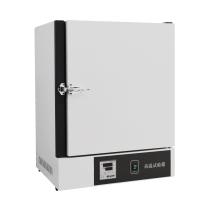
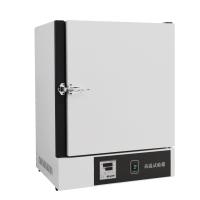
①Gufeng constant temperature Drying Oven can maintain the temperature up to 250 ℃, and the drum can be opened and closed according to needs.
② Glass plate, suitable size, suitable for this test.
Metal plates can also be selected for testing. However, the composition and true surface clarity of the sheet metal need to be strictly regulated. The plate shall be sufficiently rigid so as not to bend or deform during the test. Specific sections of sheet metal shall be included in the test report.
③ Plate device, suitable metal and can be placed in the drying box. The device should be able to carry a piece of more plates, this device can rely on the joystick to place the metal plate from the horizontal position to 65 ° ± 1 ° inclined angle position reciprocating movement.
④ Balance, capable of weighing up to 10mg.
⑤Steel [to the column mold machine, connected with a new rod, can produce a cylindrical mold with a diameter of 12.5mm ± 0.05mm and a thickness of 6.5mm ± 0.2mm.
⑥Steel ruler, graduation mm.
⑦ Polytetrafluoroethylene (PTPE), smoke release device.
(4) Sampling: According to the provisions of ISO8130-9, take a representative sample of the test product.
(5) Operation steps
Experiments were performed in duplicate.
① Use a balance to weigh a certain amount of test sample, accurate to 10 mg, which is equivalent to half the amount in the measurement of the coating density of the IS08130-2 or ISO8130-3 powder. Put the sample into a round mold, use a steel cylinder mold machine to press the cylinder mold into a disc with a thickness of 6.11mm±0.2mm, and push out the cylinder mold with a normal ejector rod. Weigh the cylindrical mold to ensure its mass is accurate to 10mg.
If there is a period of time between the beginning of the test and the preparation of the cylindrical mold, the prepared circular injection mold should be stored in a desiccator or in a sealed bag to prevent moisture absorption.
② Unless otherwise agreed, the test temperature will adopt the suggested Drying Oven temperature. 180°C ± 2°C is used unless stated otherwise.
③ Spray the top of the glass plate with a PTFE fume releaser and air dry.
The purpose of using the PTFE smoke release device is to facilitate the movement of the sample, and the glass plate for subtraction test can be reused to ensure a flat surface. If it is replaced by a metal plate, this step is not appropriate. Agreements made by interested parties may be ignored, and this situation should be stated in the test report.
④ Place the board horizontally on the board device.
⑤ Put the plate device and the plate together in a Drying Oven at a suitable temperature, turn on the blast to preheat the plate device for at least 15 minutes.
⑥Turn off the blast at the end of preheating, and open the door of the Drying Oven. Place the finished round injection mold on the tail of the plate (the tail should be at the highest point when the device is tilted). Close the door of the dry box and re-start the blower. The whole operation process should not exceed 15 seconds. After 15 seconds after closing the drying box door, operate the panel device to drive the panel from the horizontal position to 65°±1°, keep it for 15 minutes, remove the panel from the drying box, and cool it to room temperature in the horizontal position.
⑦ Use a steel ruler to measure the total length due to the flow of the column mold, in mm. It is more convenient to observe and measure from the opposite side of the glass plate. Record the measured value, accurate to 0.5mm.
(6) Indication of results
The flow length of the cylindrical mold can be calculated by subtracting the diameter of the injection mold 12.5 mm from the measured flow of the cylindrical mold.
If the difference between the two measurement results is greater than 5% of the lower value, it is necessary to repeat the operation according to the operation steps.
(7) Precision
The precision of this method is obtained by statistical analysis of the internal test results of the laboratory. The results are as follows:
Repeatability: The absolute difference between two results obtained by the same operator in the same laboratory using standard test methods for the same sample (each result is the average of two parallel determinations) should be less than 5% (confidence level is 95%).