Pigment specific gravity measurement method
In the paint industry, some pigments with different specific gravity are used.
The specific gravity of the pigment can vary in a wide range - 1 from 1.6 (carbon black) to 9.5 (tripin tetroxide).
Significant changes in specific gravity are not only found between different pigments, but also among the same pigments. For example, when measuring the specific gravity of Cuo Dan, many authors respectively obtained the following values: 8.8; 9.2; 9.93~9.46; . These differences in the data measured by the various researchers are due to the fact that the physical properties of the tested pigments are widely different (different dispersion, structure, etc.) .
The specific gravity of the pigment can greatly affect the specific gravity of the color paint and the degree of savings in the amount of pigment used. Determining the specific gravity of the pigment is also of great significance in the selection of the head material used in the manufacture of stable color paint, because other conditions are equal. In the case of , the higher the specific gravity of the pigment, the greater the sedimentation of the pigment from the paint.
Often for a specific purpose, such as the manufacture of printing inks, it is necessary to mix a pigment with a large specific gravity (ship name yellow) with a pigment with a small specific gravity (aluminum hydroxide), because the pigment with a large specific gravity may precipitate in the Impression wells stain the impression.
The consumption of paint is also determined by the specific gravity of the pigment. At the same time, the price of several kinds of paint is the same as that of the wide quantity. At the same time, it is better to choose the paint with smaller specific gravity (that is, the paint containing the pigment with smaller specific gravity), because of the consumption of this paint on the same surface. The amount of paint with larger specific gravity is less than the amount of flux.
Determining the specific gravity of a pigment is generally more complicated than measuring the specific gravity of a liquid.
In order to accurately determine the specific gravity of the pigment, it is necessary to make the pigment free of gas wrapping layer and void, and to make the surface easy to be wetted by the liquid; it is necessary to make the surface of the wave pigment adsorbed. In the paint industry, some materials with different specific gravity are used. pigment.
When determining the specific gravity of a pigment, the rod selection of the wetting liquid is of great significance. Water is a very unsuitable wetting liquid because it has a high surface tension and thus has poor wetting ability for many materials. Therefore, liquids with low surface tension (such as ethanol, toluene, kerosene, etc.) must be used.
In order to quickly test the wettability of various liquids to pigments, pour two immiscible liquids into a large test tube, such as water and extract, ethanol and petroleum, water and toluene, etc.; A small amount of pigment (a block the size of a matchhead) is dropped into each test tube to determine its specific gravity. First shake the test tube, then let it stand, and then observe which layer of liquid the pigment enters.
The pigment can be dispersed in a layer of liquid that is easy to wet it, and this liquid is selected to determine the specific gravity.
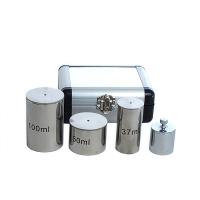
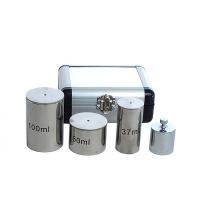
Of the existing methods for determining specific gravity, only the pycnometer method is described in this book because it gives fairly accurate results. This method has been checked and corrected by us more than once. The major disadvantage of this method is the long measurement time. When measuring the specific gravity of the pigment, the ordinary pycnometer used to measure the specific gravity of the liquid can be used.
Generally, kerosene is used as the wetting liquid. If necessary, ethanol, gas imitation and other liquids can be used instead of kerosene. Which liquid to use depends on the different wettability of the pigment.
The pigment to be tested must be sent to a dry box at 105°C for 1.1/2 hours to constant weight.
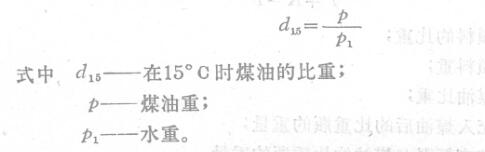
The determination of the specific gravity of the pigment begins with the determination of the specific gravity of kerosene. For this purpose, a clean and dry pycnometer must be filled with fresh distilled water until it reaches the mark on the bottle and weighed. Then dry the pycnometer again and weigh the empty bottle. Thereafter, weigh the pycnometer filled with kerosene (up to the mark on the bottle).
All weighing procedures were performed at 15°C. The specific gravity can be calculated as follows:
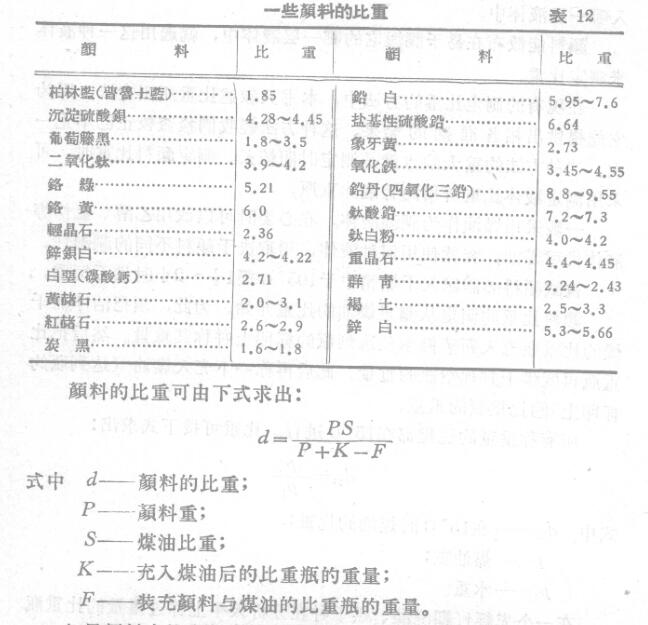
Into a pycnometer which has been carefully washed, machine-dried and weighed on an analytical balance, the pigment to be tested is poured. If it is a black or blue pigment with a small specific gravity, the weight of the sample is about 1 gram, and if it is a white pigment, it is 7 to 15 grams. First weigh the pycnometer, and accurately measure the weight of the sample pigment according to the weight difference between the two. Then pour a small amount of kerosene (5-10 ml) into the pycnometer, stirring the contents of the pycnometer carefully each time. The stirring system uses a thin glass tube with an end seal to stir, and then washes the broken glass rod with kerosene and pours the kerosene into the pycnometer. Fill 2/3 of the pycnometer with kerosene, and place it in a Water Bath (temperature 50-60°C) for 1-2 hours to drive out air bubbles from the pigment. At regular intervals, carefully stir the liquid in the pycnometer with a glass rod. Then cool the pycnometer, add some kerosene at 15°C (make it reach the mark) and weigh it. In this way, the weight of the pycnometer containing the pigment and kerosene can be measured.
The results will not be accurate if the air in the paint is not completely removed; the air in the paint can be completely removed at 5° in good air.
Table 12 lists the specific gravity of the pigments measured by various authors.
- 1Pigment related ASTM testing standards
- 2Determination of Coating Density: Density Cup
- 3Determination of pigment light fastness under natural light
- 4How is Pigment Volume Measured?
- 5Sieve residue (fineness of ground) Determination of Pigment dispersion
- 6Determination of tinctorial strength of Pigments by "sensory limit" method
- 7Characteristics of drying performance of polyurethane paint for wood
- 8The drying characteristics of nitro paint
- 9Determination of the stability of paint materials to mineral oils