Coating Transparency Detection Method
Definition and content of paint transparency
Transparency is the ability of a substance to transmit light. Transparency can indicate whether varnishes, varnishes, paints and thinners contain mechanical impurities and suspended matter. . In the production process, the purity of various materials, the mixing of mechanical impurities, the compatibility of resins, the precipitation of drier and the infiltration of water will all affect the transparency of the product. Products with turbid and opaque appearance will affect the film formation. The luster and color, as well as the adhesion and the resistance to chemical media are reduced. The varnish is required to be clear and transparent, without impurities and sediments, because the varnish used as a varnish can clearly show the color and texture of the underlying layer.
Method for testing transparency of paint
(1) Visual inspection method
It can be detected by visual inspection, and it is required to be transparent, full and not turbid. The visual inspection method refers to visual comparison of samples under transmitted light. The transparency is based on the standard GB/T1721-79 (1989) "Determination of appearance and transparency of varnishes, varnishes and thinners " . During operation, put the sample in a colorimetric tube with a capacity of 25mL, and compare it with a series of standard solutions with different degrees of turbidity under transmitted light. The results are expressed in three grades of transparent, slightly turbid and turbid, corresponding to grades 1-3 in the standard. There are two kinds of standard solutions used in the test, if the sample is colorless, use a colorless standard solution, and if the sample is colored, use a colored standard solution.
(2) Instrument method
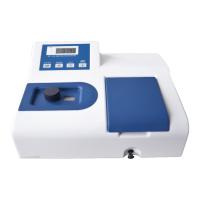
A photoelectric Turbidity Meter is used to eliminate the interference to the visual inspection results due to the different shades of the product, and to improve the accuracy of the test. The measurement principle of the instrument is: the light emitted by the light source is affected by impurities or suspended matter in the test tube to produce scattered light, which is reflected by the reflector and projected to the photoresistor to be received. Select a frosted plexiglass plate with a refractive index of approximately 1.5 as the standard turbidity of 100, and then measure the turbidity of the sample after zeroing with distilled water, expressed in numbers.