Summary of routine performance test methods related to marine and heavy corrosion protection Coatings
1. Sampling of paint products
Sampling of paint products is used to test the paint product itself and the resulting paint film. Sampling is to obtain an appropriate number of test samples of consistent quality, which requires sufficient representativeness of the tested product. Sampling is the first step of detection work, it is very important, the correctness of sampling directly affects the accuracy of detection results. For the sampling of coating products, my country currently adopts GB3186-82 (89) "Sampling of coating products".
2. Transparency of varnishes and varnishes
Both varnish and varnish are colloidal solutions, and the degree of transparency or turbidity is caused by light scattering on the particles of the dispersed phase. In the production process, the purity of various materials is not enough, the mixing of mechanical impurities, local overheating of materials, poor mutual solubility of resins, low solubility of solvents for resins, precipitation of drier and infiltration of water will affect the quality of the product. transparency. Products with muddy and opaque appearance will affect the gloss and color of the film, and reduce the adhesion and its resistance to chemical media. The determination method generally adopts GB/T1721-79(89) "Determination of Appearance and Transparency of Varnish, Varnish and Thinner".
3. Color of varnish and varnish
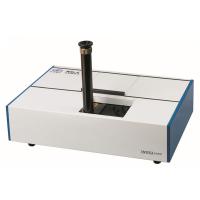
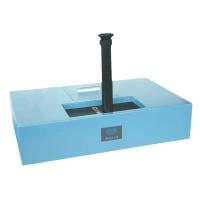
Transparent liquid coatings such as varnishes and varnishes produce different colors due to the absorption of light, and usually the lighter the color, the better. The method of detecting color is to compare these paint products with a series of standard color scale solutions or glass under the natural scattered light or the transmitted light of the prescribed artificial light source to determine the depth of the color. According to the different standards used, there are the following types of detection methods.
(1) Iron-cobalt colorimetric method: according to the national standard GB/T1722-92 "Determination of color of varnishes, varnishes and thinners".
(2) Platinum-cobalt colorimetric method: according to the national standard GB/T9282-88 "transparent liquid-evaluation of color by platinum-cobalt grade".
(3) Gardner color grading method: according to the national standard GB/T9281-88 "the color of the transparent liquid is evaluated by the lacquer base Gardner color grading for paints and varnishes".
(4) Lovibond colorimetry: according to the national standard GB/T1722-92 "Determination of Color of Varnishes, Clear Oils and Thinners".
4. Density
Density is defined as the mass per unit volume of an object at a specified temperature, and the commonly used unit is g/cm3 or g/mL.
The purpose of measuring the density of coating products is mainly to control the quality of the fixed volume in the product packaging container; it is also meaningful when testing the hiding power of the product, so as to know the area that can be coated per unit volume during construction.
At present, the density measurement is carried out according to the national standard GB/T6750-86 "Paints and varnishes - Determination of density".
5. Fineness
The pigments and extender pigments used in color paints should be tiny particles evenly dispersed in the paint. When coated into a film with a thickness of tens to tens of microns, the surface of the coating film should be smooth and smooth, and there should be no particles such as pigments. objects appear. In order to express the degree of dispersion of pigments in paint, the test item of fineness has been formulated. In addition to being used to check paints, varnishes are now sometimes tested for fineness to check whether they contain tiny mechanical impurities. Fineness is also called grinding fineness.
There are two kinds of national standard fineness determination in our country, which can be selected according to the needs.
The Fineness Meter specified in GB/T1724-79(89) "Determination of Coating Fineness" has three specifications: 0~150µm, 0~100µm and 0~50µm.
GB/T6753.1-86 "Determination of Grinding Fineness of Coatings" is divided into 4 specifications: 100µm, 50µm, 25µm and 15µm.
6. Viscosity
There are many methods for measuring the viscosity of liquid coatings, which are suitable for different varieties. These detection methods mainly adopt the method of indirect comparative determination. The viscosity detection of transparent varnishes and low-viscosity paints is mainly based on the outflow method. For high-viscosity paints, the viscosity is measured by measuring the stress at different shear rates. This method can also be used to measure other corresponding rheological properties.
(1) Outflow method
It is a relatively common method to express the viscosity of the paint by measuring the time it takes for the liquid paint to flow out in a container of a certain volume. The corresponding national standards are GB/T1723-93 "Determination of paint" and GB/T6753.4-86 "Determination of paint flow time Is0 Flow Cup method".
(2) Setting the shear rate measurement method
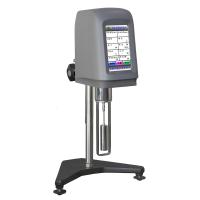
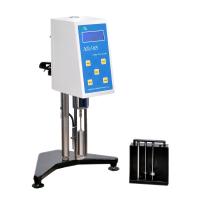
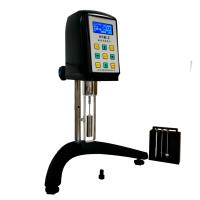
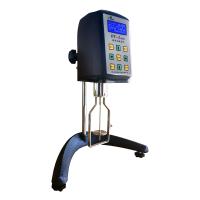
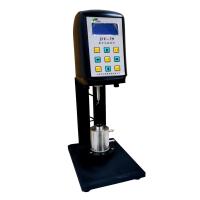
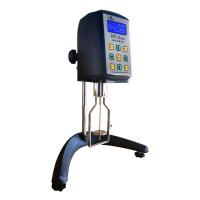
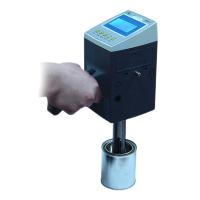
High-viscosity paints have non-Newtonian flow properties, and they produce different shear rates under different shear stresses, so their viscosity is not a constant value, and their actual values cannot be measured by the previous methods. Viscosity value. To determine their viscosity, usually need to use Rotational Viscometer method. Different types of Rotational Viscometers are suitable for testing different coating products. For the quality control of general colored paint, a cylindrical viscometer is usually used, and its accuracy can meet the requirements. my country's national standard GB/T9751-88 "Determination of Viscosity of Coatings at High Shear Rates" uses cone-plate or cylindrical viscometers and immersion viscometers (that is, viscometers in which both the rotor and the stator are immersed in the sample) ), and detect the dynamic viscosity of the coating at a shear rate of 5000-20000/s, expressed in Pa s. For latex paints, award-type viscometers are mostly used, such as Stormer viscometers. The national standard GB/T9269-88 "Determination of Viscosity of Architectural Coatings-Stormer Viscometer Method" stipulates the method of measuring the viscosity of coatings with a Stormer viscometer, which is suitable for the determination of non-Newtonian architectural coatings. The test results are expressed in Krebs It is expressed in Sri Lankan units (Ku). The conversion of this unit is based on the conversion table attached to the instrument.
7. Non-volatile content
Non-volatile matter or solid content refers to the part of the paint component that remains as a paint film after construction, and its content has a direct relationship with the quality of the formed paint film and the use value of the paint. Now in order to protect the environment and reduce the pollution of volatile organic compounds to the atmosphere, the production of high-solid coatings is advocated internationally. There are two national standards for the determination of non-volatile matter. The detection method stipulated in GB/T1725-79(89) "Determination of Solid Content of Coatings" is to use glass culture I[]1 and glass surface I[]1 to measure in a blast constant temperature oven. The sampling quantity and double-bake temperature of different types of coatings are stipulated, and the double-bake temperature is 30 minutes. In GB/T6751-86 "Determination of volatile and non-volatile matter in paints and varnishes", it is stipulated that glass, tinplate or aluminum flat-bottomed discs with a diameter of about 75mm can also be carried out in a blast constant temperature oven. The temperature is specified as 105°C±2°C, double baked for 3 hours.
8. Storage stability
Storage stability refers to the degree to which the physical or chemical properties of the product can meet the original requirements for use after a certain storage period under normal packaging and storage conditions, or the resistance of the coating product to the specified conditions. The degree of change in performance that may occur after storage.
The storage stability is tested according to the national standard GB/T6753.3-86 "Test method for storage stability of coatings".
9. Usage
The amount used refers to the amount of paint required to make a coating film of a certain thickness on a unit area under normal construction conditions, expressed in g/m2. The test method is carried out according to the national standard GB/T1758-79(89) "Determination of paint usage".
10. Construction
Construction is used to detect the difficulty of construction of coating products. It can be evaluated according to the method stipulated in the national standard GB/T67536-86 "Large area brushing test of paint products".
Eleven, leveling
Leveling is an important item in the construction performance of coatings, which is separated from the construction properties of coatings. It is specially listed as a test item. Leveling refers to the ability of the coating film to flow from an irregular and uneven surface to a flat and smooth surface after construction. It can be evaluated according to the national standard GB/T1750-79(89) "Determination of coating leveling".
12. Drying time
The physical or chemical change process in which liquid paint is applied to the surface of an object from fluid to solid coating is commonly known as the drying of the coating. It can be measured according to the national standard GB/T1728-79(89) "Determination of drying time of paint film and putty film".
Thirteen, paint film thickness
In the paint inspection process, paint film thickness is a very important control index. The measurement of certain physical properties of coatings and some special performance tests such as durability require the coating to be made into test panels and compared at a certain film thickness; in construction applications, due to the uneven thickness of the coating film or If the thickness does not meet the specified requirements, it will have a great impact on the performance of the coating. Therefore, how to correctly measure the thickness of the paint film is an important part of the quality inspection, and it needs to be given due attention. The determination method is carried out according to GB/T13452.2-92 "Determination of Paint Film Thickness of Paints and Varnishes".
14. Gloss
When light shines on a smooth surface, part of it is reflected, and part of it penetrates into the object to produce refraction. The law of light reflection is that the angle of incidence is equal to the angle of reflection. The ratio of the intensity of reflected light to the intensity of incident light is called reflectance. The reflection of light striking a flat surface is called specular reflection. The gloss of the coating film is the ability of the surface of the coating film to reflect the light irradiated on it in a certain direction, also known as specular gloss. The greater the amount of light reflected, the more glossy it is. The measurement of gloss can be carried out according to the national standard GB/T9754-88 "Determination of 20°, 60°, 85° specular gloss of paint film of paint and varnish without metallic pigment".
15. Hardness
As a protective material, the coating film needs to have a certain strength, so its mechanical properties are very important properties.
硬度是表示漆膜机械强度的重要性能之一,其物理意义可理解为漆膜表面对作用其上的另一个硬度较大的物体所表现的阻力。涂膜的硬度测定方法很多,目前常用的有3类方法,即摆杆阻尼硬度法、划痕硬度法和压痕硬度法。
(1)摆杆阻尼硬度法:按国家标准GB/T1730-93«漆膜硬度测定法摆杆阻尼试验»进行测定。
(2)划痕硬度法:按国家标准GB/T6739-1996«漆膜铅笔硬度测定法»进行测定。
(3)压痕硬度法:按国家标准GB/T9275-88«色漆和清漆巴克霍尔兹压痕试验»进行测定。
十六、耐冲击性
耐冲击性又称冲击强度,系指涂于底材上的涂膜在经受高速率的重力作用下发生快速变形而不出现开裂或从金属底材上脱落的能力,它表现了被试验漆膜的柔韧性和对底材的附着力。按国家标准GB/T1732-93«漆膜耐冲击测定法»测定。特种涂层材料参照相关的方法。
十七、柔切性
当涂于底材上的漆膜受到外力作用而弯曲时,所表现的弹性、塑性和附着力等的综合性能称为柔韧性。柔韧性的测定主要通过涂膜与底材共同受力弯曲,检査其破裂伸长情况,其中包括了涂膜与底材的界面作用。
目前涂层柔韧性的测定主要有以下3种仪器。
(1)抽棒测定器:按国家标准GB/T1731-93«漆膜柔韧性测定法»规定进行。
(2)囱柱抽弯曲试验仪:按国家标准GB/T6742-86«漆膜弯曲试验(圆柱抽)»规定进行。
(3)锥形挠曲测验仪:按国家标准GB/T11185-89«漆膜弯曲试验(锥形抽)»规定进行。
十八、附着力
系指漆膜与被涂漆物件表面通过物理和化学力的作用结合在一起的坚牢程度。目前测定漆膜附着力一般采用以下两类方法。
(一)综合测定法
1.十字划格法
按国家标准GB/T9286-1998«色漆和清漆漆膜的划格试验»规定进行。
(2)划圏法
按国家标准GB/T1720-79(89)«漆膜附着办测定法»规定进行。
(二)拉开法
按国家标准GB/T5210-85«涂层附着力的测定法拉开法»规定进行。
十九、耐磨性
Abrasion resistance is the resistance of the coating to the mechanical action of friction, and it is one of the important characteristics of the paint film that is subjected to mechanical wear during use. Generally, the national standard GB/T1768-79 (89) "Determination of Abrasion Resistance of Paint Film" is used for testing.
20. Scrub resistance
It is a measure of the relative abrasion resistance of a coating when it is repeatedly washed to remove contaminants during use. It is a very important assessment index for building interior wall paint and deck paint. Generally, the national standard GB/T9266-88 "Scrub Resistance of Architectural Coatings" is used for determination.

- 1Anti-corrosion coatings performance index and detection method, instrument and equipment
- 2Key detection performance and detection method of anti-corrosion coatings
- 3Anti-corrosion coatings performance testing
- 4Analysis of Surface Defects of Explosion Holes and Fisheye-Anticorrosive Coatings
- 5How to ensure that the anti-corrosion coating of the product does not peel off?
- 6How do anti-corrosion coatings work on the coating?
- 7What is an anti-corrosion coating?
- 8Determination of Color of Transparent Liquid by Platinum-Cobalt Colorimetry
- 9Determination of the color of transparent liquids with a Roviben Colorimeter