How is film Drying time determined?
The paint is coated on the surface of the object with a certain thickness, and forms a solid film through physical volatilization or chemical gasification polymerization, or by adding a curing agent, drying or light curing, and the time required for such a process Called dry time, expressed in hours or minutes. It depends on the chemical and physical properties of the coating itself, and can usually be divided into four stages.
①Surface dryness: the dry time of a wet paint film with a certain thickness, the surface changes from liquid to solid but the bottom is still liquid, which is called surface dry time.
②Practical drying: The solid paint film is formed from the applied liquid paint film of a certain thickness, and the drying time is called the actual drying time.
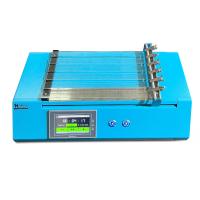
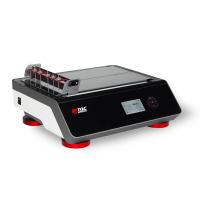
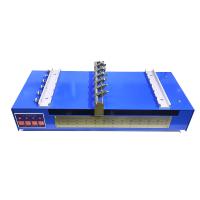
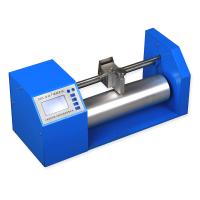
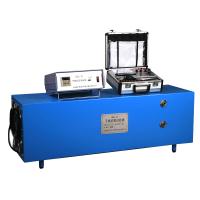
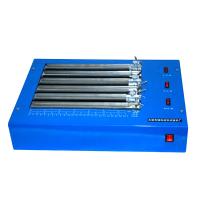
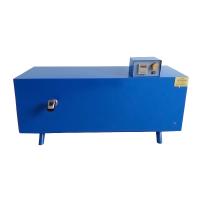
The national standard GB1728-89 (79) stipulates the determination method of the drying time of paint film and putty film. Among them, the determination of surface dry time mainly includes the blowing phase ball method and the finger angle! l1 method. This test mainly depends on the experience of the Tester. Put a phase ball on the surface of the paint film, and blow the phase ball with your mouth. If it can be blown away and no cotton threads are left on the paint film surface, it is considered dry. This method is the method of blowing cotton balls. Gently rub the surface of the raw paint film with your finger, if it feels a little sticky, but it does not stick to your finger, and no paint sticks to your finger, it is considered dry. , The method of pressing filter paper and cotton ball is to put a filter paper or cotton ball on the surface of the paint film, and then press it on the dry Tester (200g weight type), remove the weight after 30 seconds, turn the test plate over, and the filter paper (or Cotton balls) can fall freely, and the fibers do not stick to the coating film; if there are 1~2 fibers that can be lightly dusted off, the paint film is considered to be hard dry, and the time from the time the paint is painted to this time is defined as the hard drying time. When pressed with fingers, the paint film is hard, not sticky, and has no fingerprints. It can be estimated that it is dry. The paint film can be scraped off on the sample board with a safety blade, and there is no sticking phenomenon at the bottom of the paint film. It is considered that the paint film has actually dried ,, Since the drying of the paint and the formation of the paint film are a slow and continuous process, in order to observe the overall changes in the drying process, the accurate method is to use an automatic paint film drying time Tester, such as BYK and other companies. Drying time Recorder, QGz automatic paint film drying time Tester from Tianjin Weida Testing Machine Factory, etc., one (such as the BYK company instrument) uses a motor to drive the gear through the reduction box, and the paint film is sprayed at a slow rate of 30mm/h. Move in a straight line for a total of 24 hours. With the gradual drying of the paint film, the paint film becomes harder and harder, and the traces of the gear test needle gradually change from deep to shallow until they disappear completely. When the scratch marks completely disappear, it is the hard drying time. Another automatic measurement is to use the motor to drive the funnel equipped with spun yarn to move slowly on the sample plate coated with paint film, and the sand will continuously fall on the paint film, forming linear traces of sand grains. When the sand grains are blown, there will be no When sticking, it is the hard drying time, and use the tip of the needle to slowly draw a circle with a radius of 5cm on the paint film. It takes 24 hours to draw a circle, so that the drying of the paint film that changes with time can be observed on a small test panel area The degree and the time required for hard drying, but these measurement methods are also related to the type of paint and the level of solid content of the paint.
The factors that affect the drying time of the paint film are temperature, humidity and the performance of the painted substrate. Generally speaking, as the temperature rises, the paint film dries faster, but except for drying paint, too high temperature will cause the paint film to become brittle. At the same time, the type of coating has a great influence on the drying time. Physically volatile non-conversion coatings such as nitro, ethylene, chlorinated rubber, etc. usually dry in about half an hour, and dry in about 4 hours. ; while epoxy, polyurethane and other coatings added with curing agent usually need more than 4 hours to dry on the surface, and about 24 hours to dry. For the surface dry, hard dry time and the maximum coating time interval of specific coating types, see Chapter 1 and For the relevant content in Chapter 4, it should be explained that the paint coating after hard drying cannot be put into use immediately, because this kind of drying is only about 95% dry, and it takes more than 7 days for it to be completely dry before it can be put into normal use .
- 1Basic Principle and Application Analysis of Paints drying time Tester
- 2Waterborne architectural coatings detection method
- 3Summary of drying time determination method for paint film and putty film
- 4Several Determination Methods of Coating drying time
- 5Coating performance testing: ensuring the efficiency and mass of the painting process
- 6Film drying method: natural drying, heating drying, irradiation curing and gas phase curing
- 7How to detect the drying time of architectural coatings (surface drying)?
- 8How to test architectural coatings workability?
- 9List of water-based paints testing laboratory equipment