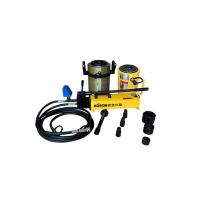
Coating mass control - concrete substrates
Concrete coatings are commonly used as building materials and are arguably the most likely to experience coating failure. These failures greatly increase the potential for premature degradation of the substrate material and often result in additional cost increases for repair.
In most cases, the lack of a comprehensive quality control program is often the root cause of coating failure. As with other building materials, coatings applied to concrete require specific measures to ensure the performance and longevity of the coating.
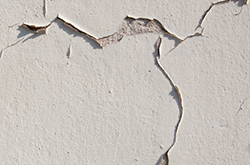 It is assumed that the concrete surface has been determined to be non-destructive, that is, it will not be damaged by contaminants such as dust, oil and grease. Then the moisture in the concrete is suitable for painting. The following measures are part of a coating application quality control program.
surface preparation
One of the first considerations in assuring coating quality control is the physical surface texture (also known as the anchor or surface "profile") of the concrete and the compatibility of the coating. The recent ASTM standard D7682 "Standard Test Method for Replication and Measurement of Concrete Surface Profile Using Replica Putty" cites both Method A (visual comparison) and Method B (quantitative measurement) as means of determining specific surface profiles. Given the likelihood of coating failure and the cost of fabrication and materials, it is good to have a long-term record of the profile for reference.
One test method that satisfies both visual contrast and quantifiable measurement of surface profile is the use of a fast-curing two-putty. Obtain a permanent relief mold of the surface sample by preparing and removing the putty. Relief molds can be compared visually to models of ICRI's (International Concrete Repair Institute) CSP (Concrete Surface Profile) or, depending on the test method, with tailor-made micron measurements in multiple areas of the mold.
envirnmental factor
The main reason for measuring weather conditions is to avoid rework and premature failure of protective coatings. Recommendations and requirements, in addition to those specified by the paint manufacturer, are included within the scope of various internationally recognized standards. It is also important to document the results as observational evidence of conditions before, during and after the coating process.
Surface preparation and coating preparation should be carried out under favorable environmental conditions to prevent the possibility of coating failure. The main factors affecting the long-term performance of concrete coatings are the pre-treatment and climatic conditions of coating application. The handheld electronic device enables painting contractors, inspectors and property owners to measure and record applicable environmental conditions (PosiTector DPM map).
Coating thickness
The main purpose of measuring the thickness of concrete coatings is to control coating costs while ensuring adequate protective coverage. Commercial contracts often require independent inspection work after the work  is completed .
Masonry coatings serve a variety of purposes including cosmetic appearance, durability, abrasion resistance, and protection from elements such as moisture, salt, chemicals, and UV light. Common coatings for concrete include latex paints, acrylic paints, polyurethanes, epoxies, and polyesters. The St. Anthony Falls Bridge (pictured) was coated with a uniform smooth coat to enhance multi-color LED lights at night, and finished with an anti-graffiti clear coat.
Traditionally, a destructive test method has been used to test the performance of coatings on masonry substrates such as concrete.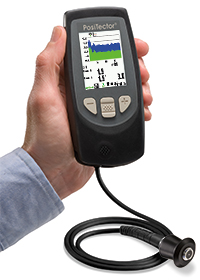 thickness. Coatings applied to concrete range from hard to soft, smooth to rough, and cover a wide range of thicknesses. The surface of concrete can be quite rough, which can show significant variations in thickness measurements.
ASTM D6132 standard "Standard Test Method for Non-Destructive Measurement of Dry Film Thickness of Applied Organic Coatings Using Ultrasonic Thickness Gauge" specifies a non-destructive test method that eliminates the need for coating repair after inspection. needs, and save time for inspectors and contractors. Ultrasonic thickness testing equipment (positector 200 figure) sends ultrasonic pulses to the coating surface through a probe used with a couplant.
Ultrasonic Thickness Gauges are also used in the scope of SSPC-PA 9, "Measurement of Dry Film Thickness on Cementitious Substrates Using Ultrasonic Thickness Gauges". The PA 9 method specifies that the thickness of a coating is determined by averaging a specified minimum number of measurement readings that are acceptable (according to the method) over a single measurement area of the coated surface.
Coating Adhesion
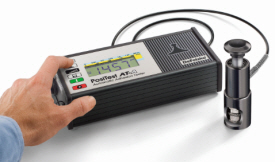
Once the coating has been properly applied to the required thickness, it is advantageous to quantitatively measure the bond strength between the coating and the concrete substrate. This test method is specified in ASTM d7234 standard "Standard Test Method for Adhesion of Coatings on Concrete Using a Portable Adhesion Tester".
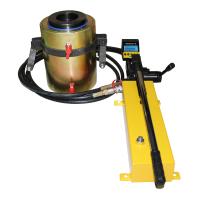
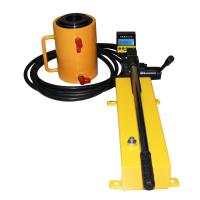
The pull-off adhesion test measures the resistance of a coating to detachment from a substrate when a perpendicular tensile force is applied. Portable pull-off adhesion Testers (PosiTest AT manual and automatic charts) measure the pull force required to pull a coating of a specified size away from a substrate. The measured tensile force provides a direct indication of the strength of the tensile bond between the coating and the substrate. By eliminating sources of pull-off variation, such as inadvertent bond failures between adhesives and poorly prepared carts, adhesion test structures become more meaningful and predictable.
The main components of a pull-off adhesion Tester are a pressure source, a pressure gauge and a driver. During operation, the flat side of the pull bolt (cart) is adhered to the coating being evaluated. After the adhesive has cured, the driver's coupling connector is attached to the cart. By turning on the pressure source, the pressure is slowly raised to the actuator in the system.
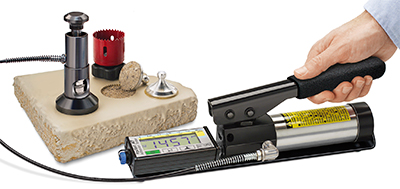
When tested on concrete, concrete internal bond failure occurs at the point where the pressure within the driver typically exceeds the internal tensile strength of the concrete itself. The system's gauge's maximum pressure indicator provides a direct readout of the pressure at which the pullout occurred. With proper cutting around the dolly, this instrument can be used to measure the tensile strength of uncoated concrete, as well as for concrete repairs.
in conclusion
As the use of concrete as a building material continues to grow, it is imperative to establish proper quality control measures when using prepared coatings. As mentioned above, these measures ensure the longevity of the coating and the underlying structure and are major contributors to meeting cost and performance expectations.
-
![KOSON KS-10C coating Adhesion Tester]() KOSON KS-10C coating Adhesion Tester$ 544.00
KOSON KS-10C coating Adhesion Tester$ 544.00 -
![KSJM-5C High precision rivet insulation material Bond strength Tester]()
-
![KOSON KS-100T (iron) bolt puller Measurement range 0~1000KN CHINA pump]()
-
![KOSON KS-50T (iron) bolt puller Measurement range 0~500KN CHINA pump]()
-
![Kosu KS-30T (iron) bolt drawing instrument measuring range 0~300KN CHINA pump]()
-
![Kosu KS-20T (iron) Bolt TensIon Meter measuring range 0~200KN CHINA pump]()
-
![KOSON KS-10T (iron) Bolt TensIon Meter measurement range 0~100KN domestic (CN) pump]()
-
![KOSON KS-5T (iron) steel bar drawing instrument Measurement range 0~500KN CHINA pump]()
-
![KOSON KS-2T (iron) bolt puller Measurement range 0~20KN CHINA pump]()