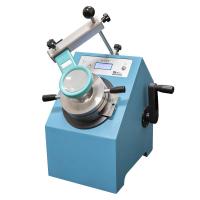
Modern environment TCB cupping instrument operating instructions
I. Overview
The coating cupping test machine is designed and manufactured according to the ISO 1520 "Paints and Varnishes - Cupping Test" GB9753 standard. It mainly evaluates the performance of the coatings of paints, varnishes and related products against cracking or separation from metal substrates after they are gradually deformed under standard conditions. The test can be carried out according to the specified indentation depth, and the evaluation can be passed or failed. The indentation depth can also be gradually increased to determine the minimum depth at which the coating just cracks or begins to detach from the base material.
2. Main technical parameters
1. Punch: 20mm
2. Maximum depth of indentation: 10mm
3. Measuring device: digital display, the division value is 0.01mm
4. Indentation accuracy: 0.05
5. Test plate size: 70×70mm =0.30~1.25mm flat and not deformed
Polished steel plate, in line with GB9271 requirements
3. Test procedures and methods of use
1. Test panel preparation: The coated test panel (the coating can only be sprayed on one side, and the back side needs to be conductive, polished with 0# sandpaper and cleaned), according to the drying conditions and drying conditions specified in the sample standard. Time to dry, and then at a temperature of 23±2°C and a relative humidity of (50±5)%, adjust the state for at least 16 hours (except for special regulations) before putting into the test.
2. Ambient temperature: The test should be carried out in an environment with a temperature of 23±5°C and a relative humidity of (50±5)% (except for special regulations).
3. How to use:
(1) Turn the handwheel of the cupping instrument to the bottom in the "down" direction (clockwise), unscrew the clamping head of the test plate on the upper part of the testing machine, insert the test plate with the coating side up into the gap, and connect the punching head and Align the center of the test plate, tighten the clamping head of the test plate, and firmly fix the test plate on the stamping die.
(2) Turn on the power switch on the rear panel of the device, and the display should display 00.00.
(3) Rotate the hand wheel in the direction of "up" (counterclockwise) to raise the stamping head. When the rotation is close to 3 laps, you should slow down and rotate at a speed of about 3 seconds. When the stamping head just touches the template, the counter conducts electricity and starts counting, and the counter reading machine is the indentation depth.
(4) Continue to rotate the handwheel to reach the specified depth, observe the test plate to judge whether the sample is qualified; or gradually increase the indentation depth to determine the minimum depth when the coating just cracks or begins to separate from the bottom material.
4. Matters needing attention in the test:
(1) During the indentation process, it is irreversible to rotate, otherwise the counting will be inaccurate.
(2) With corrected normal vision or a magnifying glass as agreed, check whether the coating of the test panel is cracked or separated from the substrate. If a magnifying glass is used, it shall be stated in the test report so as not to cause misunderstanding with the visual results.
(3) When determining the minimum depth of damage, when the coating surface cracks or separates from the substrate for the first time, stop rotating the handwheel and read the indentation depth (accurate to 0.1mm), and the experiment should be repeated Experiment to verify the results until the results agree.
- 1Performance index of medium paint for railway vehicles
- 2Cupping Testing Machine Test Coating Cupping Test
- 3Operation method and precautions of cupping instrument
- 4Preparation and production process of transparent coating powder
- 5Effect of Surface Roughness on Electrophoresis mass of Cold Rolled Sheet
李子涛;孙晨阳;张武;詹华 - 《安徽冶金》
- 6Study on influencing factors of coil Coating T bending/cupping performance
周春利; 冯春苗; 吴奎录; 李大鸣 - 《涂料技术与文摘》
- 7Paint and Varnish Cupping test
- 8Coating adhesion test --- Cupping test method (spherical pit test)
- 9Coating powder film Cupping test
-
![MODERNER TCB-II digital cupping instrument, ball diameter 20mm]()
-
![JINGKELIAN QBJ coating Cupping test machine, paint film cupping instrument ISO1520 GB/T9753]()
-
![JINGKELIAN DBJ electric cupping instrument, digital touch screen accuracy 0.01mm]()
-
![TQC sheen SP4500 automatic cupping instrument]()
-
![JFL QBJ coating Cupping Tester]() JFL QBJ coating Cupping Tester$ 998.00
JFL QBJ coating Cupping Tester$ 998.00 -
![PUSHEN QBJ automatic cupping instrument, Striker Diameter 20mm]()