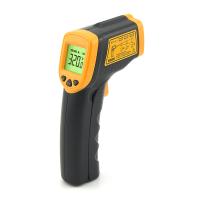
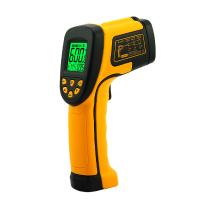
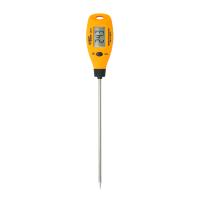
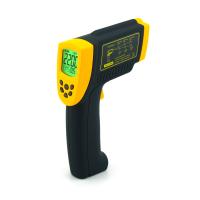
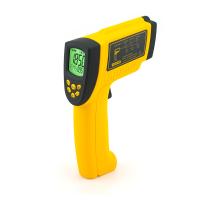
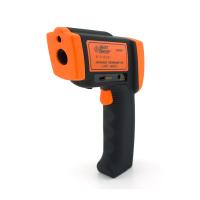
AT-150D-CN Non-contact Infrared thermometer operating instructions
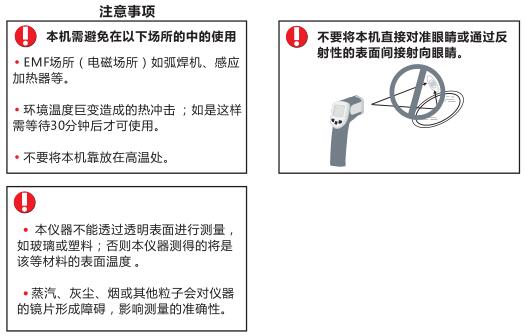
1. Instrument introduction
The machine is compact in structure, anti-interference and easy to use. Just aim and press the key, and the current surface temperature of the measured object can be read within one second. For hot, toxic or hard-to-reach objects, measure safely with this unit. 1.1 Instrument Features
*℃/℉ two measurement temperature conversion.
* Ratio of infrared temperature measurement distance to object target (Type A and Type C is 12:1; Type D is 20:1)
*Multi-function measurement: maximum, minimum, temperature difference, average, comparison, etc.
* Can measure non-contact, moving, charged surfaces and hard-to-reach objects, etc.
*It has the functions of "measuring value storage", "automatic shutdown" and "setting temperature alarm".
1.2 Working principle
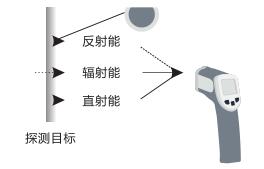
Infrared thermometers measure the surface temperature of an object. Its light sensor radiates, reflects and transmits energy, and then the energy is collected and focused by the probe, and then other circuits convert the information into readings and display them on the machine. The laser light equipped with this machine is more effective in aligning the measured object and improving the measurement accuracy. .
1.3 When using the machine to measure temperature
Point the machine to the measured object and press the button. At this time, pay attention to the ratio between the distance and the size of the measurement area. The machine is equipped with a laser light for aiming at the measured object.
1.4 Distance and size of measuring point
As the distance to the object being measured increases, the measurement area increases accordingly.
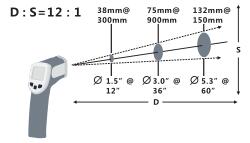
1.5 Observation range
Make sure that the target to be measured is larger than the measurement area of the machine. The smaller the measured target, the closer the distance to the measured target should be. To perform accurate measurement, it is necessary to ensure that the measured target is at least twice as large as the measurement area.
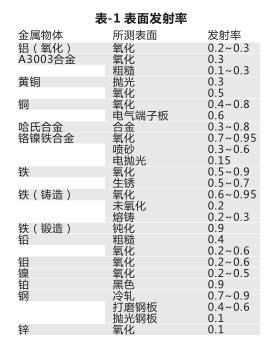
1.6 emissivity
The emissivity of most organic materials and painted or oxidized materials is 0.95 (preset in this machine), smooth or polished metal surfaces may cause inaccurate measured values, and a tape or hood should be worn on the surface to compensate. Paint black and wait to bring it to the same temperature as the underlying material before taking the temperature measurement.

2. Instrument parameters
Measuring range: -50°C~1100
Measurement accuracy: ±2%±2°C
Resolution: 0.1℃/1℉
Repeatability: ±1% or ±1°C
Response time: 500mSec, 95% response
Response wavelength: 8~14um
Sampling rate: 2.5 times/second
Distance to test point ratio: 20:1
Shutdown: automatic shutdown
Operating temperature: 0~40℃
32~104℉
Storage temperature: -20~60℃
-4~140℉
Relative humidity: 10%~90%RH (operating)
<80%RH(storage)
Power supply: 9V battery alkaline battery
Battery life: 12 hours
Dimensions: x50mm (length x width x height)
Weight: 270g (without battery)
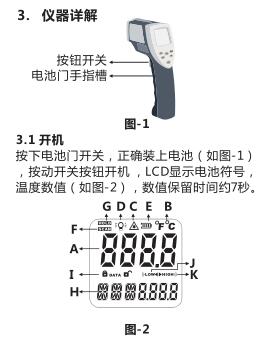


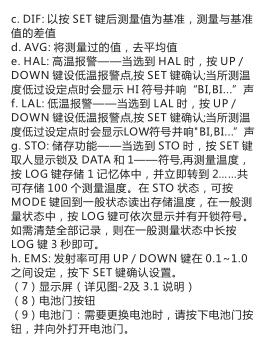
- 1Technical Principle, Application and Development Trend of Infrared Thermometer
- 2Industrial high temperature infrared thermometer DT-8889H operating function description
- 3Precautions for infrared thermometers
- 4How does emissivity affect infrared thermometers? Emissivity of common substances
- 5Infrared thermometer selection method
高丽 - 《山西科技》
- 6Principle of Infrared thermometer and Problems to be Noticed in Its Application
刘福杰;王浩静;范立东 - 《现代仪器》
- 7Technical Questions and Answers about Infrared Thermometers
- 8Infrared Thermometer Technical Questions and Answers
- 9AT-150C-CN Non-contact Infrared thermometer operating instructions