Preparation method and step of film
Scope and description
This method is applicable to the preparation of test panels for the determination of general properties of paint films. When preparing a coating film, the materials for preparing the coating film, the surface treatment of the substrate, the method of making the board, the drying and state adjustment of the paint film, the constant temperature and humidity conditions, and the thickness of the paint film should be selected. This method introduces the material requirements and treatment methods of five kinds of substrates, and lists six board making methods, which are the standard test boards and painting methods used in the general sample methods of related products.
Instruments and Materials
(1) Tin plate should meet the requirements of tin plating amount of E4, hardness grade of T 52, and thickness of 0.2~0.3mm. Unless otherwise specified, a test panel with a size of 25mmX120mm, 50mmX120mm or 70mmX150mm.
(2) Glass plate Unless otherwise specified, the glass plate shall meet the specified technical requirements, and the size of the test plate shall be 90mmX120mmX (2~3) mm.
(3) Unless otherwise specified, the steel plate shall meet the technical requirements of ordinary carbon steel, and the size shall be a test plate of 50mmX120mmX (0.45~0.55) mm or 65mmX150mmX (0.45~0.55) mm.
(4) Aluminum plate Unless otherwise specified, the aluminum plate should meet the specified technical requirements, and the size of the test plate is 50mmX150mmX (1~2) mm.
(5) Asbestos cement board Unless otherwise specified, the asbestos cement board shall meet the specified technical requirements, and the thickness of the test board shall be 3~6mm.
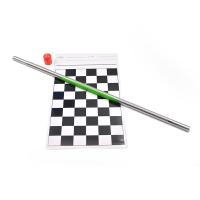
(6) Steel rod Ordinary carbon steel rod with a diameter of (13±2) mm and a length of 120 mm, with a smooth surface at one end and a hole or ring at the other end.
(7) Paintbrush width 25 wavy line 35mm.
(8) Spray gun The inner diameter of the nozzle is 0.75~mm.
(9) Squeegee applicator
(10) Viscometer Tu-4 viscometer or ISO outFlow Cup.
(11) Lever micrometer or other paint Film Thickness Gauge.
(12) The stopwatch scale is 0.2S.
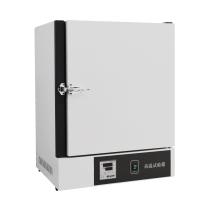
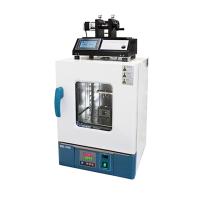
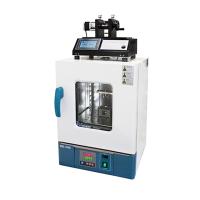
(13) Electric blast constant temperature Drying Oven.
Surface treatment of the bottom plate
(1) Tinplate
1. Solvent cleaning method: before painting the test panel, the oil on the test panel should be wiped clean, and the oil stains should be cleaned with xylene or solvent gasoline; it can also be cleaned with other solvents that do not contain acid or alkali and evaporate quickly. The test panel can be dried by solvent evaporation or wiped dry with a clean silk cloth. If it is not painted immediately, it should be stored in a desiccator.
2. Grinding (polishing) of the French-made plate If a more uniform test surface is required than that of the solvent-cleaned plate, it is recommended to grind the tinplate plate. Grinding treatment Unless otherwise specified, dry grinding shall be done with No. 500 water sandpaper that meets the requirements.
The grinding operation procedure is as follows: a. Grind back and forth straight and evenly along the parallel direction of any side of the test plate; b. Grind back and forth straight and evenly in the direction perpendicular to the first direction until the original surface is worn away; c. Grind in a circular motion of about 80-100mm until the circles formed on the surface overlap.
The grinding action should be light to prevent the abrasive from being embedded in the surface, and no tin plating layer on the test plate should be completely worn off. The polished test panel is then cleaned according to the above-mentioned operation of "solvent cleaning method".
(2) glass plate
1. Solvent cleaning method: on the day of use of the test plate, use xylene or solvent gasoline to clean the oil stains; it can also be cleaned with other solvents that do not contain acid or alkali and evaporate quickly. The cleaned test plate can be dried by solvent volatilization or with Wipe with a clean silk cloth and store in a desiccator if not painting immediately.
2. Detergent cleaning method The glass test plate is effectively washed with warm non-ionic detergent aqueous solution, and then the test plate is effectively washed with warm distilled water (should meet the third-grade water specified in GB/T 6682).
The cleaned test panel is dried by natural volatilization or heated at low temperature to remove a small amount of condensed moisture. The dry and clean glass plate should be placed in a desiccator, painted as needed, and used up on the same day.
Note: In general, wash with soapy water, rinse with clear water, and dry naturally or at low temperature. Back in T can device.
(3) Before the steel plate is made , the steel plate should be soaked in neutral light mineral oil or hydrocarbon solvent (no additives) for storage to prevent corrosion. Or wrap the steel plate in paper soaked with mineral oil and store it. Or store in a desiccator.
1. The solvent cleaning method is the same as the "solvent cleaning method" of the above-mentioned "tinplate plate".
2. Grinding (polishing) The grinding treatment of the legal plate should be done by dry grinding with No. 400 water sandpaper that meets the regulations, and the surface coating should be removed (the thickness of the removed surface layer should not be less than 0.7 μm, that is, all the coating should be removed).
The grinding operation procedure is to grind back and forth straight and evenly along the parallel direction of any side of the test plate, and then grind back and forth straight and evenly in the direction perpendicular to the first direction until the original surface is worn away, and finally with a diameter of about 80~100mm Sand in a circular motion until the circles formed on the surface overlap.
Note: If there are special requirements on the surface of the test plate, other operating procedures and methods can be stipulated to implement a
3. The surface of the cold-rolled steel plate used for the general test method should not be cleaned by spraying and blasting. The blast cleaning method is suitable for hot-rolled steel, cast iron and other tip-shaped or plate-shaped materials.
Before treating the test plate with the spray cleaning method, the test plate should be cleaned according to the operation of "solvent cleaning method". The abrasives used in the blasting cleaning method and the supplied compressed air should be dry and clean, and the particle size of the abrasives should be uniform, preferably 0.5~1.2mm, and abrasives of different sizes can also be used according to the test requirements. All abrasives shall have sharp edges and be harder than the blast cleaned test panels. Generally, silicon carbide can meet the requirements. In addition, steel shots with a Vickers (Vickers) hardness value greater than 750HV are also suitable.
The direction of abrasive injection should be perpendicular to the surface of the test plate, and the injection velocity should be greater than 75m/s. Use compressed air with a pressure of 0.8MPa to spray the abrasive from a suitable nozzle to meet the spray speed requirement. Blast cleaning should be carried out until the surface of the test panel shows the pattern of blast cleaning, no visible dirt or spots, and all abrasive particles are blown off with compressed air. After blast cleaning, the surface roughness of the test panel shall not be greater than 100 μm, and shall not be soiled again. Unless otherwise agreed, the treated test panels shall be coated as soon as possible within 2 h.
(4) aluminum plate
1. Solvent cleaning method is the same as the "solvent cleaning method" of the above-mentioned "tinplate".
2. Grinding (polishing) the legal plate
The aluminum plate is easy to form an oxide film in the air, and it is usually treated before painting. Use a soft cloth pad or other suitable material to dip the abrasive, moisten it with a solvent, and polish it according to the above-mentioned "tinplate plate" grinding operation procedure until the traces on the surface of the aluminum plate are completely removed.
The polished test plate should be cleaned according to the operation of "solvent cleaning plate making method" before use.
(5) For asbestos cement board , wipe off the dust on the test board with a dry cloth, and soak the test board in clean water for a week. During this week, change the water once a day to make the pH value of the test board close to 10. Remove the loose mud precipitated on the surface of the test panel with a scraper, rinse it with water, and let it dry. Use No. 0 emery cloth or No. 200 water sandpaper to polish the test plate, and the grinding operation procedure refers to the above-mentioned "tinplate plate" method. Rinse the test plate with smooth surface with water, dry it, and store it in an environment of (23±2)°C and relative humidity (50±5)% for more than one week. Before the test board is used, the dust on the board surface should be wiped clean.
Note: Under the condition that the standard overflow and humidity cannot be maintained, other conditions can also be negotiated separately, but it should be specified.
Board making method
Stir the sample evenly before painting. If there is orange peel on the surface of the sample, it should be carefully peeled off first. The multi-component paint is weighed and mixed according to the ratio specified in the product standard, and fully stirred. If necessary, the uniformly mixed sample can be filtered through a 0.124~0.175mm (120~80 mesh) sieve, and then one of the following methods is used to prepare the paint film according to the product standard.
(1) Brushing method Dilute the sample to the appropriate viscosity or the viscosity specified in the product standard, brush the specified test plate with a paint brush, and paint it quickly and evenly along the vertical and horizontal directions to form a uniform paint film. There is a gap or overflow phenomenon. The painted panel should be dried according to 6 in this chapter.
General laboratory utensils are wolf hair brushes. This method controls the thickness of the sample by controlling the amount of paint.
(2) Spraying method Dilute the sample to the spraying viscosity [(23±2)°C, the measured value in Tu-4 viscometer, 20~30s for oil-based paints; 15~25s for volatile paints. The measured value in the ISO outFlow Cup, oil-based paint should be 45~80s; volatile paint should be 24~45s] or the viscosity specified in the product standard, and then sprayed on the specified test plate to form a uniform paint film, no There is a gap or overflow phenomenon. When spraying, the distance between the Spray Gun and the surface to be coated should be less than 200mm, the spraying direction should be at an appropriate angle to the surface to be coated, the air pressure should be 0.2~0.4MPa (the air should be filtered to remove oil, water and dirt), and the Spray Gun should move The speed should be even. The sprayed samples should be dried according to 6 in this chapter.
This method controls the film thickness by controlling the viscosity of the sample, the moving speed of the Spray Gun, the number of spraying passes and other factors.
(3) Dilute the sample to an appropriate viscosity by dip coating (to make the thickness of the paint film meet the requirements of the product standard), then dip the test panel vertically into the paint solution at a slow and uniform speed, and after staying for 30s, remove from the paint solution at the same speed. Take it out, put it in a clean place to drip dry for 10~30 minutes, and hang the drip-dried sample or steel rod vertically in a constant temperature and humidity place or in an electric blast constant temperature drying box to dry (the drying conditions are stipulated in the product standard). The drying time of one immersion paint is not stipulated and can be determined by oneself, but it should not exceed the drying time specified in the product standard. Control the drying degree of the first paint film, and then ensure that the paint film will not sag, bite or wrinkle after the second dipping.
Thereafter, turn the sample upside down 180°, perform a second dip coating according to the above method, and drip dry. Dry according to 6 in this section.
This method controls the thickness by controlling the viscosity of the sample.
(4)刮涂法
1.腻子刮涂法 将试板放于腻子刮涂漆底座上,把厚度适合的模框及刮刀框套在其上 并卡紧。再用金诚刮刀将腻子均匀刮涂在试板上,使其成均匀平整的腻子膜,取下腻子样板 按本章节6进行干燥。
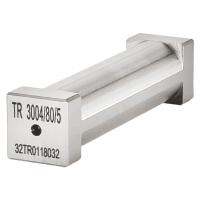
2.漆膜刮涂法 将试板放在平台上,并予以固定。按产品规定的湿膜厚度,选用适宜间隙的漆膜制备器,将其放在试板的一端,制备器的长边与试板的短边大致平行或放在试板 规定的位置上,然后在制备器的前面均匀地放上适贵试样,握住制备器,用一定的向下压力 并以150mm/s的速度均速滑过试板,即涂布成需要厚度的湿膜。
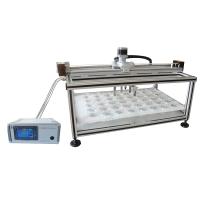
手工涂膜会因为作用在漆膜制备器上的涂布速度和施加压力的不同而造成涂膜的不规 则,采用自动涂膜机可减少或消除人为因素的影响,仪器见下图。
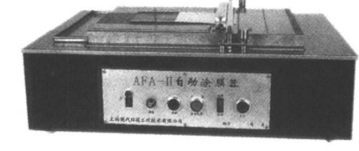
(5)浇注法 用杠杆千分尺或测厚仪测量底材厚度,然后把预先调整至合适黏度并充分 搅匀的漆样均匀地浇注于整块位于水平的样板 上,再以45°角倾斜放置于沽净无灰尘处10~30min,使样板上多余的漆流尽,以同样的角度 置于干燥箱内,干燥的温度和时间按产品标准 规定进行。此后,将样板倒转180°,按上述方进行第二次浇漆。
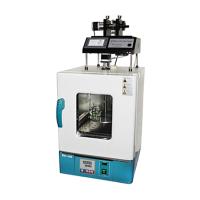
(6)旋转涂漆法 采用旋转涂漆器制备均匀的漆膜。将底板固定在涂漆器的样 板架上,在仪器上选定旋转时间[以“秒(s)” 计]及转速[以“转/分(r/min)”计],再将调整 至合适黏度(涂-4杯,黏度高于30s,低于150s) 的试样沿底板纵向的中心线成带状注人,其贵约占 底板面积的1/2,迅速盖上盖子,启动电机,待涂 漆器自动停止转动后,方可打开盖子,取出样板, 按本章节6进行干燥。
此法通过控制试样的黏度、仪器的转速及旋转时间来制得一定厚度的漆膜。涂料黏度越低、转速越快、旋转时间余越长,制得的漆膜厚度越薄,反之越厚。
注:上述各种方法的制板过程中,均不允许手指与试板表面直接接触,以免留下指印影响漆膜性能的测试。
Drying and conditioning of paint films
(1) Unless otherwise specified for self-drying paint, the paint film prepared by the above method should be placed flat under constant temperature and humidity conditions [temperature (23±2)°C, relative humidity 50%±5%], according to product standards Dry for the specified time. Generally, self-drying paints are adjusted for 48 hours (including drying time) under constant temperature and humidity conditions; volatile paints are adjusted for 24 hours (including drying time), and then various performance tests are performed.
(2) Unless otherwise specified for drying paint, the paint film prepared according to the above-mentioned method should first be placed at room temperature for 15-30 minutes, and then placed flat in an electric blast constant temperature drying box. time to dry. The dried paint film was adjusted for 0.5~1h under constant temperature and humidity conditions, and then various performance tests were carried out.
Constant temperature and humidity conditions
Constant temperature and humidity conditions refer to the standard environmental conditions temperature (23 ± 2) ℃, relative humidity 50% ± 5%.
Film thickness
Unless otherwise specified, the thickness of various paint films after drying is shown in the table below.

Reference standard
National Standard GB/T 1727 "General Preparation Method of Paint Film"
National standard GB/T 1736 "Preparation method of insulating paint film"
National Standard GB/T 9271 "Standard Test Panels for Paints and Varnishes"
National standard GB 9278 "Temperature and Humidity for State Conditioning and Testing of Coating Samples"



- 1How to choose the right model for the scraper?
- 2Film Appliances: Scraper Mayer Rods Automatic Film Applicator
刘登良 - 《《涂料工艺》》
- 3Coating mechanical performance test
- 4Preparation process of film
- 5Preparation method of film with open brain of foreigners [Video]
- 6Coating film formation performance inspection method - film preparation
- 7What are the inspection equipment required for emulsion paint?
- 8Painting constructivity--general preparation method of film
- 9Preparation method of film