Paint and Varnish Cupping test
Cupping test of paints and varnishes (GB/T9753-88) This standard is equivalent to the international standard 1S01520-1973 "Cupping test of paints and varnishes".
(1) Subject content and scope of application
This standard specifies the evaluation of the resistance of coatings of paints, varnishes and gloss products to cracking or separation from the metal substrate after gradually deforming them under standard conditions.
The test methods specified in this standard can be tested according to the specified indentation depth, and the evaluation can be passed or failed. The indentation depth can also be gradually increased to determine the minimum depth at which the coating just cracks or begins to detach from the substrate.
(2) Equipment
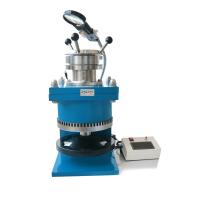
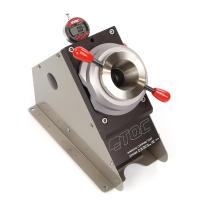
① The cupping testing machine shall comply with the design and dimensions shown in Figure 10-15.
②Test plate: Unless otherwise specified, the test plate should be polished steel plate and meet the requirements of GB/T9271. The test plate is square and the thickness is 0.30~1.25mm. The weight and length are not less than 70mm.
(3) Test procedure
①The test should be carried out at a temperature of 23°C±2°C and a relative humidity of 50%±5% (except for special regulations).
②Fix the test plate firmly between the fixed ring and the die, with the coating facing the die. When the punch is at zero position, the top is in contact with the test plate. Adjust the test plate to make the center of the punch; The distance between the intersection point and each side of the board is not less than 35mm.
③Push the hemispherical tip of the punch to the test plate at a constant speed of 0.2mm±0.1mm per second until it reaches the specified depth, which is the distance the punch has moved from the zero position. During the test, the punch should be prevented from bending, and the deviation between the center of the spherical top and the axis of the punched film should not be greater than 0.1 mm.
④ With corrected normal eyesight or a 10 times magnifying glass as agreed, check whether the coating of the test panel is cracked or separated from the substrate. The above procedures should be carried out on two separate test panels. If the results are different, the test shall be supplemented until the results of the two test panels are consistent; if cracks appear in the substrate, the test results shall be invalid.
- 1Cracking resistance of coatings: Cupping test
- 2Cupping test and its role in Coating evaluation
- 3Study on the Influence of Stamping Speed on Cupping Outburst
程令霞;曹阳根;杨尚磊;邓沛然;张文瑞 - 《热加工工艺》
- 4Cupping test of sheet metal forming limit diagram
李伟锋;乔明杰 - 《锻压技术》
- 5Analysis of Factors Affecting Cupping test data
郑延福;付全科;荀建民 - 《理化检验(物理分册)》
- 6Film flexibility test
郑顺兴 - 《涂料与涂装科学技术基础》
- 7What is the Cupping test?
- 8Modern environment TCB cupping instrument operating instructions
- 9Coating adhesion test --- Cupping test method (spherical pit test)