How to choose car lame plating equipment?
Spraying equipment for car repair and repainting includes Spray Guns, paint delivery systems, compressed air supply systems, spray booths, etc. When the business volume is large, forced drying equipment should also be purchased.
1. Spray gun
For single or small batches of car body repairs and coatings, most of the car repairs use air Spray Guns, which are divided into three types: suction type, gravity type and pressure feeding type according to the paint supply method. When the workload is small, gravity or suction Spray Guns are generally used.
(1) Gravity Spray Guns should use a gravity Spray Gun with a paint cup volume of less than 0.5L when the amount of paint is small, the number of color changes is large, and the flat surface is sprayed, but it should be noted that it is not suitable for upward painting. Gravity Spray Guns previously designed for small area repairs have now been developed into fully usable Spray Guns. It has the advantages of saving money and paint when repairing small areas. It is suitable for low-pressure spraying. Generally, when the air pressure of primer and intermediate paint is 0.25~0.3MPa, a φ1.8mm paint nozzle is used. When it is 0.3~0.35MPa, a φ1.4mm paint nozzle is selected.
(2) Suction-type air Spray Gun When the amount of paint is slightly larger and the number of color changes is large, especially when spraying the side, it is advisable to choose a suction-type Spray Gun with a capacity of less than 1L. Use the suction Spray Gun to spray a large area. It has the characteristics of good paint atomization effect, and can achieve the thickness and gloss of the coating film. When spraying primer and intermediate coating, the diameter of the paint nozzle is generally 1.8mm, and the matching air cap When the air pressure is 0.34MPa, the flow rate is about 0.325m³/min. If the coating speed needs to be increased, the diameter of the paint nozzle can be increased to 2.2mm. The air flow rate of the air cap matched with it is about 0.368m³/min. When spraying the topcoat, a paint nozzle with a diameter of f1.6mm is generally used.
(3) The pressure-feed air Spray Gun can choose the pressure-feed Spray Gun for continuous operations that require a large amount of paint delivery and the color is almost unchanged. Since it does not have paint cups or cans, the hand-held Spray Gun is light in weight and easy to spray. As the pressure of the pressure-feeding paint increases, the spraying volume of the paint increases. When the pressure is high, a Spray Gun with a slightly smaller nozzle diameter can be selected. Generally, paint nozzles with larger diameters are used when spraying primers and intermediate coatings, and paint nozzles with smaller diameters are selected when spraying topcoats or low-viscosity paints. When using a pressure-feed Spray Gun, in order to prevent sagging, the aperture of the paint nozzle should be between φ1.22~1.32mm, and an air cap with an air flow rate of about 0.4m³/min should be used to match it.
(4) Other types of Spray Guns are used in order to improve the utilization rate and adapt to the spraying of special coatings
Sometimes, high-pressure airless Spray Guns, air electrostatic Spray Guns, and high-volume low-pressure (HvLP) air Spray Guns are also used. The use of high-pressure airless spraying can reduce redundant spraying. It is suitable for spraying of viscous paints, but because of the poor appearance quality of spraying, it is only suitable for spraying of trucks and anti- corrosion To improve spray quality, air-assisted high-pressure airless Spray Guns can also be used.
Compared with the air Spray Gun, the electrostatic Spray Gun has a higher paint utilization rate and better atomization effect. Because of the high voltage used, safety is very important. When operating, the car must be well grounded. The use of HVLP air Spray Gun can improve the utilization rate of paint, and greatly reduce the amount of paint mist scattered by rebound and overspray, which is not only beneficial to environmental protection, but also improves the working environment of the workshop and reduces the maintenance cost of spraying equipment. The operation of using the HVLP Spray Gun is basically the same as that of the conventional air Spray Gun. Because the paint flow speed is slightly slower, the Spray Gun should be closer to the spraying surface. Because the HVLP Spray Gun has a slightly lower working efficiency and cannot keep up with the needs of assembly line production and coating, it is more suitable. Applied in the field of automotive refinish coating.
2. Other coating equipment
(1) The volume of the paint cup used with the suction Spray Gun of the paint container is about , and it is directly connected to the paint inlet of the Spray Gun. The volume of the paint tank for pressure feeding is generally about 2L. A short paint hose with a solvent-resistant corrosion resistant liner is used to connect the Spray Gun and the paint tank. If the amount of paint sprayed is large, use a pressurized hose with a volume of more than 7.6L. The paint tank should be equipped with an agitator in order to prevent the paint from settling or discoloring.
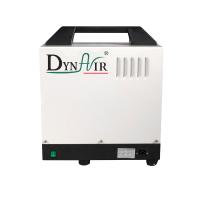
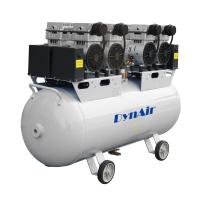
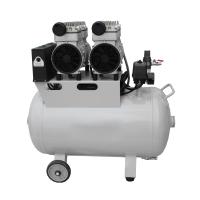
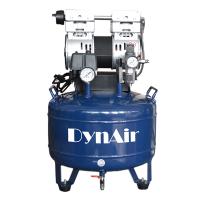
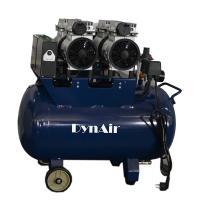
(2) The gas output of the Air Compressor selected by the Air Compressor needs to be able to meet the needs of the air consumption of the Spray Gun when it works continuously. For updraft Spray Guns, the air supply capacity of the Air Compressor should be above 0.325m³/min, and for pressure-feed Spray Guns, the air supply volume should be greater than 0.396m³/min. Generally, when the pressure of compressed air is 0.7MPa, the gas production of a compressor with a power of 3.73kW (5hp) is 0.566m³/min, and the power of the electric motor increases by 0.746kW (1hp), and the gas production can increase. 0.113m³/min.
(3) The air hose should have sufficient air pressure and air output at the outlet of the Spray Gun to ensure sufficient air atomization of the paint. If the inner diameter of the hose is too small, it will cause serious pressure loss, and the paint cannot be atomized effectively. Therefore, the inner diameter of the hose connecting the air regulator and the Spray Gun should not be less than 8mm, and the length of the hose should be 6-9m. Long, the pressure should be adjusted with the help of a pressure regulator to compensate for pressure loss.
(4) Oil-water separator and pressure regulator In order to ensure that the pollutants in the compressed air are completely removed, an oil-water separator and a pressure regulator are required between the Air Compressor and the Spray Gun. The minimum processing capacity of the selected oil-water separator should reach 0.9m³/min, and all its parts are corrosion-resistant, and equipped with high-sensitivity regulators to ensure precise adjustment of air pressure.
(5) Spray booth In order to ensure that the repair coating process is carried out in a good environment, a suitable spray booth should be established. The initial spray booth for refinishing is a "tunnel booth" similar to a car wash. The air passes through the filter above the inlet and then is supplied to the painting room. The airflow passes through the vehicle stably and then is discharged from the vicinity of the outlet. Most of the spray booths currently in use are of the upper air supply and lower exhaust type. Clean air is supplied from the top and the exhaust is located under the grille on the floor of the spray booth. This air supply method can quickly discharge the scattered paint mist without polluting the paint surface.
In order to improve the production efficiency of repair coating and reduce the cost of coating, on the one hand, it is necessary to develop low-temperature baking series of automotive repair coatings, and on the other hand, it is necessary to develop the matching spraying-drying equipment. At present, what is developed and used is a spray-drying room that combines the drying room and the spraying room, so that after the repaired car is finished spraying and drying from the drying room, the coating can be hardened, and it is equipped with a good air supplement system. And then ensure that the air in the painting room can be changed more than twice every minute. The temperature in the spray booth in winter is low, which will affect the spray quality, so the supplementary air must not only be well filtered before entering the spray booth, but also heated to 20~25C. If the spray booth is a closed system, the supplementary air volume should be slightly larger than the exhaust volume of the spray booth to maintain a positive pressure and prevent external dust from entering the spray booth, but it should also avoid excessive pressure difference, causing paint mist to fly away.
- 1Application and classification of lame plating technology
- 2Types of Spray Guns commonly used
- 3How to properly operate and maintain the Spray Gun?
- 4Why does the coating have orange peel defects? How to solve sagging and leakage?
- 5What are the tips to prevent sand inclusion and dry spray of paint film?
- 6The relationship between Spray Gun caliber, paint viscosity and coating type of electric airless sprayer
- 7Spraying of power tools - Spray Guns
- 8Several solutions for double coating
- 9Basic knowledge of Spray Gun: the relationship between air and paint