Application of Colorimeter in Pork Color Detection
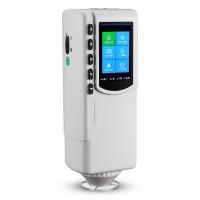
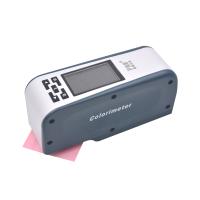
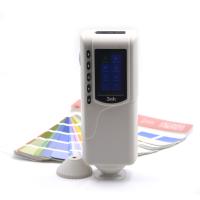
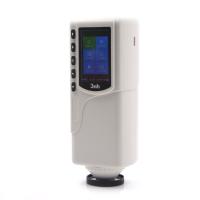
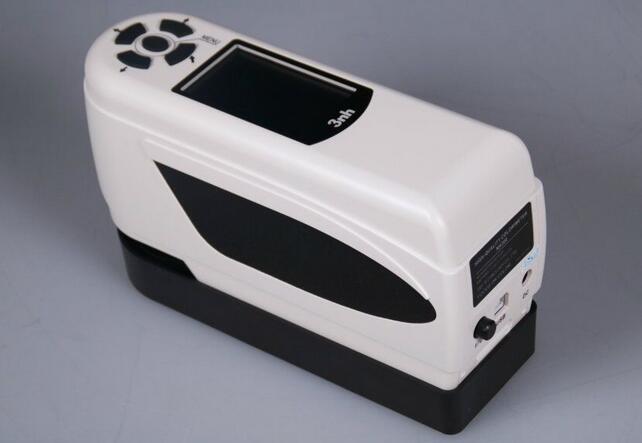 With the continuous development of Colorimeter technology, it has been widely used in many fields, among which the most common in daily life is the detection of food color, it is generally difficult to judge the gap between the actual color difference and the standard color difference of food with the naked eye, this article mainly lists The application of the Colorimeter in the detection of pork color is explained as follows.
The 6 color grades of the standard flesh-colored plate (made in Japan) were measured with a 3nh color difference meter, and the variation rules of the L*, a*, b*, C and H* values of the 6 color grades were statistically analyzed. The pigs (HH), Suhuai white pigs (75% Yorkshire pigs + 25% Xinhuai pigs, SHB), Large Yorkshire pigs×Huai pigs (YH), Landrace pigs were aligned with the naked eye control meat color plate evaluation method and the color difference meter evaluation method ×A total of 23 pigs from 5 breeds (lines) or hybrid combinations including Huai pig (LH) and Chang·Da (DLY) Yang Sanyuan pig were evaluated for post-mortem meat color, and the results of the two methods were compared and analyzed. The results show that the b* value has little reference significance in the evaluation of meat color; when the individual meat color difference is small (between 3.0 and 3.5 points), the evaluation results of the color difference instrument evaluation method and the naked eye control evaluation method are inconsistent; when When there is a large difference in individual flesh color, the evaluation structures of the two methods are basically the same.
The traditional meat color evaluation method of pork is to use the naked eye to score against the meat color board, and take the background longissimus muscle cross section (also known as eye muscle) at the last rib as the evaluation site. Use standard flesh-colored plates to evaluate under normal light during the day 1-2 hours after slaughter. The standard flesh color board is 5~6 color grades (Japanese standard is 6 color grades, American standard is 5 color grades), 1~2 grade light (PSE meat), 3~4 normal, 5~6 grade color Deep (DFD meat). This evaluation method is highly subjective. The same piece of meat may be tested by different people, and the results may vary by 0.5 to 1 color level. In addition, the results of detection under different light conditions are also quite different. In short, dividing the flesh color into 5~6 grades and only relying on the naked eye to identify it will lead to rough detection results and low reliability. It is necessary to improve the detection method.
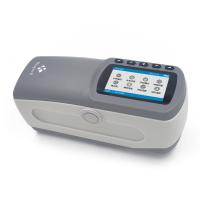
At present, Colorimeters are often used abroad to detect flesh color. The color difference meter is a high-precision electronic instrument that can distinguish different colors. It can measure the L*, a*, and b* values of pork color. The Lab color space is to use L*, a*, b*3 values in one group to represent any color. Among them, L* represents brightness, the value is 0~100, the larger the value, the greater the brightness; a* and b* have positive and negative points, +a* represents redness, -a* represents greenness, +b* represents yellowness degree, -b* means blue degree. The L*, a*, b* value of any color can be measured with a color difference meter, and the difference between different colors can be judged according to the measured L*, a*, b* value. In addition, the Colorimeter can also measure the fineness (C) and hue (H) at the same time. The 3Enchi Colorimeter can calculate the H value with the color difference calculation formula.
The use of a Colorimeter to measure flesh color has the advantages of high data accuracy, strong objectivity, and convenient operation, and is worth promoting. In this experiment, the 3nh color difference meter and the meat color plate were used to evaluate the meat color of pork at the same time, and the relationship and difference between the two were analyzed to provide a reference for the practical application of pork meat color evaluation.
experimental method
Measuring flesh-colored plates with a Colorimeter
Use a 3nh Colorimeter to measure the 6 color levels in the flesh-colored plate, measure each color level 10 times, record the measured L*, a*, b* values, and perform statistical analysis to determine the L* of the 6 color levels , mean and standard deviation of a*, b* values. Then the H value is obtained according to the conversion formula, and then the pork meat quality problem is judged according to the variation range of L*, a*, b*, C and H values.
Meat color determination control test
Carry out slaughter and meat color evaluation according to uniform standards. Within 1-2 hours after slaughter, evaluate the flesh color of fresh meat samples with a flesh color plate and a 3nh Colorimeter. The score of the meat-colored board is to compare the cross-section of the longissimus dorsi muscle at the last rib with the standard meat-colored board with the naked eye when there is sufficient outdoor light during the day (but avoid direct sunlight), and the accurate value is 0.5 points. The measurement method of the Colorimeter is to place the lens of the Colorimeter vertically on the longest cross-section of the back at the last rib for measurement. Evenly distributed on the cross-section of the eye muscle, record the L*, a*, b* values, calculate the fineness C and hue angle H values according to the conversion formula, and then statistically analyze the result data with SPSS software.
The above is the introduction of the application of 3nh Colorimeter in the detection of pork color, hoping to provide some references for users in related industries.
- 1Summary of execution standards for 3NH Colorimeters
- 2Grease mass index: color
- 3A set of beautiful 3NH color difference Gloss instruments
Xiaohua - 《南北潮商城》
- 4Application of Spectroscopic Colorimeter in Detection of Age on Skin Tone
- 5What are the important applications of Colorimeter in the consumer electronics industry?
- 6Application of Colorimeter in Encasement Design
- 7Colorimeter inspection applications in the automotive industry
- 8Important application of Colorimeter in printing and dyeing industry
- 9Detection applications of Colorimeter in the plastics industry