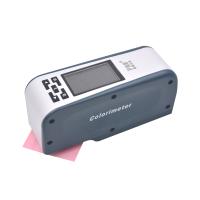
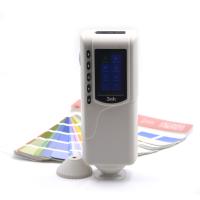
What is the application of Colorimeter in noodle color detection?
Food is the most important thing for the people. In CHINA's catering, rice is the main food in the south, and pasta is the main food in the north. Noodles are one of the typical representatives of noodle food. How to ensure the relationship between its taste, nutritional value and color during the manufacturing process? This issue mainly introduces the use of a Colorimeter to detect and control the color quality of noodles.

In fact, during the processing and storage of dough sheets, coloration often occurs, which is often referred to as browning. The browning of dough is mainly caused by non-enzymatic reaction (Maillard reaction) and enzymatic reaction, and the color change refers to the change of the organic component of the thing itself. The Colorimeter is mainly used to measure the Lab value of the noodles to determine the degree of browning of the noodles so as to determine the color and nutrition of the noodles.
Maillard reaction is a non-enzymatic reaction between aldehydes, ketones or reducing sugars and amino acid polypeptides or proteins. Flour contains protein, amino acid and reducing sugar. Under the condition of moderate moisture, above 50°C, and pH of 4~7, brown substances will be formed, resulting in poor food appearance and reduced nutritional value. The higher the reducing sugar in flour, Maillard reacts faster. Browning is a very taboo change in noodle production. In order to ensure the quality of noodles, noodle manufacturers now use Colorimeters to measure whether browning occurs in noodles and the degree of browning to determine the quality of noodles, so that noodles are classified according to color and nutritional value. grade. The enzymatic reaction is mainly caused by doan oxidase. Browning occurs after the raw dough has been left for 24 hours and the dough will darken. Turn red with little change in yellowness value. The three indicators of color of raw noodles all decreased after cooking. The color standard of dough slices shows that the gap between samples will be enlarged after the dough slices are left for 24 hours, and the difference between samples will be reduced after the dough slices are boiled.
Both the color of the noodle sheet and the measurement of wheat pink color were highly significantly correlated with the sensory evaluation of noodles, which was consistent with previous studies. Among them, the correlation coefficient between the a value and the L value of the noodle color measurement is the largest, indicating that the dark red color of the noodles is a color that people do not like very much. The sensory score of this kind of noodles is also very low, and the b value has a small correlation coefficient with the sensory evaluation color. This is consistent with Xue Dan's research results. After Xue Dan pulverized the noodles with a high-speed multifunctional Grinder, put them into the sample box, measured them with a Colorimeter, repeated three times to get the average value, and combined with the sensory evaluation results showed that: Colorimeter measurement There is a very significant correlation between the value and all sensory indicators and the total score, among which the red-green parameter a* is negatively correlated with the sensory indicators, while the brightness parameter L*, the yellow-blue parameter b* and the sensory indicators There is a positive correlation; the red-green parameter a* has the highest correlation with color, and the yellow-blue parameter b* has a weaker correlation with sensory scores and total scores.
The Colorimeter can be used to clearly and quickly measure the Lab value of the noodles to determine the color and nutritional value of the noodles, which is also a sign that CHINA's industry has entered into intelligent digital production. Digital and intelligent production People no longer need to evaluate the color of products based on the senses of the naked eye, and can quickly and clearly analyze all the required data through the Colorimeter.
The above is an introduction to the application of the Colorimeter in the detection and control of the color of noodles, hoping to provide some references for users in related industries.
- 1Grease mass index: color
- 2Application of Spectroscopic Colorimeter in Detection of Age on Skin Tone
- 3What are the important applications of Colorimeter in the consumer electronics industry?
- 4Application of Colorimeter in Encasement Design
- 5Colorimeter inspection applications in the automotive industry
- 6Important application of Colorimeter in printing and dyeing industry
- 7Detection applications of Colorimeter in the plastics industry
- 8Application of Colorimeter in Cable Plastic Industry
- 9Application of Colorimeter in Printing ink Production
-
![IWAVE WF28 Colorimeter 8mm caliber, suitable for Spinning & weaving, Chemical, Plastic, Food, Hardware, Printing and Dyeing, etc]()
-
![3NH NH300 Colorimeter 8mm caliber, suitable for plastics, clothing, products, inks, food, cosmetics, powder, etc]()
-
![3NH/3NH NH300 portable Colorimeter 8mm caliber with multi-function test kit]()
-
![3NH NR110 Colorimeter 4mm caliber, suitable for powder, Spinning & weaving, chemical, leather, food, plastic, etc]()
-
![CHNSPEC CS-580B Computer Colorimeter 6mm]() CHNSPEC CS-580B Computer Colorimeter 6mm$ 2233.00
CHNSPEC CS-580B Computer Colorimeter 6mm$ 2233.00 -
![CHNSPEC CS-660B Computer Colorimeter measurement diameter 6mm]()